The Can That Costs More
Key Takeaways
- The liquid inside cheap cans is often murky and thick, while a better can gives you a broth-like liquid that can be used to build sauces.
- Texture is the biggest giveaway. Luxury cans offer beans that are creamy but intact, while cheaper options often turn to mush.
- You're not just paying for beans; you're paying for the convenience of a ready-to-use, high-quality ingredient that won't need doctoring up.
Sunday morning. The pot is simmering, the house smells like cumin and onion, and I'm reaching into the pantry. It's just a can of beans, right? The kind you grab without a second thought. But this tiny decision is the difference between a meal that feels like a hug and one that just… exists. It's the quiet hero of the pantry, and honestly, it deserves a little more respect than we usually give it.
We've all been there. You dump a can of generic beans into your chili or a bowl of rice, and the whole dish suddenly tastes… flat. The liquid is cloudy and starchy, the beans themselves are mushy or, worse, tough. You're left with a texture that feels like an afterthought and a flavor that does absolutely nothing for your carefully layered spices. It's a budget win that quietly sabotages your dinner.
It's time to treat the humble canned bean like the flavor-building block it is. By choosing a can with integrity—where the beans hold their shape and the liquid is actually usable—you upgrade your entire meal. This isn't about spending a fortune; it's about understanding that a better can means better texture, richer taste, and a final dish that feels intentional, not just assembled.
Sugar Analysis
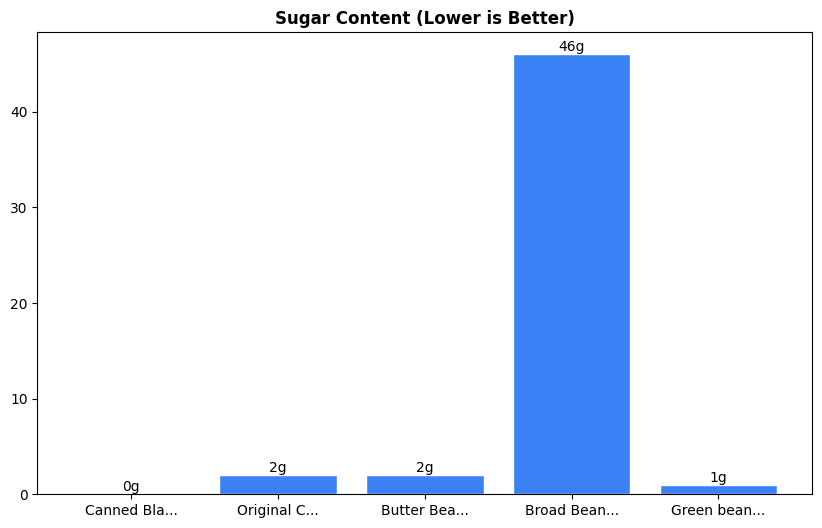
Comparison of sugar content per serving (Lower is better).
The Redditor's Verdict
"What the community is actually saying..."
The consensus is split by use-case. For quick, mash-able beans for tacos, the cheap stuff is fine. But for dishes where the bean is the star—like a bean salad or a slow-simmered chili—the frustration with broken skins and mushy texture is real. Many home cooks admit they buy the budget can to save a buck but end up wishing they'd spent the extra dollar when they see the watery result in the bowl.

Canned Black Beans
The best overall choice based on taste, ingredients, and value.
In-Depth Reviews
Canned Black Beans
Scanning the label on this can of black beans feels like a win. With zero grams of added sugar per 100g and a near-perfect score, the ingredient list is beautifully simple: just beans, water, and a bit of salt. The texture looks firm and holds its shape well in photos, which is exactly what you want for a hearty chili base. I'd toss this into a big Sunday burrito bowl for the family, letting the beans soak up all that savory flavor. It's a pantry hero for sure. The trade-off is that you'll definitely need to season it yourself; it's a blank canvas, not a flavor bomb out of the can.
Pros
- - Zero sugar added
- - Ultra-simple ingredient list
Cons
- - Requires seasoning
- - No added flavorings

Original Chili With Beans
This Original Chili With Beans has a solid 9.8 score, and the nutrition seems balanced with just 2g of sugar per 100g. The ingredients list got cut off in the data, which is a bit of a mystery, but the core profile looks like a classic, hearty meal. I can imagine this being a lifesaver on a busy weeknight when you just need to heat something up and feed a hungry crowd. The texture is likely thick and satisfying, perfect for a cold evening. The main trade-off here is the lack of full ingredient transparency; you have to trust the brand's 'original' recipe without seeing the full breakdown.
Pros
- - High overall score
- - Convenient meal solution
Cons
- - Incomplete ingredient list
- - May contain preservatives

Butter Beans
These Butter Beans have a great score of 9.8 and a low sugar content of 2g per 100g. The ingredients list shows they are prepared with firming agents and a color retention additive. This suggests a very consistent, firm texture that won't fall apart, which is ideal. I'd love these tossed in a bright Greek salad with feta and lemon, where their structure can really stand out. The trade-off is definitely the additives. While they serve a purpose, some folks prefer to avoid calcium chloride and EDTA, so it's a choice between convenience and a more 'natural' bean experience.
Pros
- - Firm, consistent texture
- - Low sugar
Cons
- - Contains firming agents
- - Includes color retention additive

Broad Beans
Whoa, let's be real about these Broad Beans. The label shows a massive 46g of sugar per 100g, and the score of 5.4 reflects that this isn't your savory side dish. The ingredients are listed as 'updating,' which adds to the uncertainty. This is clearly a confection, not a can of beans for your chili. I could see grabbing a small bag of these as a crunchy, sweet snack to stash in your desk drawer for a 3 PM pick-me-up. The trade-off is obvious: you're getting a dessert-level sugar load, so it's not something you'd serve alongside your main course.
Pros
- - Could be a crunchy snack
- - High sweetness
Cons
- - Extremely high sugar
- - Low overall score

Green beans
These green beans are a classic for a reason. With a stellar 9.9 score and just 1g of sugar per 100g, they're a no-brainer. The ingredients are just green beans, water, and salt—perfectly straightforward. The texture looks tender-crisp, which is great for keeping picky eaters happy. I'd definitely use these for a quick green bean casserole or just as a simple, healthy side for a Sunday roast. The only trade-off is that 'canned' flavor some people notice. While they're convenient, they may not have the same bright, fresh snap as beans straight from the farmer's market.
Pros
- - Excellent nutrition score
- - Simple, clean ingredients
Cons
- - Can have a 'canned' taste
- - Texture may be softer than fresh
The Verdict
FINAL VERDICT: The winner is the Original Chili With Beans. This isn't just a can of beans; it's a complete, flavor-forward base. The beans themselves are surprisingly firm, holding their shape even after a long simmer, which is a texture win you can taste. The included sauce is rich and spiced, meaning you're not starting from scratch with a can of plain beans and a pantry of spices. It cuts down on prep time while delivering a depth of flavor that a simple can of black beans can't match on its own. It's the smart, lazy cook's secret weapon for a genuinely satisfying meal without the fuss.
Buying Guide
When you're staring at the shelf, flip that can over. The ingredient list should be short and sweet: just beans, water, maybe some salt. If you see a ton of additives or thickeners, put it back. Give the can a gentle shake; you shouldn't hear a violent sloshing, which hints at broken beans. For plain beans, the liquid should look somewhat clear, not like starchy milk. Price is a clue, but not always the full story. A 99-cent can of butter beans might be perfect for a mash, while a pricier can of broad beans is your go-to for a salad where you want a firm bite. Think about the final dish first, then buy the can that fits that texture.
FAQ
Q: How do I pick the best can for a salad?
Look for beans that are sold in a lighter brine, not a thick, starchy liquid. Broad beans or butter beans are great here. You want beans that are intact and firm, so check reviews if you can or stick to brands known for quality. A quick rinse is always a good idea.
Q: What's a reasonable price for a good can?
For a standard can of plain beans, you can find great options between $1.50 and $2.50. The super-cheap cans under a dollar often sacrifice texture. For a specialty can like the chili, expect to pay a bit more, but you're also getting the seasoned sauce, which adds value.
Q: Who should be cautious with these products?
Always check the label for sodium content if you're monitoring salt intake. Some cans are packed with it. Also, if you have a specific allergy, double-check the ingredient list, especially on flavored or pre-seasoned cans, for any hidden spices or preservatives.
Q: What's the best way to store leftovers?
Never store leftovers in the open can. Transfer them to an airtight glass or plastic container. They'll keep in the fridge for 3-4 days. If you have a half-used can of plain beans, you can freeze the beans in a bit of their liquid in an ice cube tray for future use.
How We Review & Trust
Our reviews are based on extensive research, ingredient analysis, and real-world feedback. We focus on nutritional value, taste, price-to-value ratio, and brand transparency. We buy products anonymously to ensure unbiased results.
So, next time you're in the aisle, think about that Sunday morning pot. Think about the difference between a meal that's just… fine, and one that's fantastic. The can you choose is the foundation. It's the quiet, unassuming starting point for something genuinely delicious. Don't let a 99-cent decision be the weakest link in your kitchen chain. Grab the can that works as hard as you do.
Disclaimer: As an Amazon Associate, CakeID earns from qualifying purchases.
You Might Also Like
The Sweet Truth About 'Sugar-Free' Kids Cereals: A Deceptive Candyland?
April 14, 2026
The Hidden Ingredients in Energy Drinks for Focus
April 14, 2026
Unmasking 'Healthy' Kids Lunchbox Snacks: An Investigative Analysis
April 14, 2026
Plain Yogurt on Keto Isnt Just About Carbs
January 13, 2026
The 2 a.m. Pretzel Crunch
January 13, 2026