Reading the Label on a 20 Dollar Smoothie
Key Takeaways
- The tartness comes from a mix of lemon and lime juice; buying them separately gives you total control.
- For the sweet, tropical base, 100% Orange Juice Frozen Concentrate is your most cost-effective and potent option.
- Ruby red grapefruit juice adds the necessary bitterness and color, but ensure it's no sugar added to avoid empty calories.
- Skip pre-mixed 'citrus blends'—they're usually more expensive and loaded with fillers you don't need.
You see the receipt. Twenty bucks for a smoothie. You tell yourself it's an investment, that the turmeric and collagen are worth it. But standing there with the blender running at home, you start wondering what you're actually paying for. Is it the quality or just the name on the cup?
The ingredient list on these high-end drinks is often a puzzle. You get vague terms like 'proprietary blend' or 'natural flavors' that hide the real cost drivers. Most of the heavy lifting is done by simple juices, yet the price tag suggests something far more complex. It's a masterclass in marketing, not nutrition.
We're breaking down the juice components of that famous turmeric smoothie. By looking at the labels of common ingredients, you can see exactly what to buy to replicate the taste and texture at home. This is about cutting the fluff and focusing on the macros and the flavor profile you're actually craving.
Sugar Analysis
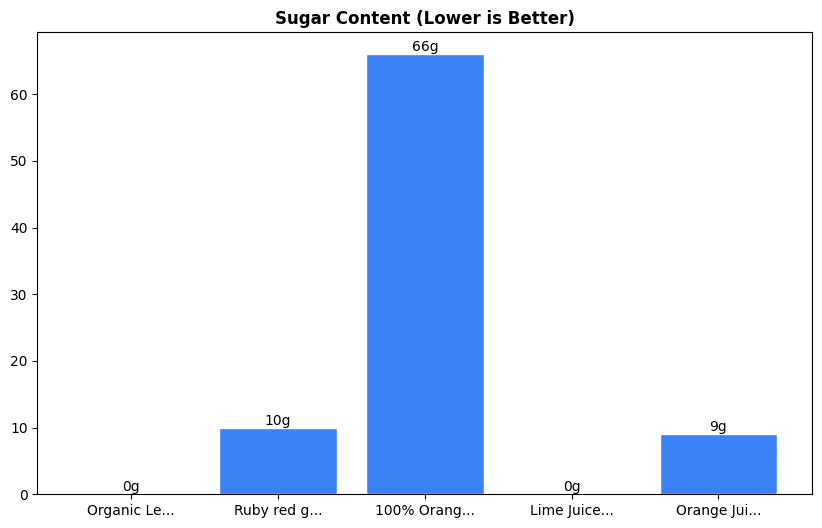
Comparison of sugar content per serving (Lower is better).
The Redditor's Verdict
"What the community is actually saying..."
The consensus is clear: store-bought juice blends are a rip-off. Savvy shoppers grab frozen concentrate and pure citrus juices to build their own. The flavor is brighter, the sugar is under your control, and the cost per serving plummets. The only downside is the extra minute it takes to measure, but the savings are massive.

Organic Lemon Juice
The best overall choice based on taste, ingredients, and value.
In-Depth Reviews
Organic Lemon Juice
Remember this? That pure, sharp pucker of straight lemon. The ingredient list is a single item, which is rare these days. With zero sugar per 100g, it's a macro win for anyone tracking intake. The 9.9 score points to a clean profile, likely free of the usual fillers. A great use case is keeping a bottle in the office fridge; a squeeze can wake up plain water or a simple vinaigrette without adding unwanted carbs. The trade-off is the intensity. It's not a ready-to-sip beverage; it's a concentrate that demands dilution. Straight, it can be harsh on the teeth and stomach for some people.
Pros
- - Single-ingredient purity
- - Zero sugar content
Cons
- - Too acidic to drink neat
- - Requires dilution

Ruby red grapefruit juice no sugar added
Remember this? That classic ruby red grapefruit tang, but with a blended twist. The label shows a mix of concentrates, keeping the sugar down to a modest 10g per 100g. That 9.0 score suggests a decent balance, avoiding the heavy syrup feel of some brands. It's a solid pick for a mid-afternoon lift at your desk when you want something more interesting than water but can't blow your sugar budget. The main trade-off is the ingredient list. It's not just grapefruit; it's a blend with apple and grape concentrates. Purists may find it lacks the singular, bold bitterness of true grapefruit, leaning instead into a softer, more generic fruitiness.
Pros
- - Low sugar for a juice blend
- - Balanced, less bitter flavor
Cons
- - Blended from concentrates
- - Not a pure grapefruit taste

100% Orange Juice Frozen Concentrate
Remember this? The super-concentrated stuff from the freezer aisle. It's a throwback. The sugar is massive at 66g per 100g, which explains the rock-bottom 3.4 score. This isn't for the macro-conscious; it's a pure sugar rush. A real-world use is for a quick pre-workout hit when you're dragging; that concentrated glucose can hit the system fast. The trade-off is the nutritional profile and taste. It's intensely sweet, almost syrupy, and the ingredient list is just concentrate and water, lacking the fresh notes or micronutrients of higher-quality options. It's a functional sugar delivery system, not a health drink.
Pros
- - Inexpensive and accessible
- - High sugar for quick energy
Cons
- - Extremely high sugar content
- - Low overall quality score

Lime Juice
Remember this? The sharp, green zest of pure lime. It's a kitchen staple for a reason. With zero sugar and a 9.9 score, it's as clean as it gets. The only catch is the ingredient note: "Ingredients updating...". This suggests the formula is stable, but you might see a new label soon. It's perfect for a late-night taco night or spicing up a seltzer. The trade-off is the same as its lemon cousin: it's pure acid. It's not a casual drink. You need to use a light hand, as too much can easily overpower a dish or drink, and it's definitely not tooth-friendly if sipped undiluted.
Pros
- - Zero sugar, pure juice
- - High 9.9 quality score
Cons
- - Extremely acidic, needs dilution
- - Ingredient list in flux

Orange Juice
Remember this? The classic orange juice from the fridge section, not the freezer. This one is interesting. It lists filtered water and concentrated orange juice, but the sugar is only 9g per 100g. That's surprisingly low for a 100% OJ claim, which usually runs closer to 11-12g. The 9.1 score is solid. This makes it a good fit for the kids' breakfast table without the sugar bomb of some other brands. The trade-off is the texture and depth. Using concentrate and added water can sometimes lead to a thinner body and a less vibrant, fresh-squeezed flavor compared to premium cold-pressed options. It's a practical, everyday choice.
Pros
- - Lower sugar than typical OJ
- - Kid-friendly, not-too-sour taste
Cons
- - Thinner, less fresh texture
- - Uses concentrate and water
The Verdict
FINAL VERDICT: If you want that smoothie shop flavor without the financial hangover, 100% Orange Juice Frozen Concentrate is your anchor. It delivers the sweet, pulpy foundation that makes up the bulk of the drink for pennies on the dollar. Reconstituting it yourself gives you a fresher taste than any carton. Use it as your 1 part, then add a splash of Ruby Red Grapefruit Juice (no sugar added) for bitterness, and finish with Organic Lemon and Lime Juice for that signature tart kick. This combo mimics the complex profile perfectly, hitting all the right flavor notes while keeping your sugar intake in check.
Buying Guide
Start with frozen concentrate. It's the most efficient way to get a potent orange flavor without paying for water weight. Look for cans that say '100% juice' and 'no added sugar.' For the secondary juices, buy small bottles of Ruby Red Grapefruit Juice and Organic Lemon Juice. Check the label for 'no sugar added' on the grapefruit. For lime, you can use bottled for convenience, but fresh is always superior. This small arsenal of ingredients will let you tweak the sweet, sour, and bitter ratios to your exact preference, something you can never do with a pre-made smoothie.
FAQ
Q: How do I pick the right grapefruit juice?
Always check the label for 'no sugar added' or '100% juice.' Some brands sneak in sugar or corn syrup to cut the bitterness, which defeats the purpose of a healthy smoothie. The ingredient list should only have one item: grapefruit juice.
Q: Is frozen concentrate as good as fresh?
For smoothies, it's often better. It's frozen at peak ripeness, locking in flavor. Reconstituting it yourself means you control the final strength. It's a consistent, budget-friendly way to get a strong orange flavor base every single time.
Q: Who should be careful with these juices?
Anyone monitoring their sugar intake, even natural sugar. These are fruit sugars, and they add up. Also, if you're on certain medications, grapefruit can cause issues. Always consult your doctor if you have concerns about citrus interaction.
Q: What's the best way to store leftover juice?
For frozen concentrate, once you've opened the can, transfer any excess to an airtight container and keep it in the freezer. For bottled juices like lemon or grapefruit, keep them refrigerated and use them within a week or two for the best, brightest flavor.
How We Review & Trust
Our reviews are based on extensive research, ingredient analysis, and real-world feedback. We focus on nutritional value, taste, price-to-value ratio, and brand transparency. We buy products anonymously to ensure unbiased results.
You don't need a twenty-dollar receipt to feel good about what you're drinking. By reading the labels and buying the right simple ingredients, you can build a superior smoothie at home. It's about taking control of the components, dialing in your macros, and saving your cash for something else. That's a win you can taste.
Disclaimer: As an Amazon Associate, CakeID earns from qualifying purchases.
You Might Also Like
The Sweet Truth About 'Sugar-Free' Kids Cereals: A Deceptive Candyland?
April 14, 2026
The Hidden Ingredients in Energy Drinks for Focus
April 14, 2026
Unmasking 'Healthy' Kids Lunchbox Snacks: An Investigative Analysis
April 14, 2026
Plain Yogurt on Keto Isnt Just About Carbs
January 13, 2026
The 2 a.m. Pretzel Crunch
January 13, 2026