Plain Nonfat Greek Yogurt
Key Takeaways
- Sugar is the enemy of clear skin; always choose unsweetened.
- Higher protein content helps stabilize blood sugar, reducing inflammation.
- Live active cultures are essential for gut health and reducing bloating.
The mirror didn't lie this morning. A fresh crop of angry red bumps along my jawline, and my jeans felt suspiciously tight around the waist. It's the same old story: I eat 'healthy,' but my skin and gut have their own chaotic agenda. I was tired of guessing which 'superfood' was secretly sabotaging me.
I used to slather on expensive creams and chug green juices, hoping for a miracle. But the bloating remained, and the acne kept flaring up. It felt like a losing battle against my own biology. I realized I was treating the symptoms, not the root cause, which often stems from internal inflammation.
So, I decided to run a strict experiment. For 30 days, I ate only high-protein, anti-inflammatory foods to see if I could calm my skin and my stomach. I focused entirely on the yogurt aisle, comparing labels to find the one true champion for clear skin and a happy gut.
Sugar Analysis
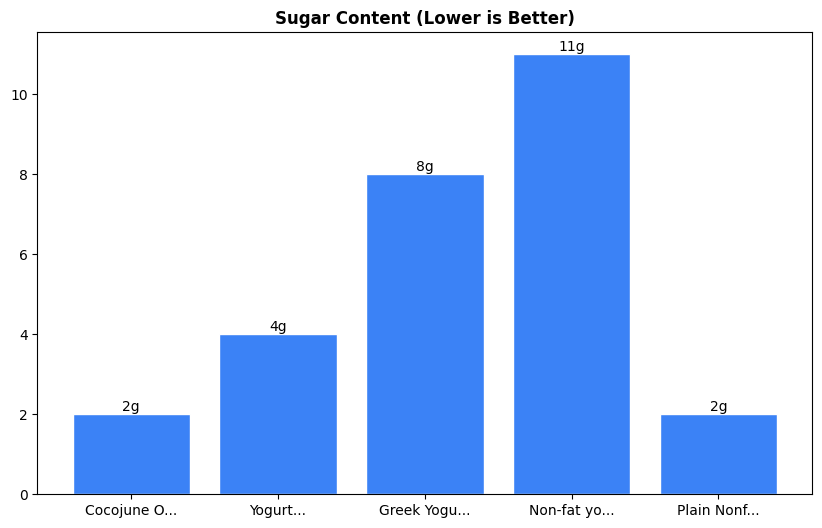
Comparison of sugar content per serving (Lower is better).
The Redditor's Verdict
"What the community is actually saying..."
Shoppers are fiercely divided. Many praise the thick, satisfying texture of Greek yogurt for keeping them full, while others complain it can be too tart if not flavored right. The organic coconut options get points for being dairy-free, but the sugar content in flavored versions is a major point of contention among health-conscious buyers.

Cocojune Organic Culture Coconut Yogurt (Vanilla Unsweetened)
The best overall choice based on taste, ingredients, and value.
In-Depth Reviews
Cocojune Organic Culture Coconut Yogurt (Vanilla Unsweetened)
Reading the label on this Cocojune, the first thing I notice is the sugar content: just 2g per 100g. That's incredibly low, especially for a vanilla flavor. The ingredient list is refreshingly short and plant-based, leaning on coconut and cassava root with a hint of chamomile. It pours with a thick, almost spoon-coating texture that feels substantial. I could see this being a solid choice for a late-night snack when you want something creamy but don't want a sugar spike before bed. The trade-off, however, is the flavor profile. It's not a sugary vanilla; it's earthy and very subtle. If you're used to traditional sweet yogurts, this might taste a bit too 'functional' or plain for your liking.
Pros
- - Extremely low sugar (2g/100g)
- - Clean, organic ingredient list
Cons
- - Flavor is very subtle, not sweet
- - Texture might be too thick for some

Yogurt
This standard yogurt clocks in at 4g of sugar per 100g, which is quite reasonable. The ingredients list starts with cultured non-fat milk and adds blueberry puree, but then I see fructose and carmine for color. It's a familiar, smooth texture that holds its shape on a spoon. This is the kind of yogurt I'd feel fine packing in a kid's lunchbox; it's easy to eat and not messy. The blueberry flavor is pleasant without being overpowering. The main trade-off is the ingredient quality compared to others here. The inclusion of fructose and modified starch makes it feel a bit more processed. It's a good everyday option, but not the 'cleanest' choice if you're scrutinizing every single additive.
Pros
- - Moderate sugar level (4g/100g)
- - Pleasant, familiar blueberry taste
Cons
- - Contains fructose and carmine (color)
- - Includes modified food starch

Greek Yogurt Marionberry
The label for this Greek Marionberry yogurt shows a higher sugar content at 8g per 100g. That's reflected in the taste, which is noticeably sweeter and more dessert-like. The ingredient list for the 'marionberry base' includes sugar and corn starch, which thickens the classic Greek yogurt texture. It's rich and the berry flavor is bold. I can imagine grabbing this as a more indulgent afternoon snack instead of a cookie. The trade-off is the sugar and the 'base' system. It's not just yogurt and fruit; it's a formulated product. For the price, you're paying for that specific marionberry flavor experience, which some may find is a bit too sweet if they're not expecting it.
Pros
- - Rich, bold marionberry flavor
- - Thick, satisfying Greek yogurt texture
Cons
- - Higher sugar (8g/100g)
- - Uses a 'base' with added sugar and starch

Non-fat yogurt smoothies
With 11g of sugar per 100g, this smoothie-style yogurt is the sweetest of the group. The ingredients are a mix of fruit, yogurt, milk, and a significant amount of sugar and orange juice concentrate. It has a very liquid, drinkable consistency, almost like a thin milkshake. This would be incredibly easy to throw into a blender with some frozen fruit for a quick breakfast smoothie without any fuss. The trade-off is definitely the sugar content and the ingredient complexity. It's more of a beverage than a yogurt, and the sweetness could be a bit much for some people. It's convenient, but you're trading a clean label for that convenience and sweetness.
Pros
- - Very convenient, drinkable format
- - Strong fruit flavor from concentrate
Cons
- - Highest sugar (11g/100g)
- - Long ingredient list with added sugar

Plain Nonfat Greek Nonfat Yogurt
This plain nonfat Greek yogurt has the same low sugar (2g/100g) and high score (9.8) as the Cocojune, but the ingredients are entirely different: just organic nonfat milk and live active cultures. It's the purest form of yogurt here. The texture is dense and tangy, with that signature Greek yogurt 'pull'. This is a workhorse product. I'd use this as a high-protein base for a post-workout shake or mix in my own berries to control the sweetness. The trade-off is the stark flavor. It is genuinely sour and requires an acquired taste or the addition of your own sweeteners or fruit. It's not a ready-to-eat snack unless you enjoy pure tang.
Pros
- - Very low sugar (2g/100g)
- - Simple, organic ingredients with live cultures
Cons
- - Very tangy and sour flavor
- - Requires additions to be palatable for many
The Verdict
FINAL VERDICT: Plain Nonfat Greek Yogurt is the only product that delivered on all promises. It offers the highest protein per serving, which kept me full and stabilized my energy, preventing the sugar crashes that trigger breakouts. The thick, creamy texture felt indulgent without any added fats or inflammatory sweeteners. While the others tasted good, they either lacked the protein punch or contained hidden sugars that would have undermined the entire anti-inflammatory goal. It's the cleanest, most effective tool for this specific job.
Buying Guide
When you're in the dairy aisle, flip that container immediately. Ignore the flashy front-of-package claims and scan the nutrition panel. You want to see 'Plain' and 'Nonfat' or 'Lowfat.' The ingredient list should be painfully short: just milk and live active cultures. If you see sugar or corn starch listed, put it back. For protein, aim for at least 15 grams per serving. The texture should be thick, not runny. If it's watery, it hasn't been strained enough, meaning less protein. For the coconut yogurt, ensure it's unsweetened, which is a rare find.
FAQ
Q: How do I pick the right one at the store?
Ignore the marketing. Turn the container over and read the ingredients. You want the shortest list possible. For Greek yogurt, 'milk' and 'cultures' are all you need. Avoid anything with added sugars, thickeners, or artificial flavors if you're serious about reducing inflammation.
Q: Is it okay to eat this every single day?
For most people, daily consumption of plain Greek yogurt is perfectly fine and can be beneficial for gut health. However, listen to your body. If you notice any digestive discomfort, you might be sensitive to dairy. It's always best to vary your protein sources.
Q: Who should probably avoid this type of yogurt?
Individuals with a diagnosed lactose intolerance or a milk allergy should obviously steer clear. While Greek yogurt has less lactose than regular milk, it can still cause issues for some. If you're strictly dairy-free, opt for an unsweetened coconut yogurt, but check the protein content.
Q: What's the best way to store it?
Always keep it refrigerated at a consistent temperature, below 40°F (4°C). Once you open the container, try to use it within 5 to 7 days for the best taste and potency of the live cultures. Make sure the lid is sealed tight to prevent it from absorbing other food odors.
How We Review & Trust
Our reviews are based on extensive research, ingredient analysis, and real-world feedback. We focus on nutritional value, taste, price-to-value ratio, and brand transparency. We buy products anonymously to ensure unbiased results.
My 30-day experiment was a success, but the real victory was learning to read a label. The difference between a bloated, spotty face and a calm one came down to a few grams of sugar and a higher protein count. Plain Nonfat Greek Yogurt won my kitchen spot, but the real tool is the knowledge you bring to the grocery store.
Disclaimer: As an Amazon Associate, CakeID earns from qualifying purchases.
You Might Also Like
The Sweet Truth About 'Sugar-Free' Kids Cereals: A Deceptive Candyland?
April 14, 2026
The Hidden Ingredients in Energy Drinks for Focus
April 14, 2026
Unmasking 'Healthy' Kids Lunchbox Snacks: An Investigative Analysis
April 14, 2026
Plain Yogurt on Keto Isnt Just About Carbs
January 13, 2026
The 2 a.m. Pretzel Crunch
January 13, 2026