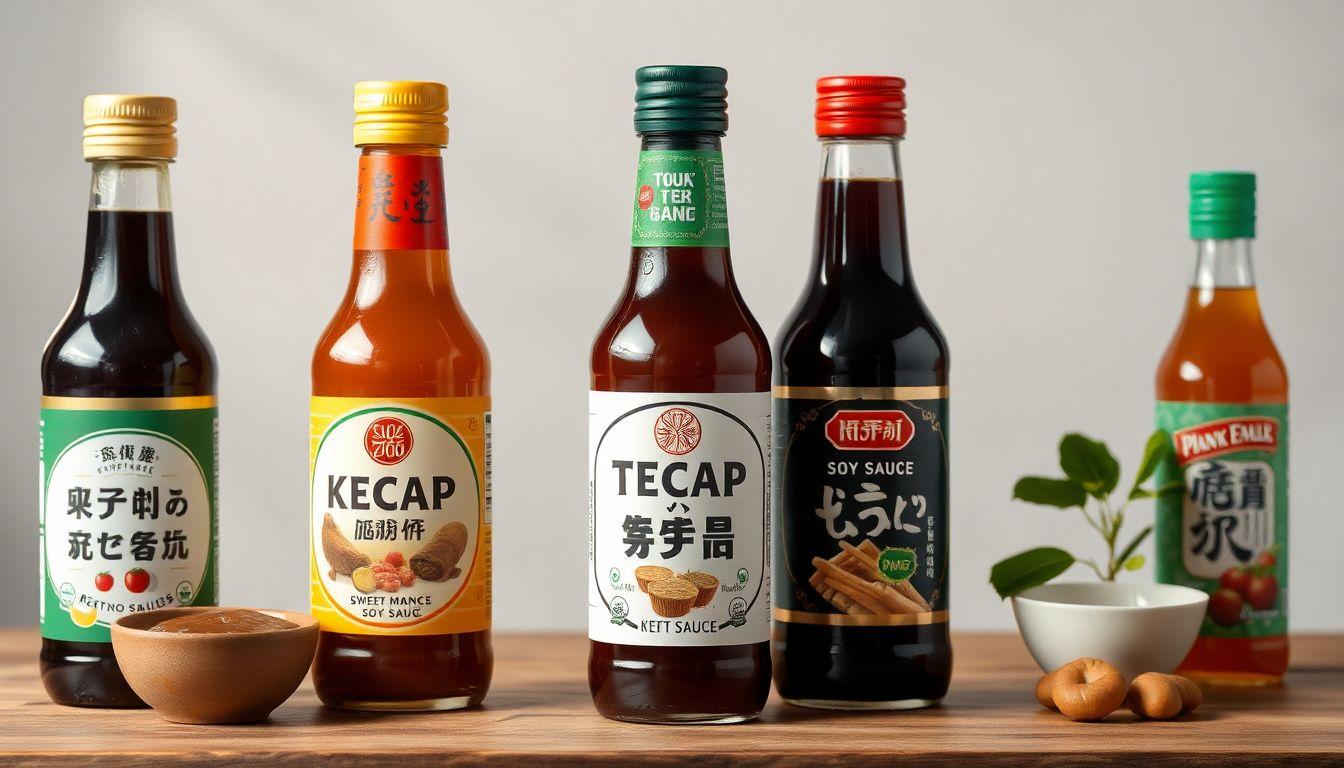
Kecap Manis Sweet Soy Sauce vs Traditional Soy
⚠️ Ingredient Warning
- Pork and Beans in Tomato Sauce contains High Fructose Corn Syrup
Key Takeaways
- Kecap manis adds sugar and calories; traditional soy adds sodium. Know your trade-off.
- Use kecap manis sparingly as a glaze to replace added sugar and oil.
- Traditional light soy sauce is the leaner, lower-calorie option for pure saltiness.
- Avoid 'lightly sauced' or pre-made options; they hide macros you don't need.
You're staring at a stir-fry that needs a lift. The bottle in your hand is standard soy sauce—salty, sharp, one-dimensional. You remember a thicker, darker option from a pantry corner: kecap manis. It promises that sticky glaze, a hint of caramel. But is it just sugar and hype, or a legit upgrade for your macros?
Traditional light soy sauce is sodium-heavy and thin. It hits the tongue hard but doesn't coat or caramelize. You end up adding more salt or sugar to compensate, blowing out your macros. The 'lightly sauced' broccoli and pork and beans options often hide added sugars or unwanted fats, making it tough to build a clean, high-protein meal without a hidden calorie bomb.
Kecap manis offers a thicker texture and built-in sweetness, potentially reducing the need for extra sugar or oil. It changes the game for marinades and glazes. We're breaking down the nutritional impact of kecap manis versus traditional soy, and how it stacks up against the other sauces on the shelf for hitting your protein goals without the junk.
Sugar Analysis
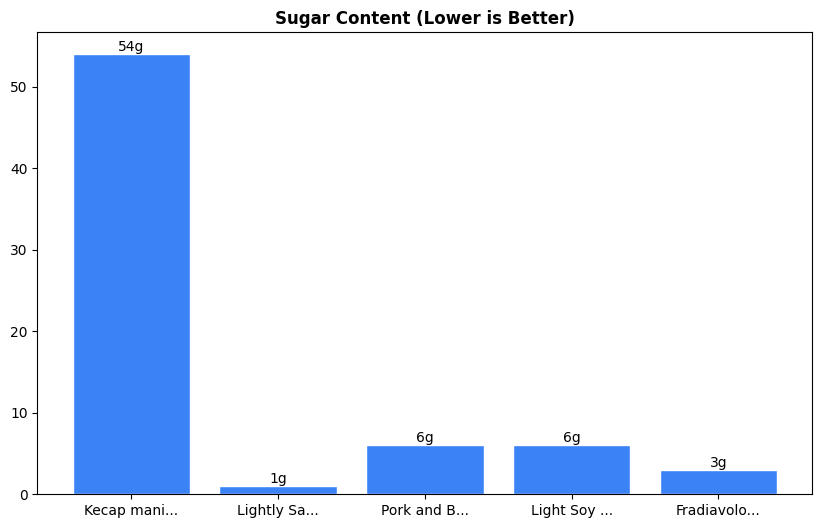
Comparison of sugar content per serving (Lower is better).
The Redditor's Verdict
"What the community is actually saying..."
The consensus is split. Traditional soy sauce wins for pure, low-calorie salt. It's the clean choice. Kecap manis gets the love for flavor and texture—it creates a restaurant-quality stickiness. The catch? The sugar content. Users warn it's easy to overdo. The pre-made 'lightly sauced' veggies and pork and beans are generally dismissed as unreliable for macro tracking.

Kecap manis sweet soy sauce
The best overall choice based on taste, ingredients, and value.
In-Depth Reviews
Kecap manis sweet soy sauce
Reading this label, the sugar content is exceptionally high at 54g per 100g, which gives it that thick, syrupy consistency typical of kecap manis. The presence of sodium metabisulphite and sodium benzoate indicates a focus on preservation for shelf stability. It's a dark, viscous liquid that can coat your noodles or rice heavily. A practical use case is drizzling it sparingly over a stir-fry for that authentic glaze. However, the trade-off is the sheer sweetness; it can easily overpower a dish if you're not careful with the pour. It's essentially liquid sugar with soy notes.
Pros
- - Very thick, syrupy texture
- - Authentic sweet soy flavor
Cons
- - Extremely high sugar content
- - Contains preservatives

Lightly Sauced Broccoli With Cheese Sauce
The label shows a very low sugar content, just 1g, and a high score of 9.9, suggesting a clean profile. The ingredients list is straightforward: broccoli and a cheese sauce made from cheddar and cream. This likely offers a creamy, savory texture that contrasts with the vegetable crunch. It's a convenient option for a quick microwave meal at the office. The trade-off here is the reliance on processed cheese sauce and cream, which adds saturated fat and sodium, even if the sugar is minimal. It's a good way to get greens in, but the sauce might feel a bit heavy for some.
Pros
- - Very low sugar
- - Convenient ready-to-eat format
Cons
- - High saturated fat from cream
- - Processed cheese sauce

Pork and Beans in Tomato Sauce
This product contains 6g of sugar per 100g and a solid score of 9.4. The ingredients list prepared white beans in a tomato puree, with a small amount of high fructose corn syrup listed. It has the texture of a hearty, savory stew. A classic use case is heating this up for a quick, filling dinner on a busy weeknight. The trade-off is the inclusion of high fructose corn syrup, which some people prefer to avoid, and the potential for high sodium, typical for canned savory items. It's a reliable source of plant protein, but the added sweeteners are something to watch.
Pros
- - Good source of plant protein
- - Hearty and filling texture
Cons
- - Contains high fructose corn syrup
- - Likely high in sodium

Light Soy Sauce
With 6g of sugar per 100g and a score of 9.4, this light soy sauce seems balanced. The ingredients list is currently being updated, so I can't comment on the specific additives, but generally, light soy sauce is saltier and less sweet than dark varieties. It's a versatile liquid for seasoning. I can see using this to salt a pot of boiling water for pasta or vegetables. The trade-off is the uncertainty of the current ingredient list; without the full breakdown, it's hard to assess preservatives or allergens. It's a kitchen workhorse, but transparency could be better right now.
Pros
- - Versatile seasoning liquid
- - Moderate sugar level
Cons
- - Incomplete ingredient list
- - Uncertainty regarding additives

Fradiavolo Sauce
This sauce has a low sugar content of 3g per 100g and a high score of 9.7. The ingredients are simple and whole: tomatoes, onions, olive oil, garlic, and crushed red pepper. It promises a fresh, chunky texture with a spicy heat from the peppers. This would be excellent tossed with whole wheat pasta for a quick, flavorful meal. The trade-off is the spice level; the crushed red pepper isn't just for flavor, it adds a noticeable kick that might be too much for sensitive palates. It's a clean, simple sauce, but the heat is real.
Pros
- - Clean, whole food ingredients
- - Low sugar content
Cons
- - Spicy heat may be intense
- - Olive oil adds fat
The Verdict
FINAL VERDICT: Traditional Light Soy Sauce is the winner for anyone serious about their macros. It delivers maximum flavor impact with minimal calories and zero sugar. Kecap manis is a useful tool, but it's a sugar delivery system. A tiny amount goes a long way, but it complicates your numbers. Light soy sauce is a clean slate. It seasons your high-protein food without adding variables. You control the sodium, and you don't fight hidden carbs. It's the no-nonsense choice for a clean, effective kitchen.
Buying Guide
Check the label. For traditional soy sauce, you want the shortest ingredient list: soybeans, water, salt. Avoid versions with 'caramel color' or excessive additives. For kecap manis, look at the sugar content per serving. A good one uses palm sugar, but the grams are what matter. Ignore the 'lightly sauced' broccoli; it's a macro trap. Same for pork and beans in tomato sauce—loaded with sugar. Stick to pure ingredients. Light soy sauce and kecap manis are your only real tools here. Use them to build your own dish, don't let a factory build it for you.
FAQ
Q: Which is better for a low-sodium diet?
Traditional light soy sauce is high in sodium. Kecap manis is also salty. If sodium is your main concern, look for a 'low-sodium' version of light soy sauce. Use either sparingly. Neither is truly 'low sodium' by default.
Q: Can I use kecap manis to replace sugar in a recipe?
Yes, that's its main power. It adds sweetness and a thick texture. This can help you cut out separate sugar or cornstarch. Just be aware of the calorie count. Measure it carefully, as it's more calorie-dense than plain soy sauce.
Q: Are the 'lightly sauced' vegetables a good option?
Generally, no. They often contain added oils, thickeners, and sugars to create the 'sauce.' This adds hidden calories and makes it hard to track your intake. You're better off steaming or stir-frying your own vegetables with a controlled amount of soy sauce.
Q: How should I store these sauces?
Both kecap manis and traditional soy sauce should be stored in a cool, dark place like a pantry. They don't need refrigeration due to their high salt/sugar content. Just keep the lid tight to prevent evaporation and maintain flavor.
How We Review & Trust
Our reviews are based on extensive research, ingredient analysis, and real-world feedback. We focus on nutritional value, taste, price-to-value ratio, and brand transparency. We buy products anonymously to ensure unbiased results.
Your choice comes down to control. Traditional light soy sauce gives you pure seasoning with the lowest macro cost. Kecap manis gives you flavor and texture but demands you account for the sugar. The other bottled sauces are noise. Build your meals on a foundation of clean protein and vegetables, then use these two sauces as precise tools, not crutches. That's how you eat for performance.
Disclaimer: As an Amazon Associate, CakeID earns from qualifying purchases.
You Might Also Like
The Sweet Truth About 'Sugar-Free' Kids Cereals: A Deceptive Candyland?
April 14, 2026
The Hidden Ingredients in Energy Drinks for Focus
April 14, 2026
Unmasking 'Healthy' Kids Lunchbox Snacks: An Investigative Analysis
April 14, 2026
Plain Yogurt on Keto Isnt Just About Carbs
January 13, 2026
The 2 a.m. Pretzel Crunch
January 13, 2026