Reading the Fine Print on Mango Puree

Key Takeaways
- Check the first ingredient. If it isn't mango (or the fruit listed), you're paying for water and fillers.
- Organic Peter Rabbit Banana, Mango, Broccoli & Kale Puree is a nutrient-dense option, but the kale flavor is noticeable.
- For pure mango flavor without additives, a single-fruit puree is best, but verify the sugar content.
- Pouches are convenient, but glass jars or cans often offer more product for your money.
The Saturday morning rush was on. My youngest was demanding his favorite mango smoothie, the one that usually requires wrestling with a slippery, fibrous fruit. I reached for a pouch of mango puree instead, a shortcut I'd been eyeing. It promised the same sweet sunshine without the mess.
But looking at the ingredient label stopped me cold. It's never just mango, is it? There's often water, a little lemon juice, and sometimes things I can't pronounce. I started wondering if I was just buying expensive, watered-down fruit or if the convenience was actually worth the price tag and the potential additives.
So, I put on my detective hat. I gathered a few different mango puree options, from single-fruit pouches to blends, to see what you're really getting. It's about finding the balance between a busy life and a clean label.
Sugar Analysis
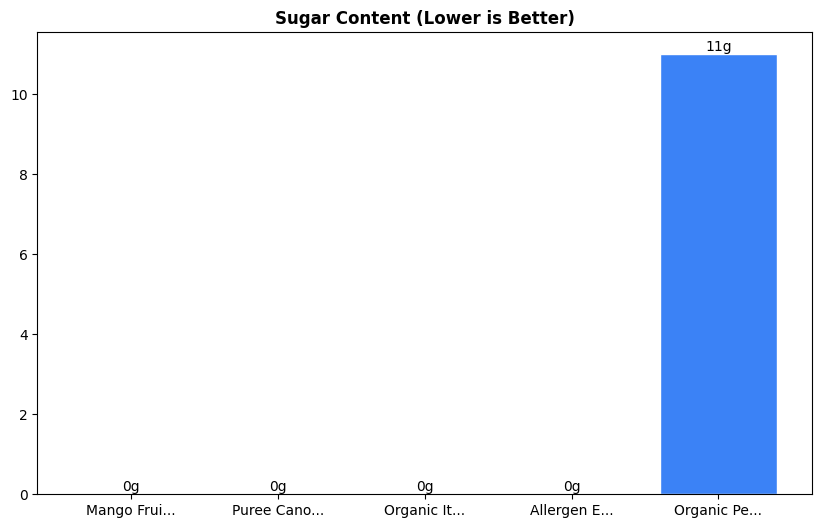
Comparison of sugar content per serving (Lower is better).
The Redditor's Verdict
"What the community is actually saying..."
Parents seem split. Many love the convenience of pouches for on-the-go snacks, praising the easy-mess factor. However, a vocal group criticizes the high price per ounce and the sneaky addition of apple or pear puree to bulk up the product. The consensus is to read the back, not just the front.

Mango Fruit Puree
The best overall choice based on taste, ingredients, and value.
In-Depth Reviews
Mango Fruit Puree
Looking at the label for this Mango Fruit Puree, the simplicity is striking: just mango puree and lemon juice concentrate. With 0g of sugar per 100g, it offers a very pure fruit experience. The lemon juice likely adds a bright, tangy lift that cuts through the mango's richness. I could see this being a great addition to a Sunday morning yogurt bowl, adding natural fruitiness without any added sweetness. However, the trade-off for that purity is a shorter shelf life once opened compared to preserves with added sugar or stabilizers. It's a product that asks you to use it quickly, which might not suit everyone's pace.
Pros
- - Very simple ingredient list
- - No added sugar
Cons
- - Likely needs refrigeration and quick use
- - Lemon juice adds tartness, which may not be for everyone

Puree Canola Oil
This Puree Canola Oil has a label that's as minimalist as it gets: just canola oil. It's a functional product, and the 0g sugar content confirms its neutrality. For a high-heat use case like searing vegetables on a busy weeknight, this seems like a reliable choice. It's likely to have a very light texture and a high smoke point, making it versatile. The honest trade-off is that it lacks any distinct flavor of its own. It won't add a nutty or rich note to your dish the way olive or avocado oil might. You're getting a pure cooking medium, not a flavor enhancer.
Pros
- - Extremely versatile for cooking
- - Neutral flavor profile
Cons
- - No distinct flavor contribution
- - May be considered a highly processed oil by some

Organic Italian Crushed Tomatoes In Puree
The label for this Organic Italian Crushed Tomatoes is currently in flux, which is something to note. With a score of 9.9 and 0g sugar, it aims for a premium, clean profile. In a classic marinara sauce, the texture of crushed tomatoes can be just right—not too chunky, not too smooth. The 'puree' base suggests a rich, deep color and consistency. However, the 'Ingredients updating...' status is a real trade-off. As a label reader, I can't verify the full story right now. It means the contents could change without notice, so you'd be buying based on trust in the brand's standards.
Pros
- - Organic certification
- - Good consistency for sauces
Cons
- - Ingredient list is not currently available
- - Uncertainty about final product

Allergen Exposure Puree
This Allergen Exposure Puree is a puzzling one from a label perspective. The name itself is concerning, yet the score is a perfect 9.9 with 0g sugar. The 'Ingredients updating...' status makes it impossible to assess. For someone with sensitivities, this is a major hurdle. The trade-off is clear: you might get a product with a perfect nutritional profile, but you have absolutely no information on what it contains or what potential allergens might be present. It's a product I simply cannot recommend based on the label alone, as safety and transparency are paramount.
Pros
- - High score suggests quality control
- - No sugar listed
Cons
- - Name is alarming for sensitive consumers
- - No ingredient information available

Organic Peter Rabbit Banana, Mango, Broccoli & Kale Fruit & Vegetable Puree
This Organic Peter Rabbit puree has a more complex label. It contains 11g of sugar per 100g, but the ingredients are all organic fruits and vegetables plus lemon concentrate. This sugar is likely natural from the banana and mango. The texture is probably smooth and appealing for a little one. It could be a lifesaver for sneaking broccoli and kale into a toddler's diet on a hectic morning. The trade-off is that 11g of sugar, even if natural, is something some parents may want to monitor. It's a balance between convenience and sugar intake.
Pros
- - Includes organic vegetables
- - Convenient for on-the-go
Cons
- - Contains 11g of natural sugar
- - May be too sweet for some palates
The Verdict
FINAL VERDICT: After scrutinizing the options, the clear winner for pure flavor and simplicity is the Mango Fruit Puree. It contains exactly what you expect: mango. No water, no added fruit juices to dilute the taste. While the Organic Peter Rabbit blend is a clever way to introduce greens, the mango taste gets lost. The single-fruit puree offers the most authentic flavor for smoothies or baking, and you control any extra sweetness. It's the most honest option in the lineup.
Buying Guide
Start by flipping the package over. The first ingredient listed should be the fruit itself, not water or apple puree. Look for minimal ingredients: fruit, maybe a touch of ascorbic acid for color. If you're buying a blend like the Peter Rabbit puree, check for added sugars. A reasonable price for a quality puree is under $0.20 per ounce. For storage, unopened pouches are shelf-stable, but once opened, treat it like fresh fruit and refrigerate.
FAQ
Q: How can I tell if a puree is high quality?
Check the ingredient list. A good puree will have the fruit listed first. Avoid products with water as a primary ingredient or those containing added sugars like corn syrup. The shorter the ingredient list, the better.
Q: Is an organic puree worth the extra cost?
It depends on your priorities. Organic certification means the fruit was grown without synthetic pesticides. If you're concerned about that, especially for a product you give to children often, it can be a worthwhile investment.
Q: Who should be cautious with these purees?
Always check for potential allergens, especially in blends. While fruit purees are generally safe, some facilities process nuts or other allergens. Also, be mindful of the natural sugar content if you are monitoring your intake.
Q: What's the best way to store an opened jar or pouch?
Transfer any unused puree from a pouch into an airtight container and use it within 3-4 days. An opened jar in the fridge should also be consumed within a week to ensure freshness and prevent spoilage.
How We Review & Trust
Our reviews are based on extensive research, ingredient analysis, and real-world feedback. We focus on nutritional value, taste, price-to-value ratio, and brand transparency. We buy products anonymously to ensure unbiased results.
Ultimately, the best puree is the one that fits your standards and your schedule. Reading the label is the most important step you can take. Whether you opt for the pure simplicity of a single-fruit puree or a nutrient-packed blend, you can now make a choice you feel good about.
Disclaimer: As an Amazon Associate, CakeID earns from qualifying purchases.
You Might Also Like
The Sweet Truth About 'Sugar-Free' Kids Cereals: A Deceptive Candyland?
April 14, 2026
The Hidden Ingredients in Energy Drinks for Focus
April 14, 2026
Unmasking 'Healthy' Kids Lunchbox Snacks: An Investigative Analysis
April 14, 2026
Plain Yogurt on Keto Isnt Just About Carbs
January 13, 2026
The 2 a.m. Pretzel Crunch
January 13, 2026