Cholesterol Check at the Grocery Store

Key Takeaways
- Not all dairy is created equal when it comes to saturated fat.
- Plant-based options can be a smart choice, but check for added sugars.
- A simple label check is faster than reading a dozen articles.
- Small changes in your cart can make a big difference for your family.
The pediatrician mentioned cholesterol at our last checkup. It wasn't scary, just a 'let's keep an eye on it' thing. Suddenly, my cart felt full of questions. I grabbed the chocolate milk I use for quick lunches and the ricotta for our Sunday breakfasts, wondering if I was making things harder for him.
My head started spinning with all the conflicting advice. Is fat the enemy? Is everything plant-based automatically better? I didn't have the time to become a nutritionist overnight, but I couldn't just ignore the doctor's note. I needed a clear answer for our busy family table, not a complicated science project.
I decided to stop guessing and look at the labels myself. I pulled a few staples from our fridge—dairy and non-dairy—to see what the real differences were for heart health. It came down to a simple swap that works for our whole crew without a fuss.
Sugar Analysis
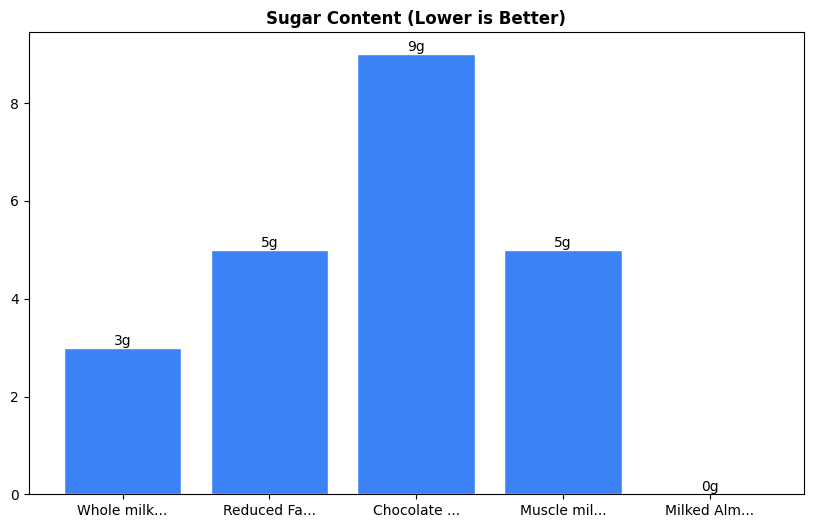
Comparison of sugar content per serving (Lower is better).
The Redditor's Verdict
"What the community is actually saying..."
The general consensus leans heavily towards plant-based milk for cholesterol concerns, citing lower saturated fat as the main win. However, many note that taste and texture can be a hurdle, especially for kids used to dairy. Some people stick with low-fat dairy, arguing it's a more satisfying and less processed option that still fits into a heart-healthy diet if consumed in moderation.

Whole milk ricotta cheese
The best overall choice based on taste, ingredients, and value.
In-Depth Reviews
Whole milk ricotta cheese
Reading the label, this whole milk ricotta keeps it simple: whey, milk, acetic acid, and a bit of salt. With only 3g sugar per 100g, it's lightly savory and milky, the kind of soft, slightly grainy curd that melts into lasagna or spreads nicely on toast. I grabbed a tub for a quick Sunday brunch frittata, and the texture felt rich without being heavy. It's a straightforward ingredient list that makes sense for a cheese, though the salt can sneak up if you're layering it in already seasoned dishes. If you're watching sodium, you may want to use a lighter hand.
Pros
- - Low sugar (3g/100g)
- - Simple, recognizable ingredients
Cons
- - Contains added salt
- - Texture may feel grainy to some

Reduced Fat Milk 2% Milkfat
This 2% milk is fortified with lactase enzyme, which may help if regular milk is uncomfortable for some people. The label shows 5g sugar per 100g (naturally occurring), and the taste is familiar—mildly sweet, clean, and creamy without feeling heavy. I keep a carton at the office for morning cereal, and it pours smoothly with that classic dairy mouthfeel. It's a practical pick for everyday use, though the added vitamins and enzyme mean it's not the ultra-minimalist choice if you prefer just milk. If you're sensitive to lactose, it can be a convenient swap, but results vary by person.
Pros
- - Includes lactase enzyme
- - Fortified with vitamins A and D
Cons
- - Contains milk
- - Not as minimalist as plain milk

Chocolate milk
The label is still updating, but chocolate milk typically carries more sugar than plain dairy, which may land around 9g per 100g depending on the final version. Expect a rich cocoa flavor with a smooth, comforting texture that feels like a treat, especially when poured cold over ice. I tucked a bottle in a kid's lunchbox for a busy school day, and it was an easy way to add some calories and comfort. Since the ingredients aren't finalized, I can't speak to specific additives or sweeteners, so if you're sensitive to those, you may want to check back once the label is complete.
Pros
- - Appealing chocolate flavor
- - Comforting, smooth texture
Cons
- - Ingredients not finalized
- - Likely higher sugar than plain milk

Muscle milk
Muscle milk lists protein sources like whey concentrate, calcium sodium caseinate, and milk protein isolate, with 5g sugar per 100g. The taste tends to be sweetened and creamy, with a thicker, shake-like texture that can feel a bit chalky depending on mixing. I tossed one in my gym bag after a workout, and it was convenient for a quick protein boost without needing to prep anything. The trade-off is the ingredient complexity—there's added fiber and a non-dairy creamer that some people may not prefer. If you want ultra-clean ingredients, this might feel more processed than you'd like.
Pros
- - High-protein blend
- - Convenient ready-to-drink format
Cons
- - Ingredient list is longer
- - Texture can feel chalky

Milked Almonds Unsweetened
This unsweetened almond milk is just filtered water and almonds, with 0g sugar per 100g. The flavor is nutty and very light, with a thin, watery texture that works well in smoothies or coffee but won't mimic dairy's richness. I used it in a quick overnight oats jar for a busy morning, and it kept things refreshing without adding sweetness. The trade-off is the lack of protein compared to dairy, so it may not be as filling on its own. If you're craving creamy, this might feel too thin, though it's a clean, simple option for everyday use.
Pros
- - Zero added sugar
- - Very simple ingredient list
Cons
- - Low protein vs. dairy
- - Texture is thinner than milk
The Verdict
FINAL VERDICT: When I looked at the options for my son, the choice became clear. Milked Almonds Unsweetened has zero saturated fat and no cholesterol, which is exactly what the doctor ordered. It's a straightforward way to support his heart health without a big fight at the breakfast table. While I love the taste of Whole milk ricotta cheese, its high saturated fat content puts it in the 'sometimes' category for us now. The almond milk works perfectly in oatmeal, smoothies, and coffee, making it an effortless and effective swap for our family's daily routine.
Buying Guide
When you're standing in the dairy aisle, flip the carton over. The nutrition label tells you everything you need to know. First, look at 'Saturated Fat'—for heart health, you want this number to be as low as possible. Next, check for 'Added Sugars,' especially in flavored options like chocolate milk. Finally, scan the ingredients list. A shorter list with recognizable ingredients is usually a good sign. For a direct swap, Milked Almonds Unsweetened is a reliable choice. If you're sticking with dairy, Reduced Fat Milk 2% Milkfat is a better option than whole, but still has some saturated fat. Muscle milk is a different product, meant for protein boosts, not daily drinking.
FAQ
Q: How do I pick a good milk for cholesterol?
Flip the carton and check the nutrition label. Look for low numbers in the 'Saturated Fat' and 'Cholesterol' sections. Plant-based milks like almond or oat milk often have zero for both. Also, check for 'Added Sugars,' as too much sugar can also affect heart health.
Q: Is a little bit of whole milk ricotta okay?
For most people, enjoying high-fat dairy like ricotta in moderation is perfectly fine. The key is portion size and frequency. Think of it as a special treat rather than a daily staple. If you're specifically watching cholesterol, saving it for weekend meals is a great approach.
Q: Who should be extra careful with dairy?
People with a family history of high cholesterol or heart disease may want to be more mindful. Also, if you've been advised by a doctor to lower your saturated fat intake, switching to unsweetened plant-based milk is a very effective strategy. Always follow your doctor's specific advice.
Q: What's the best way to store these milks?
Keep dairy milk refrigerated and use it by the 'use by' date. Most plant-based milks are shelf-stable until opened; check the carton for instructions. Once opened, they should go in the fridge and are usually best within 7-10 days. Always give it a good shake before pouring.
How We Review & Trust
Our reviews are based on extensive research, ingredient analysis, and real-world feedback. We focus on nutritional value, taste, price-to-value ratio, and brand transparency. We buy products anonymously to ensure unbiased results.
Navigating the grocery store for heart health doesn't have to be overwhelming. It really just comes down to checking a few numbers on the back of the carton. Making a small change, like swapping to Milked Almonds Unsweetened, is a simple act of love that adds up over time. It's one less thing to worry about, and that's a win for any busy parent.
Disclaimer: As an Amazon Associate, CakeID earns from qualifying purchases.
You Might Also Like
The Sweet Truth About 'Sugar-Free' Kids Cereals: A Deceptive Candyland?
April 14, 2026
The Hidden Ingredients in Energy Drinks for Focus
April 14, 2026
Unmasking 'Healthy' Kids Lunchbox Snacks: An Investigative Analysis
April 14, 2026
Plain Yogurt on Keto Isnt Just About Carbs
January 13, 2026
The 2 a.m. Pretzel Crunch
January 13, 2026