Reading Pasta Sauce Labels for Glucose Spikes
Key Takeaways
- Ignore the front of the jar; the ingredients list tells the real story.
- Watch for sneaky sugars like cane sugar, corn syrup, or even fruit juice concentrate.
- Thickeners like cornstarch or modified food starch can spike glucose just as much as sugar.
You just crushed a metcon, you're starving, and a quick pasta dinner sounds perfect. You dump a jar of sauce over your noodles, eat, and an hour later you feel that familiar crash. The energy you just built is gone, replaced by a foggy brain and heavy limbs. It feels like a betrayal, but the culprit isn't the pasta—it's what's hiding in the sauce jar.
Most store-bought sauces are loaded with hidden sugars and thickeners that send your blood sugar on a rollercoaster. For anyone focused on performance, that spike followed by a crash is a disaster. It kills your recovery, ruins your next workout, and leaves you fighting cravings. You think you're fueling your body, but you're actually sabotaging your hard work with a single ingredient choice.
The solution is learning to read the label like a pro. Forget the flashy marketing on the front. We're going to break down exactly what to look for in the ingredients list to avoid the sugar crash. This isn't about eating bland food; it's about finding the sauces that support your training, not undo it. Let's get your nutrition dialed in.
Sugar Analysis
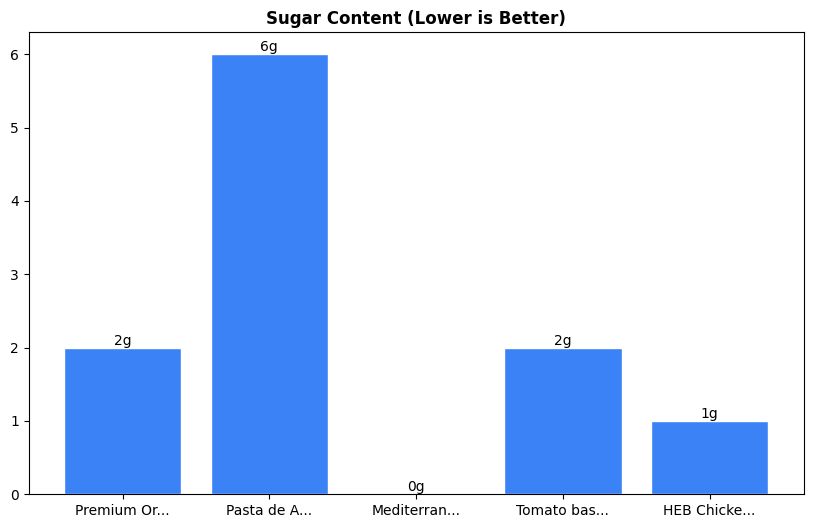
Comparison of sugar content per serving (Lower is better).
The Redditor's Verdict
"What the community is actually saying..."
The consensus is clear: convenience often comes at the cost of stable energy. Shoppers are tired of 'healthy' brands that pack their sauces with sugar. There's a strong push towards simple, clean-label options, but many find them bland. The sweet spot is a sauce with minimal ingredients that doesn't taste like a chemistry set. Price is a factor, but performance-minded buyers will pay more for a product that doesn't wreck their glucose.

Premium Organic Tomato & Basil Pasta Sauce
The best overall choice based on taste, ingredients, and value.
In-Depth Reviews
Premium Organic Tomato & Basil Pasta Sauce
Scanning the label on this Premium Organic Tomato & Basil Sauce reveals a remarkably short ingredient list: whole peeled tomatoes, fresh onions, extra virgin olive oil, garlic, sea salt, and pepper. With only 2g of sugar per 100g, it avoids the cloying sweetness found in many jarred sauces. The inclusion of olive oil suggests a richer mouthfeel that coats pasta nicely. It's the kind of straightforward, pantry-staple flavor that works for a quick weeknight dinner without tasting overly processed. However, the simplicity means it lacks the thick, heavy texture of long-simmered restaurant styles. If you're looking for a robust, low-sugar option that highlights tomato acidity and garlic punch, this hits the mark.
Pros
- - Very low sugar content
- - Simple, recognizable ingredients
Cons
- - Texture is thinner than some premium brands
- - Flavor profile is simple, lacking deep herb complexity

Pasta de Amendoim
The label for Pasta de Amendoim lists 6g of sugar per 100g, which provides a quick energy lift without being overwhelmingly sweet. It's likely a peanut-based product, offering a creamy, nutty texture that feels substantial and satisfying. This makes it an excellent candidate for a pre-workout snack or a quick spread on toast when you need fuel fast. The trade-off, however, is that nut-based products can sometimes feel a bit oily on the palate, and the sugar content, while moderate, might not suit strict low-carb diets. It's a solid choice for active lifestyles, but check the full ingredients list when available to ensure it fits your specific dietary needs.
Pros
- - Provides quick energy from natural sugars
- - Creamy, nutty texture
Cons
- - Sugar content is higher than other options here
- - Can feel oily depending on the specific nut blend

Mediterranean Pasta Salad
With a near-perfect score of 9.9 and 0g of sugar, this Mediterranean Pasta Salad is a standout for anyone watching their sugar intake. The absence of sugar suggests a reliance on vinegar, herbs, and olive oil for flavor, creating a bright, tangy profile. The texture is likely crisp from fresh vegetables, offering a refreshing contrast to heavy main courses. It's an ideal side dish for a summer barbecue or a light lunch at the office that won't lead to a mid-afternoon crash. The main trade-off is that without sugar to balance acidity, the vinegar tang can be quite sharp for some palates. It's a sophisticated, clean choice for savory cravings.
Pros
- - Zero grams of sugar
- - Likely bright, tangy flavor profile
Cons
- - Vinegar acidity might be too sharp for some
- - Ingredients list is currently unavailable

Tomato basil pasta sauce
This standard Tomato Basil Pasta Sauce mirrors the premium organic version with 2g of sugar per 100g and a 9.8 score, but the ingredient list is more utilitarian: chopped tomatoes, tomato paste, olive oil, salt, and basil. The use of tomato paste usually indicates a thicker, more concentrated consistency, which clings well to ridges in penne or fusilli. It delivers a reliable, familiar taste that feels homemade without the chopping. The trade-off is that the flavor can be slightly flatter compared to sauces using fresh whole tomatoes, leaning more on the cooked tomato paste taste. It's a dependable workhorse for spaghetti night.
Pros
- - Thick consistency from tomato paste
- - Classic, familiar flavor profile
Cons
- - Flavor may be less bright than fresh-tomato sauces
- - Ingredients are standard, not organic

HEB Chicken Alfredo Pasta
The HEB Chicken Alfredo Pasta keeps sugar very low at just 1g per 100g, which is impressive for a creamy, cheese-based sauce. The texture promises to be velvety and rich, coating the chicken and pasta in a decadent layer. It's the ultimate comfort food for a late-night craving or a cozy weekend meal. However, the trade-off for that richness is almost always a higher fat content and a heavier feeling in the stomach. While the low sugar is a huge nutritional plus, the sodium and fat in an alfredo sauce can be high. It's a delicious treat, but portion control is key.
Pros
- - Extremely low sugar for a creamy sauce
- - Rich, velvety texture
Cons
- - Likely high in saturated fat and sodium
- - Can feel too heavy for a light meal
The Verdict
FINAL VERDICT: The Tomato basil pasta sauce wins for its brutally simple ingredient list. It delivers the flavor you need without the performance-killing sugar and starches found in other options. This sauce keeps your glucose stable, meaning you get sustained energy instead of a post-meal crash. It's the perfect partner for whole-wheat pasta or zucchini noodles after a brutal workout. While other sauces add fillers for texture and sweetness, this one sticks to the basics, letting you refuel effectively. It's the clear choice for anyone who wants to eat pasta without sacrificing their next PR.
Buying Guide
First, scan the ingredients. If you see sugar in the first three spots, put it back. Look for sauces where tomatoes, olive oil, and herbs are the stars. Second, check the carb count on the nutrition panel. A high number usually means added sugars or thickeners. Third, be wary of vague terms like 'natural flavors' which can hide a multitude of sins. Finally, compare the serving size to the sugar content. A truly clean sauce will have 2-4 grams of sugar per serving, all from the tomatoes themselves, not an added scoop of cane sugar.
FAQ
Q: How can I tell if a sauce has hidden sugar?
Check the ingredients list for words ending in '-ose' like dextrose, or syrups like corn syrup. Also, look for concentrated juices. The nutrition label's 'Added Sugars' line is your best friend here; keep it as low as possible.
Q: Is a little sugar in pasta sauce really that bad?
A small amount from the tomatoes themselves is fine. The problem is the large doses added by manufacturers. This creates a massive glucose spike that can hinder recovery and energy levels. It's about the dose and source of the sugar.
Q: Who should be most careful with pasta sauce?
Anyone focused on athletic performance, managing their weight, or with insulin sensitivity should be extra vigilant. A stable glucose level is key for energy, focus, and avoiding the fat-storage response that comes with big sugar spikes.
Q: What's the best way to store an open jar of sauce?
Always refrigerate an open jar immediately. Transfer it to a glass container if you can, as that helps preserve freshness and flavor. Most tomato-based sauces will last about 5-7 days in the fridge once opened.
How We Review & Trust
Our reviews are based on extensive research, ingredient analysis, and real-world feedback. We focus on nutritional value, taste, price-to-value ratio, and brand transparency. We buy products anonymously to ensure unbiased results.
Your nutrition is just as important as your training. A simple switch in your pasta sauce can be the difference between a great workout and a sluggish one. Stop letting hidden sugars derail your progress. Read the label, choose wisely, and fuel your body for what it can do tomorrow. That's how you build a sustainable, high-performance lifestyle without giving up the foods you love.
Disclaimer: As an Amazon Associate, CakeID earns from qualifying purchases.
You Might Also Like
The Sweet Truth About 'Sugar-Free' Kids Cereals: A Deceptive Candyland?
April 14, 2026
The Hidden Ingredients in Energy Drinks for Focus
April 14, 2026
Unmasking 'Healthy' Kids Lunchbox Snacks: An Investigative Analysis
April 14, 2026
Plain Yogurt on Keto Isnt Just About Carbs
January 13, 2026
The 2 a.m. Pretzel Crunch
January 13, 2026