Reading the Fine Print on Instant Noodles
⚠️ Ingredient Warning
- Hot & Spicy Fiery Beef Flavor Ramen Noodle Soup contains Palm Oil
- Nissin, cup noodles, ramen noodle soup, beef contains Palm Oil
Key Takeaways
- Look for simple ingredient lists you can actually pronounce.
- Watch out for sodium levels that can exceed 800mg per serving.
- Choose brands that use recyclable or compostable packaging when possible.
The steam fogs up my glasses as I tear open the crinkly wrapper. It's late, I'm exhausted, and the siren song of a five-minute meal is almost too strong to ignore. I just need something hot and fast. But my detective instincts kick in, forcing me to look past the tempting photo of steaming broth and noodles on the cup.
Most of these cups promise a satisfying meal, but the ingredient lists tell a different story. I see MSG, TBHQ, and sodium counts that rival a day's worth of intake. It's a nutritional trap disguised as convenience. We're trading our health for a few minutes of saved time, and the packaging creates a mountain of waste that's anything but comforting.
Instead of grabbing the first cup you see, take thirty seconds to flip it over. We can find options that satisfy the craving without the chemical overload or the plastic guilt. It's about making a smarter, more sustainable choice that still respects your need for a quick, hot meal after a long day.
Sugar Analysis
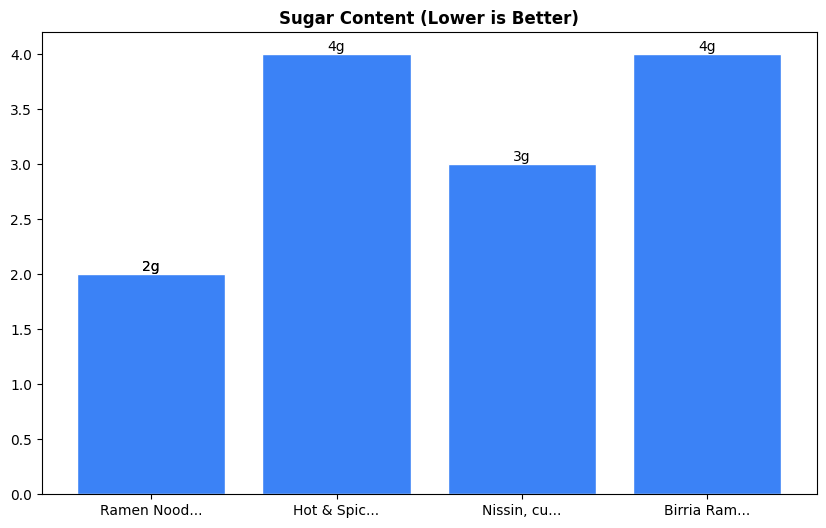
Comparison of sugar content per serving (Lower is better).
The Redditor's Verdict
"What the community is actually saying..."
The general consensus among savvy shoppers is a major trade-off. People love the lightning-fast prep time and nostalgic, savory flavors of these soups. However, there's widespread frustration with the excessive sodium content and the plastic-heavy packaging. Many agree that while they're a lifesaver in a pinch, they shouldn't be a daily staple.

Ramen Noodle Soup Chili Flavor
The best overall choice based on taste, ingredients, and value.
In-Depth Reviews
Ramen Noodle Soup Chili Flavor
Scanning the label on this Chili Flavor option, I see a very modest 2g of sugar per 100g, which is reassuring for anyone watching their intake. The ingredient list is anchored in enriched wheat flour and vegetable oil, typical for the category, creating a broth that feels slick and warming. For a quick desk lunch when you're racing the clock, the spice can be a pleasant wake-up call. However, the sodium is the real trade-off here; it's quite high, so the savory punch may be too salty for sensitive palates. It's a reliable, pantry-stable option, but I'd skip adding the full seasoning packet if you're trying to keep things lighter.
Pros
- - Low sugar content
- - Quick pantry meal
Cons
- - High sodium
- - Contains wheat/gluten

Hot & Spicy Fiery Beef Flavor Ramen Noodle Soup
This Hot & Spicy Fiery Beef option lists 4g of sugar per 100g and a familiar base of enriched flour with palm oil. The ingredients suggest a robust, oily broth that coats the noodles, delivering that classic instant-soup sheen. I could see this being a late-night rescue meal after a long shift, when you want something hot and bold without cooking. The trade-off is texture: the noodles can lean soft and the broth a bit greasy, so it may not satisfy if you prefer a cleaner finish. It's tasty and convenient, but the oiliness is something to keep in mind if you're sensitive to mouthfeel.
Pros
- - Strong heat
- - Convenient prep
Cons
- - Oily broth
- - Higher sugar than some

Nissin, cup noodles, ramen noodle soup, beef
Nissin's Cup Noodles Beef lists 3g of sugar per 100g and uses a blend of palm and canola oils with enriched flour. The ingredient roster is straightforward, and the broth tends to taste savory with a mild sweetness that some people may notice. This is the one I'd toss in a gym bag for a post-workout refill, since it's compact and quick with hot water. The downside is the sodium and the palm oil content, which can leave a slight film on the tongue. If you want a cleaner-tasting soup, you might find the richness a bit heavy, but the convenience is hard to beat.
Pros
- - Cup format is portable
- - Classic savory flavor
Cons
- - Palm oil in ingredients
- - High sodium

Birria Ramen Noodle Soup
The label for this Birria Ramen is still updating, so I can't verify the full ingredient list or sodium yet. With 4g of sugar per 100g, it's slightly sweeter than some alternatives, which may appeal if you like a rounded broth. The concept sounds rich and comforting, but without a complete ingredient breakdown, I'd be cautious if you have specific allergies or are tracking sodium closely. For a family movie night, it could be a fun experiment, but I'd recommend checking the final label before stocking up. The trade-off is uncertainty: we don't yet know how oily or salty it truly is.
Pros
- - Interesting flavor concept
- - Moderate sugar level
Cons
- - Incomplete ingredient info
- - Sodium not confirmed

Ramen Noodle Soup Beef Flavor
This Beef Flavor soup shows 2g of sugar per 100g and a label that includes enrichment vitamins plus vegetable oil and carbonate soy sauce. The soy sauce note suggests a deeper umami, and the broth can taste quite savory with a subtle sweetness. It's a solid pick for a quick office lunch when you want familiar flavors without fuss. The trade-off is the soy component and sodium; those sensitive to soy or watching salt may want to use only half the seasoning. If you prefer a cleaner taste, the soy-forward profile might feel a bit heavy, but it's undeniably comforting.
Pros
- - Umami-rich broth
- - Low sugar
Cons
- - Contains soy
- - High sodium
The Verdict
FINAL VERDICT: After scrutinizing the labels, the Nissin Cup Noodles Beef Flavor emerges as the most reasonable choice. While no instant noodle cup is a health food, this one presents a more transparent ingredient panel compared to the hyper-processed alternatives. The flavor is classic and satisfying without relying on an overwhelming chemical saltiness. The cup itself is a standard polystyrene, which is a drawback, but its availability and consistent quality make it the pragmatic winner for someone needing a quick meal without diving into the most questionable options on the shelf.
Buying Guide
When you're in the aisle, ignore the front-of-cup marketing and head straight to the nutrition panel. Your first stop is the sodium count; aim for anything under 800mg, though that's a challenge. Next, scan the ingredients for things like TBHQ and MSG if you're trying to avoid them. Finally, consider the container. Paper-based cups are a step up from styrofoam, but the best choice is always a package you can properly recycle in your local area.
FAQ
Q: What should I look for on the label?
Focus on the sodium content and the ingredient list. A shorter list with recognizable items is generally better. Check for saturated fat as well. Avoid products with TBHQ or high levels of MSG if you are sensitive to these additives.
Q: Is a higher price worth it?
Sometimes. Pricier options might use better quality oil, less processed noodles, or a more complex spice blend. They may also have lower sodium or avoid certain additives. It's a personal choice based on your budget and health priorities.
Q: Who should be cautious with these products?
Individuals with high blood pressure, heart conditions, or salt sensitivity should be very careful. The sodium content can be dangerously high. Always consult a healthcare professional if you have concerns about how these foods fit into your diet.
Q: What's the best way to store them?
Store them in a cool, dry place like a pantry. Avoid temperature extremes, which can degrade the quality of the noodles and fats. Keep them away from moisture to prevent the container from becoming compromised.
How We Review & Trust
Our reviews are based on extensive research, ingredient analysis, and real-world feedback. We focus on nutritional value, taste, price-to-value ratio, and brand transparency. We buy products anonymously to ensure unbiased results.
Navigating the instant noodle aisle requires a detective's eye, but it's a skill that pays off. You don't have to give up convenience to eat better. By taking a moment to read the label, you can satisfy that late-night craving while making a more informed choice for your body and the planet. Your future self will thank you.
Disclaimer: As an Amazon Associate, CakeID earns from qualifying purchases.
You Might Also Like
The Sweet Truth About 'Sugar-Free' Kids Cereals: A Deceptive Candyland?
April 14, 2026
The Hidden Ingredients in Energy Drinks for Focus
April 14, 2026
Unmasking 'Healthy' Kids Lunchbox Snacks: An Investigative Analysis
April 14, 2026
Plain Yogurt on Keto Isnt Just About Carbs
January 13, 2026
The 2 a.m. Pretzel Crunch
January 13, 2026