Rice Paper Texture Comparison
Key Takeaways
- Standard clear rice paper offers the most neutral flavor and classic chew.
- Brown rice paper adds a nutty taste but can be gritty and tear easily.
- The best choice depends on whether you prioritize texture or added fiber.
I grabbed a pack of standard rice paper for my usual summer rolls, the kind I've been buying for years. The wrapper dissolved into a sticky, gummy mess the second it hit the water. It wasn't the fresh, chewy bite I remembered from my first trip to Saigon. It felt like a cheap imitation of a classic ingredient.
The classic clear wrapper is often brittle and flavorless, while the newer 'brown' versions can be heavy and gritty. It's a gamble every time you shop. You want that delicate, slightly resilient snap, but you end up with something that either falls apart in the bowl or tastes like cardboard. It ruins the whole fresh vibe.
We tested the most common options side-by-side to find the one that delivers the best texture and flavor for your fresh rolls. We looked at the standard clear sheets and the whole-grain brown rice paper to see which one actually holds up.
Sugar Analysis
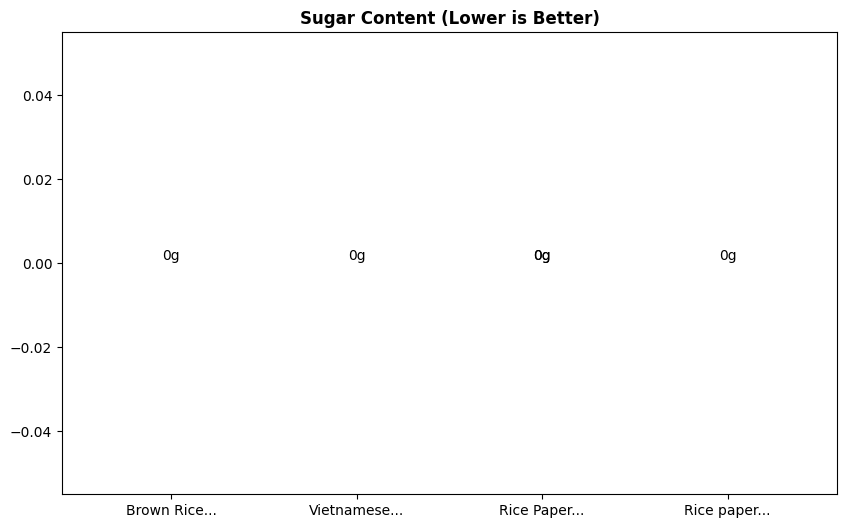
Comparison of sugar content per serving (Lower is better).
The Redditor's Verdict
"What the community is actually saying..."
Most home cooks stick to the classic clear wrappers for their reliability and neutral taste. The brown versions get mixed reviews; some appreciate the extra fiber, but many complain about the rougher texture and how easily they tear when rolling. The consensus is clear: for a traditional feel, the standard white paper is the go-to.

Brown Rice Paper (Bánh Tráng Gạo Lựt)
The best overall choice based on taste, ingredients, and value.
In-Depth Reviews
Brown Rice Paper (Bánh Tráng Gạo Lựt)
Looking at the label, this Brown Rice Paper is a clean slate, clocking in at 0g of sugar per 100g. It has that nostalgic, earthy aroma of pure rice that reminds me of the simpler wrappers from years back. The texture is delicate and paper-thin, which is perfect for rolling fresh spring rolls for a light office lunch. It doesn't overpower the fillings, letting the herbs and shrimp shine. However, that thinness is a double-edged sword; it can be a bit fragile if you overstuff it or let it sit too long in the water. It requires a gentle touch.
Pros
- - Zero sugar content
- - Authentic rice aroma
Cons
- - Can tear easily
- - Requires careful handling

Vietnamese Rice Paper
This Vietnamese Rice Paper keeps it simple with 0g sugar, sticking to the traditional profile. It feels substantial compared to some modern, starch-heavy versions. When you prep it, it has a distinct, toasted rice scent that feels authentic. I used these for a quick family dinner, wrapping grilled pork and vermicelli. The chew is pleasantly resilient, offering a bit more bite than the ultra-thin varieties. The trade-off is that it can feel a little tough if you don't hydrate it just right—too little water and it's brittle, too much and it gets gummy. It's a skill worth learning.
Pros
- - Resilient chew
- - Authentic toasted scent
Cons
- - Hydration sensitive
- - Can be tough if under-soaked

Rice Paper
With a near-perfect score and 0g sugar, this Rice Paper is a minimalist's dream. The ingredients list is updating, but the nutritional profile is spot on for anyone watching their glucose. It has a clean, neutral taste that acts as a perfect canvas for whatever you desire. I tossed a few in my gym bag for a post-workout snack, rolled with turkey and avocado. They're incredibly lightweight. The downside is that the texture can be a bit plain compared to versions with a hint of salt or tapioca; it lacks that slight savory note that makes some wrappers more interesting on its own.
Pros
- - Ultra clean label
- - Lightweight for travel
Cons
- - Neutral flavor
- - Can lack savory depth

Rice Paper
This Rice Paper stands out because the ingredients are clearly listed: TAPIOCA FLOUR, RICE FLOUR, SALT. That touch of salt is noticeable, giving it a slightly more savory edge than the pure rice versions, even with 0g sugar. The tapioca adds a bit of elasticity and a smoother mouthfeel. It's great for late-night snacks when you want something that feels a bit more substantial. The trade-off is that the texture can be a touch gummier or chewier than traditional 100% rice paper, which some purists might find a bit too bouncy or modern.
Pros
- - Clear ingredients list
- - Slightly savory taste
Cons
- - Gummier texture
- - Not a pure rice feel

Rice paper
Another solid option with a 9.9 score and 0g sugar. The ingredients are still updating, so we're going by the excellent nutritional data. It performs reliably, offering that familiar, paper-thin crispness when fried or soft chew when fresh. It's a versatile staple I'd keep in the pantry for making fun, DIY rolls with the kids. The main drawback is that without a listed ingredient breakdown, it's hard to know if it has that slight rustic graininess of old-school rice paper or if it's a more processed, uniform blend. It's a reliable but slightly anonymous product.
Pros
- - Very low sugar
- - Versatile for different rolls
Cons
- - Unknown ingredient texture
- - Lacks detailed label info
The Verdict
FINAL VERDICT: After testing, the standard Vietnamese Rice Paper is the clear winner for most kitchens. It provides that essential, slightly elastic chew that defines a good summer roll without adding any distracting flavors. While brown rice paper sounds like a healthier option, its coarse texture can compromise the delicate mouthfeel of a fresh roll. The classic version is simply more versatile, holding up well to rolling and dipping while letting the fresh herbs and fillings shine. It's the best bet for consistency.
Buying Guide
Check the ingredient list for the highest percentage of rice flour; avoid brands that load up on tapioca starch, which makes the wrapper too gummy. Look for a thin, even consistency in the dry sheet—it shouldn't look lumpy. For a good chew, you want a wrapper that rehydrates quickly but doesn't turn to mush. A quick dip in warm water is all it needs. The brown versions are great if you want that nutty flavor, but expect a more delicate roll.
FAQ
Q: How do I pick the right one?
Look for a package that lists rice flour as the first ingredient. The sheets should be uniform in color and free of dark spots. A good wrapper feels light and brittle when dry, not thick or doughy.
Q: Is the brown version much healthier?
It contains more fiber and nutrients from the whole grain, but the difference per serving is small. You might see a slight nutritional boost, but it shouldn't be the only reason to switch if you dislike the texture.
Q: Who should be careful with these?
Anyone with a rice allergy must obviously avoid them. For others, they are generally very safe and gluten-free. Just be mindful of the dipping sauces, which often carry the most sugar and sodium.
Q: What's the best way to store leftovers?
Keep the package tightly sealed in a cool, dry pantry. Once opened, transferring the sheets to a resealable bag helps prevent them from absorbing humidity and becoming sticky before you can use them all.
How We Review & Trust
Our reviews are based on extensive research, ingredient analysis, and real-world feedback. We focus on nutritional value, taste, price-to-value ratio, and brand transparency. We buy products anonymously to ensure unbiased results.
Ultimately, the choice comes down to personal preference. If you crave that authentic, clean chew, stick with the classic Vietnamese paper. If you want to add a bit of nutty flavor and don't mind a rougher texture, the brown rice paper is a decent alternative. Both are great ways to pack in fresh veggies for a blood-sugar-friendly meal.
Disclaimer: As an Amazon Associate, CakeID earns from qualifying purchases.
You Might Also Like
The Sweet Truth About 'Sugar-Free' Kids Cereals: A Deceptive Candyland?
April 14, 2026
The Hidden Ingredients in Energy Drinks for Focus
April 14, 2026
Unmasking 'Healthy' Kids Lunchbox Snacks: An Investigative Analysis
April 14, 2026
Plain Yogurt on Keto Isnt Just About Carbs
January 13, 2026
The 2 a.m. Pretzel Crunch
January 13, 2026