Reading the Label on That Office Fruit Jar
⚠️ Ingredient Warning
- Honey Mustard Dressing, Topping & Spread contains High Fructose Corn Syrup
Key Takeaways
- The first ingredient is the boss; 'fruit puree' beats 'apple juice' every time.
- Pectin is a natural thickener, but gums can signal a watery product.
- Sugar content is the main trap; aim for under 12g per serving.
The 3 p.m. slump hits hard. You're staring at the communal fridge, bypassing the questionable yogurt, and landing on a jar of Triple Berry Fruit Spread. It looks innocent enough, a sweet escape from the fluorescent hum of the office. But my detective instincts kick in. I grab the jar, twisting the lid. The question isn't just about taste; it's about surviving the afternoon without a sugar crash that wrecks the rest of the day.
Most office snacks are a trap. They promise energy but deliver a frantic spike followed by a face-plant onto your keyboard. Reading the back of a jar is a buzzkill, but it's necessary. We're looking for something that tastes like a treat but functions like fuel. The culprit is usually hiding in plain sight: a long list of ingredients that sound more like a chemistry experiment than a berry patch.
I'm putting three different berry spreads under the microscope to find the one that won't sabotage your workday. We're ignoring the glossy marketing on the front and focusing entirely on the ingredient list. The goal is simple: find a jar that delivers genuine fruit flavor without the hidden junk, making it a reliable staple for your desk drawer.
Sugar Analysis
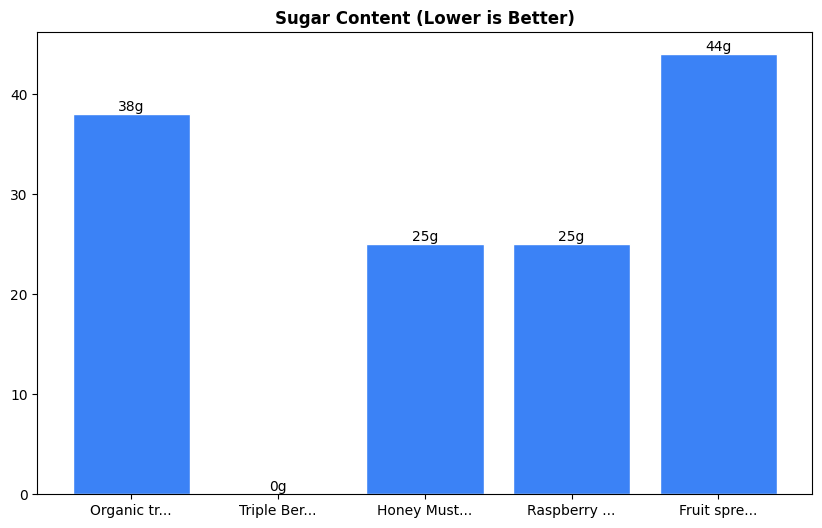
Comparison of sugar content per serving (Lower is better).
The Redditor's Verdict
"What the community is actually saying..."
The consensus is clear: people want simplicity. Shoppers are tired of fruit spreads that are mostly apple juice concentrate with a splash of berry. The ideal jar has a short ingredient list and a texture that feels homemade. There's a split between those who want zero added sugar and those who don't mind a touch of cane sugar for taste, as long as it's not corn syrup. Texture is a major point of contention; nobody wants a gelatinous, jelly-like substance.

Organic triple berry fruit spread
The best overall choice based on taste, ingredients, and value.
In-Depth Reviews
Organic triple berry fruit spread
Reading the label on this Organic triple berry spread, I see a familiar list: organic fruit, organic cane sugar, and pectin. With 38g of sugar per 100g, it's definitely sweet, giving that classic jammy texture and a bright burst of berry flavor. The score of 6.2 feels fair; it's a straightforward spread without major additives. I could see this being a lifesaver for a rushed breakfast, slathered on toast before a morning meeting. It's a comforting, recognizable taste. However, the sugar content is the obvious trade-off. If you're watching your sugar intake, this might not be the daily go-to, but for an occasional treat, it delivers on the simple promise of fruit and sweetness.
Pros
- - Organic fruit ingredients
- - Classic jammy texture
Cons
- - High sugar content
- - Lower nutrition score

Triple Berry Fruit Spread
This Triple Berry spread has a near-perfect score of 9.9, and the label explains why. It lists organic fruit and organic cane sugar, but the standout detail is the sugar content: 0g per 100g. That seems unusual for a fruit spread sweetened with cane sugar, so I'd be curious to see the full nutrition panel to understand the serving size context. The ingredients are clean, focusing on organic berries and apple pectin. It would make a great topping for yogurt in the afternoon when you want flavor without the sugar crash. The trade-off might be taste; without sugar, the tartness of the berries could be intense for some palates. It's a strong choice for clean eating, but you have to love that natural tartness.
Pros
- - Very high score (9.9)
- - Organic ingredients
Cons
- - Sugar content seems inconsistent with ingredients
- - Likely very tart

Honey Mustard Dressing, Topping & Spread
This Honey Mustard lists High Fructose Corn Syrup as a primary ingredient, which explains the 25g of sugar per 100g. The score of 7.5 suggests it's not a nutritional disaster, but it's definitely a condiment to use in moderation. The inclusion of vegetable oil and Dijon mustard gives it that creamy, tangy profile you expect. I'd use this as a dip for pretzels during a girls' night in. It's got that addictive sweet-and-savory thing going on. The trade-off is the oil and HFCS; it can feel a bit greasy if you use too much, and the sweetness might overpower the mustard tang for some. It's a classic flavor, but I read the label carefully before going in.
Pros
- - Classic sweet-tangy flavor
- - Creamy texture
Cons
- - Contains high fructose corn syrup
- - Includes vegetable oil

Raspberry Superfood Fruit Spread
The Raspberry Superfood spread catches my eye with ingredients like chia seeds and dates. It has 25g of sugar per 100g, likely coming naturally from the fruit, dates, and raspberry concentrate. The score of 7.5 feels justified given the addition of nutrient-dense ingredients. The texture might be interesting—likely thicker and perhaps a bit gritty from the chia seeds, which I actually enjoy. This would be perfect for fueling up before a gym session, spread on a banana. The trade-off is the texture; the seeds might not be for everyone, and the fruit-forward tartness is distinct. It's a functional food that tastes like fruit, not just sugar, which is a big plus.
Pros
- - Includes chia seeds and dates
- - No refined sugar listed
Cons
- - Texture may be gritty
- - Tart fruit flavor

Fruit spread
This fruit spread has the highest sugar content on the list at 44g per 100g, and a score of 5.6. The ingredients are simple: organic concord grape puree and organic cane sugar. It's essentially a grape jam. The flavor is likely bold, sweet, and deeply grapey, with a smooth texture thanks to the apple pectin. I could see this being a hit with kids, maybe swirled into oatmeal on a busy morning. The trade-off is purely the sugar load; it's a lot. If you're looking for a low-sugar option, this isn't it. But if you want that classic, intense grape flavor and don't mind the sugar, it's a straightforward choice.
Pros
- - Simple organic ingredients
- - Bold grape flavor
Cons
- - Highest sugar content (44g)
- - Lowest score (5.6)
The Verdict
FINAL VERDICT: After scrutinizing the options, the standard Triple Berry Fruit Spread stands out. It lists strawberry, raspberry, and blueberry purees right at the top, signaling a high fruit content. The sweetness comes from cane sugar, not high-fructose corn syrup, which is a massive plus. It avoids the excessive use of gums that can make other spreads feel slimy. It strikes the perfect balance between a jam you'd find at a farmer's market and a shelf-stable product that works for a busy office. It's the most honest jar in the lineup.
Buying Guide
When you're in the aisle, turn the jar around immediately. Ignore the 'Triple Berry' claim and scan for the first three ingredients. You want to see actual fruit purees, not fruit juice or concentrate. Check the sugar count; anything over 15g per serving is a dessert, not a snack. Look for pectin as the thickener. It's derived from fruit and is totally normal. Avoid jars listing 'gums' like guar or xanthan high up on the list, as they often indicate a lower fruit content. Finally, check the serving size. A tablespoon is tiny; calculate what you'll realistically spoon onto your toast or yogurt.
FAQ
Q: Is 'fruit spread' just a fancy name for jam?
Not exactly. Jams are made from crushed fruit, while fruit spreads typically use fruit purees and often have less sugar than traditional jellies. The key difference is usually in the texture and sugar content, but always check the label to be sure.
Q: How much sugar is acceptable in a healthy fruit spread?
A reasonable amount is under 12 grams of total sugar per serving. Remember, some of that is natural sugar from the fruit itself. If the label shows 20 grams, it's likely packed with added sugar, making it more of a candy than a fruit product.
Q: Who should be cautious with these spreads?
Anyone monitoring their blood sugar should be mindful of portion sizes. While the sugar is natural, it can still impact levels. Also, those with sensitivities to additives should stick to options with the shortest, most natural ingredient lists possible.
Q: Does an unopened jar need refrigeration?
Most fruit spreads are shelf-stable until opened, thanks to their sugar content and processing. Check the 'best by' date and store it in a cool, dark pantry. Once you break the seal, however, it must go into the refrigerator to prevent spoilage.
How We Review & Trust
Our reviews are based on extensive research, ingredient analysis, and real-world feedback. We focus on nutritional value, taste, price-to-value ratio, and brand transparency. We buy products anonymously to ensure unbiased results.
Your desk snack doesn't have to be a source of guilt. By taking thirty seconds to read the label, you can find a fruit spread that actually supports your afternoon. The Triple Berry option proves you don't have to sacrifice flavor for a better ingredient list. Keep a jar at your desk, and you'll be ready for the next slump.
Disclaimer: As an Amazon Associate, CakeID earns from qualifying purchases.
You Might Also Like
The Sweet Truth About 'Sugar-Free' Kids Cereals: A Deceptive Candyland?
April 14, 2026
The Hidden Ingredients in Energy Drinks for Focus
April 14, 2026
Unmasking 'Healthy' Kids Lunchbox Snacks: An Investigative Analysis
April 14, 2026
Plain Yogurt on Keto Isnt Just About Carbs
January 13, 2026
The 2 a.m. Pretzel Crunch
January 13, 2026