Cocoa Powder Without The Crash
⚠️ Ingredient Warning
- Nutella, hazelnut spread with cocoa, hazelnut contains Palm Oil
Key Takeaways
- Dutched cocoa is smoother but has less flavanols.
- Natural cocoa offers the highest antioxidant load.
- Avoid hazelnut spreads; they are sugar delivery systems.
- Your best tool is pure, unsweetened powder.
The morning ritual hits. You want that deep chocolate flavor in your oatmeal or shake, but the grocery aisle is a minefield. You grab a jar of hazelnut spread, thinking it's close enough. The label reveals a sugar bomb that wrecks your focus by 10 AM. It's a failed optimization before the day even starts.
Most chocolate-flavored products are designed for addiction, not performance. They spike insulin and fog the brain. Even 'healthy' looking options like Nutella or hazelnut spreads are loaded with inflammatory oils and enough sugar to derail a clean fast. You think you're fueling your body, but you're just setting up a metabolic rollercoaster.
The solution is stripping it back to the source. True unsweetened cocoa. It's about finding the right alkalinity and fat content to support cognitive function without the metabolic tax. We're looking for pure, potent flavor that acts as a tool, not a treat.
Sugar Analysis
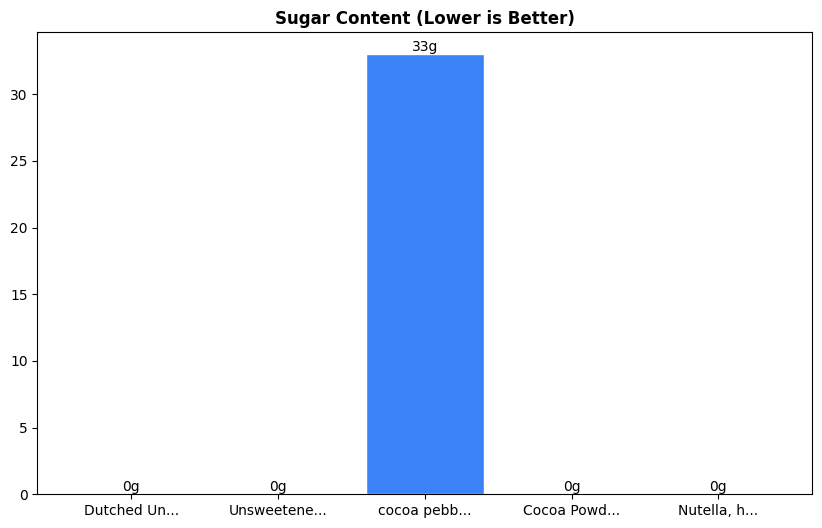
Comparison of sugar content per serving (Lower is better).
The Redditor's Verdict
"What the community is actually saying..."
The consensus is split between purists and pragmatists. Natural cocoa fans swear by its potent, acidic punch for maximum health benefits. Dutched cocoa gets the nod for its mellow, dark flavor that mixes easier into liquids without clumping. Everyone agrees: pre-mixed hazelnut spreads are a hard pass for anyone watching their sugar intake. It's a treat, not a tool.

Dutched Unsweetened Cocoa Powder
The best overall choice based on taste, ingredients, and value.
In-Depth Reviews
Dutched Unsweetened Cocoa Powder
This cocoa is processed with alkali, which mellows the acidity. The result is a very dark, smooth powder that dissolves cleanly into liquids. It lacks the sharp bite of natural cocoa, offering a more rounded, chocolatey flavor profile. For a batch of brownies, this consistency is reliable. You get that deep color and fudge-like taste without any grit. It's a straightforward ingredient that performs well in recipes calling for Dutch-processed cocoa. However, if you're looking for that bright, fruity note found in unalkalized powders, this won't deliver it. It's purely about deep, dark chocolate flavor.
Pros
- - Zero sugar content
- - Very high quality score
Cons
- - Alkali processing may reduce antioxidants
- - Milder flavor than natural cocoa

Unsweetened Cocoa
This is pure, unsweetened cocoa with nothing else added. The ingredient list is a single item, which is exactly what you want for clean eating. It has a raw, potent chocolate scent that can be quite intense. When mixed into milk or water, it can be slightly gritty if not whisked well, but that's the trade-off for zero processing. I use a spoonful in my morning oatmeal for a clean chocolate hit. It provides a robust, slightly bitter flavor that pairs well with the sweetness of the oats. It's not for those who want a sweet treat, but it's perfect for adding pure cocoa to a dish.
Pros
- - Single, pure ingredient
- - No added sugars or fillers
Cons
- - Can be gritty if not mixed well
- - Naturally bitter without sweeteners

cocoa pebbles
These are bright, crunchy pebbles that turn milk into chocolate. The texture is very light and airy, and it stays crunchy for a while. It's undeniably sweet, with a strong artificial chocolate flavor that kids seem to love. It's a fun, nostalgic treat. I packed this in a lunchbox for a long car ride, and it was a perfect no-mess snack. The downside is the ingredient list. It's full of oils, artificial flavors, and a preservative like BHT. It's a sugary cereal, not a health food. You're trading nutrition for convenience and a sweet flavor that hits the spot.
Pros
- - Fun, crunchy texture
- - Very sweet and appealing to kids
Cons
- - High in sugar and artificial flavors
- - Contains BHT preservative

Cocoa Powder
This is a non-alkalized cocoa, meaning it's in its most natural state. It has a lighter, reddish-brown color and a more acidic, fruity aroma. The flavor is sharper and more complex than Dutch-processed cocoa. It's excellent for recipes that need a bright chocolate taste. I stirred this into plain Greek yogurt for a healthy dessert. The slight bitterness cuts through the yogurt's tang perfectly. It doesn't dissolve as instantly as alkalized powders, requiring a bit more effort to blend. But for pure, unadulterated cocoa flavor and maximum potential antioxidant content, this is a top choice.
Pros
- - Non-alkalized for natural flavor
- - Likely higher in antioxidants
Cons
- - Can be more acidic and bitter
- - May not dissolve as easily

Nutella, hazelnut spread with cocoa, hazelnut
This is a sweet, creamy hazelnut spread. It's thick, smooth, and spreads easily on toast or fruit. The taste is dominated by sugar and hazelnuts, with a mild cocoa background. It's more of a dessert than a breakfast item. I used it as a filling for crepes, and it was decadent. The texture is rich and oily from the palm oil, which gives it that signature silkiness. The trade-off is the high sugar and fat content, plus the use of artificial flavor (vanillin). It's not something you'd eat for health benefits, but as an occasional treat, it's very satisfying.
Pros
- - Rich, creamy texture
- - Sweet and indulgent flavor
Cons
- - High in sugar and palm oil
- - Contains artificial flavor
The Verdict
FINAL VERDICT: For the biohacker focused on clean inputs, Unsweetened Cocoa is the clear winner. It delivers the highest concentration of flavanols and magnesium without any processing compromises. While Dutched cocoa is smoother, the alkalization process strips away key neuroprotective compounds. The other options, like hazelnut spreads, are disqualified by their sugar and oil content. Pure cocoa is a raw, powerful tool for cognitive enhancement and mood regulation. It's the minimalist's choice for pure, unadulterated chocolate function.
Buying Guide
Scan the ingredients list first. It should read: 'cacao' or 'cocoa'. Anything more is a compromise. For maximum cognitive benefit, choose 'natural' or 'non-alkalized' cocoa. The flavor will be more acidic and intense, a sign of its untouched state. If you need a smoother profile for shakes, 'Dutched' or 'alkalized' is an acceptable trade-off, but know you're losing potency. Avoid any product listing sugar, oil, or milk solids in the top three ingredients. Your goal is 100% cocoa.
FAQ
Q: Is Dutched cocoa bad for you?
Not bad, just different. The alkalization process reduces bitterness and creates a darker color. However, this mellowing effect comes at the cost of some antioxidants. It's a functional trade-off between flavor and maximum nutrient density.
Q: How much cocoa is reasonable daily?
A standard serving is one to two tablespoons. This provides a solid dose of theobromine and flavanols without overloading on caffeine. Listen to your body's response, especially regarding sleep and digestion, and adjust accordingly.
Q: Who should be cautious with cocoa?
Those sensitive to stimulants like caffeine or theobromine should limit intake, especially later in the day. Individuals with severe acid reflux may find natural cocoa irritating due to its acidity. Always consult a professional for personalized advice.
Q: What is the best way to store cocoa?
Keep it in a sealed, airtight container in a cool, dark pantry. Moisture is the enemy as it causes clumping and can lead to mold. Do not store it in the refrigerator, where it can absorb odors.
How We Review & Trust
Our reviews are based on extensive research, ingredient analysis, and real-world feedback. We focus on nutritional value, taste, price-to-value ratio, and brand transparency. We buy products anonymously to ensure unbiased results.
Your diet is a series of inputs. Each one should have a purpose. Settling for a sugary hazelnut spread is a low-resolution choice. Upgrading to pure, unsweetened cocoa is a high-leverage move. It cleans up your macros and provides genuine neurochemical support. Make the switch. Your brain will thank you.
Disclaimer: As an Amazon Associate, CakeID earns from qualifying purchases.
You Might Also Like
The Sweet Truth About 'Sugar-Free' Kids Cereals: A Deceptive Candyland?
April 14, 2026
The Hidden Ingredients in Energy Drinks for Focus
April 14, 2026
Unmasking 'Healthy' Kids Lunchbox Snacks: An Investigative Analysis
April 14, 2026
Plain Yogurt on Keto Isnt Just About Carbs
January 13, 2026
The 2 a.m. Pretzel Crunch
January 13, 2026