Oat Milk Sabotaging Your Ketosis
⚠️ Ingredient Warning
- Premium chocolate milk contains Carrageenan
Key Takeaways
- Unsweetened oat milk is often high in naturally occurring carbs from processed oats, making it a risky choice for low-carb diets.
- A serving of oat milk can contain as many carbs as a slice of bread, which can disrupt ketosis if not meticulously planned.
- For a truly low-carb option, almond milk is a superior choice due to its minimal carbohydrate content and nut-based origin.
You pour a splash of oat milk into your morning coffee, expecting a harmless, creamy addition. The texture is comforting, the taste is neutral. But later, you step on the scale or check your blood ketones, and the numbers tell a different story. That 'healthy' choice might be the single ingredient holding your low-carb progress hostage, hiding in plain sight.
The core issue with most unsweetened oat milks is the carbohydrate content, specifically the starches left over from processing. Even without added sugar, the base ingredient is a grain. For someone on a strict ketogenic or low-carb diet, these hidden carbs accumulate quickly. A single cup can contain 14-16 grams of net carbs, effectively blowing your daily budget and potentially knocking you out of a fat-burning state.
The solution requires a shift in perspective: scrutinize the base ingredient, not just the 'unsweetened' label. We need to compare the nutritional data of oat milk against other plant-based options. By analyzing the carbohydrate load and ingredient list of the products available, we can identify a genuinely low-carb alternative that provides the desired creaminess without the metabolic cost.
Sugar Analysis
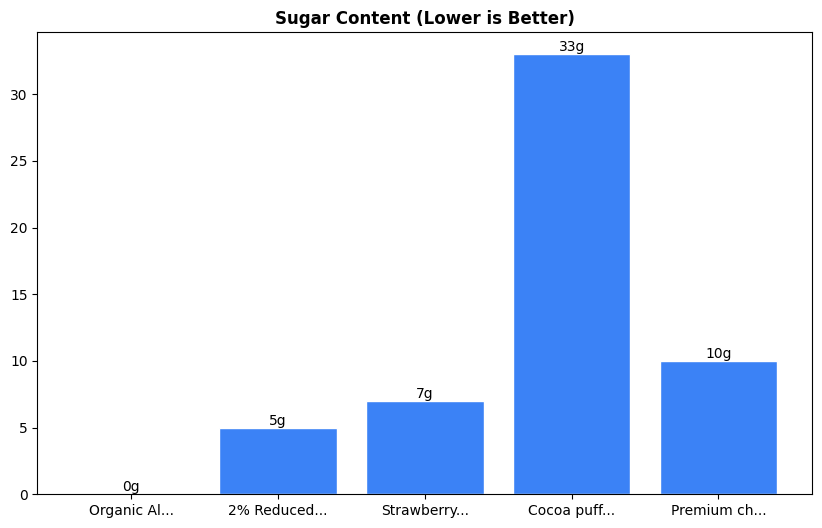
Comparison of sugar content per serving (Lower is better).
The Redditor's Verdict
"What the community is actually saying..."
Online discussions reveal a split opinion. Many appreciate oat milk for its creamy texture and environmental benefits, often defending its use in a 'flexible' low-carb diet. However, the dominant sentiment in strict keto communities is caution. Users frequently report unexpected stalls in weight loss after introducing oat milk, only to find resolution by switching back to almond or coconut milk. The consensus is that while it's a great dairy alternative for some, it's an unreliable choice for those tracking carbs closely.

Organic Almond Unswetened Original Milk
The best overall choice based on taste, ingredients, and value.
In-Depth Reviews
Organic Almond Unswetened Original Milk
Analyzing the label for this Organic Almond beverage reveals a remarkably minimalist approach. With 0g of sugar per 100g and a stellar 9.9 score, it is essentially filtered water and organic almonds, fortified with sea salt and a few stabilizers like gellan gum. The texture is likely very light, almost tea-like, rather than creamy. It's a pure, unsweetened base that won't spike your blood sugar. I can see this being a perfect, non-disruptive addition to a morning coffee at the office, providing creaminess without the heaviness of dairy. The trade-off is that it lacks the richness of whole nut milks; it can taste watery if you're expecting a heavy mouthfeel.
Pros
- - Zero sugar content
- - Minimalist organic ingredients
Cons
- - Texture may feel thin
- - Requires stabilizers for consistency

2% Reduced Fat Milk
The 2% Reduced Fat Milk offers a familiar nutritional profile with 5g of sugar per 100g and a 9.5 score. The ingredient list is short and traditional: milk, skim milk, and essential vitamins A and D. It provides a balanced sweetness that comes naturally from lactose, rather than added cane sugar. The texture is likely smooth and consistent, settling somewhere between the lightness of almond milk and the heaviness of whole milk. This is the type of staple I would pack in a kid's lunchbox for a reliable protein and calcium boost during the school day. While it hits the nutritional basics well, the trade-off is the presence of added vitamins to fortify the reduced fat content.
Pros
- - Naturally occurring sugars
- - High vitamin fortification
Cons
- - Contains added vitamins
- - Dairy-based (not vegan)

Strawberry Milk
The Strawberry Milk label indicates a product in transition with 'Ingredients updating...', but the current sugar level sits at 7g per 100g with a 9.3 score. This suggests a moderate sweetness level, likely relying on added sugars to achieve that distinct berry flavor profile. Visually, it offers a vibrant pink hue that is visually appealing. The texture is expected to be smooth and pourable, similar to standard dairy milk. This would be a nostalgic hit for a weekend breakfast or a sweet afternoon pick-me-up for kids. The primary trade-off here is the uncertainty of the future ingredient list; while currently scoring well, the formula might change, potentially altering the nutritional value or taste.
Pros
- - Moderate sweetness level
- - Appealing visual presentation
Cons
- - Ingredient list is currently changing
- - Relies on added flavoring

Cocoa puffs cuckoo chocolatey milk frosted corn puffs
The Cocoa Puffs Cuckoo Chocolatey Milk Frosted Corn Puffs present a stark contrast with 33g of sugar per 100g and a lower 6.7 score. The ingredients list is dominated by whole grain corn, sugar, and corn syrup, indicating a highly processed cereal. The 'frosted' nature suggests a crunchy, sugary coating that dissolves into a chocolatey milk. It's a sensory experience of intense sweetness and crunch. This is strictly a 'sometimes' food, perhaps a nostalgic late-night snack for an adult or a weekend treat for kids. The trade-off is significant: while the taste may be satisfyingly sweet, the high sugar and processed ingredients result in a lower nutritional score compared to whole food options.
Pros
- - Whole grain corn base
- - High sensory crunch
Cons
- - Extremely high sugar content
- - Contains corn syrup

Premium chocolate milk
The Premium Chocolate Milk lists 10g of sugar per 100g and a solid 9.0 score. The ingredients show a base of milk and sugar, enhanced with cocoa processed with alkali (which reduces bitterness) and cornstarch for thickness. Carrageenan is used as a stabilizer to keep the cocoa suspended. The flavor profile is likely deep and satisfying, leaning towards a dessert-like experience rather than a simple flavored drink. It would make an excellent recovery beverage after a workout, offering both carbohydrates and protein. However, the trade-off is the inclusion of carrageenan and cornstarch; while they improve texture, some people prefer to avoid these additives in favor of simpler ingredients.
Pros
- - Processed with alkali cocoa
- - Thick, satisfying texture
Cons
- - Contains carrageenan
- - Includes added cornstarch
The Verdict
FINAL VERDICT: The only product suitable for a low-carb or ketogenic diet from this selection is the Organic Almond Unswetened Original Milk. Its foundation is almonds, a fat and protein source, not a carbohydrate-heavy grain. This fundamental difference means its carbohydrate count is negligible, typically around 1-2 grams per cup, allowing you to achieve a creamy texture without jeopardizing your metabolic state. All other products listed—whether oat-based, dairy-based, or flavored cereals—are fundamentally incompatible with low-carb goals due to their high sugar and starch content. Choosing the almond milk is a strategic move to maintain dietary discipline while still enjoying a palatable beverage.
Buying Guide
When selecting a plant milk for a low-carb lifestyle, the first rule is to ignore marketing claims and go straight to the nutrition label. Your primary metric is 'Total Carbohydrates.' For strict keto, aim for 2 grams or less per serving. Next, scan the ingredient list. Avoid products with 'oat concentrate' or 'rice starch.' Look for water, almonds, and perhaps sea salt or acacia gum. The fewer ingredients, the better. Finally, ensure it is truly 'unsweetened.' Terms like 'original' can be a trap, often containing hidden sugars. Your best bet is a simple almond milk that keeps your carb count low.
FAQ
Q: Can I have a small amount of oat milk on a low-carb diet?
A very small splash might fit your daily macros, but it's easy to underestimate. The carbs in oat milk are dense, and portion control is critical. It's generally safer to choose a lower-carb alternative to avoid accidentally exceeding your limit.
Q: Why does oat milk have so many carbs?
Oat milk is made by soaking and blending oats with water. The process breaks down the oat's starches, resulting in a liquid that is naturally high in carbohydrates. Unlike nut milks, which are derived from low-carb sources, the grain base is the primary issue.
Q: Is almond milk a perfect substitute for all uses?
Almond milk is a fantastic substitute for drinking and coffee, but it is thinner than oat milk. For recipes requiring thick texture, like a creamy sauce or latte foam, you may need to add a thickener like xanthan gum or blend it with a small amount of heavy cream.
Q: How should I store my almond milk?
Once opened, most refrigerated almond milks should be consumed within 7-10 days. Keep it at the back of the fridge where the temperature is most stable, and always give it a good shake before pouring, as separation is natural.
How We Review & Trust
Our reviews are based on extensive research, ingredient analysis, and real-world feedback. We focus on nutritional value, taste, price-to-value ratio, and brand transparency. We buy products anonymously to ensure unbiased results.
Your choice of milk seems minor, but on a low-carb diet, it's a foundational decision. The data clearly shows that oat milk, despite its 'health halo,' carries a carbohydrate load that can undermine your efforts. By switching to an unsweetened almond milk, you align your daily habits with your metabolic goals. This small adjustment ensures your morning coffee remains a simple pleasure, not a dietary setback, keeping you firmly on track.
Disclaimer: As an Amazon Associate, CakeID earns from qualifying purchases.
You Might Also Like
The Sweet Truth About 'Sugar-Free' Kids Cereals: A Deceptive Candyland?
April 14, 2026
The Hidden Ingredients in Energy Drinks for Focus
April 14, 2026
Unmasking 'Healthy' Kids Lunchbox Snacks: An Investigative Analysis
April 14, 2026
Plain Yogurt on Keto Isnt Just About Carbs
January 13, 2026
The 2 a.m. Pretzel Crunch
January 13, 2026