
Is 1% Organic Pasture-Raised Lowfat Milk Vegan?
No, 1% Organic Pasture-Raised Lowfat Milk is not vegan. While the marketing emphasizes organic and pasture-raised standards, the core ingredients are derived from animals. Specifically, this product contains cow's milk and Vitamin D3, which is often sourced from sheep's wool.
The Ingredient Breakdown
To understand why this milk isn't vegan, we need to look past the marketing terms like 'organic' and 'pasture-raised' and analyze the actual contents. The ingredient list is short, but every item carries significant weight regarding dietary restrictions.
The primary ingredient is Organic Grade A Lowfat Milk. Regardless of how the cows are treated—whether they are grass-fed, pasture-raised, or organic—the biological product is the same. Milk is a secretion produced by mammals to feed their young. By definition, the collection of this fluid involves the use of animals, making it non-vegan. The 'lowfat' designation simply means the cream has been partially removed; it does not change the animal origin.
The second major flag is Vitamin D3. This is a common additive in dairy products to boost nutritional value, but it is a significant hurdle for vegans. Most commercially available Vitamin D3 (cholecalciferol) is derived from lanolin, a waxy substance extracted from sheep's wool. While there are plant-derived or synthetic sources of Vitamin D (like Vitamin D2 or lichen-derived D3), standard dairy fortification almost exclusively relies on the lanolin method. Unless the packaging explicitly states 'Vegan Vitamin D3' or 'Vegan Certified,' you can assume the D3 here is animal-derived.
Finally, Vitamin A Palmitate is added. This is a synthetic form of Vitamin A. While the source of this specific vitamin is generally plant-derived or synthetic (making it technically vegan), its inclusion highlights that this is a fortified, processed food product rather than a whole food.
Nutritional Value
From a nutritional standpoint, 1% Organic Pasture-Raised Lowfat Milk is a dense source of nutrients, though not necessarily the ones vegans are looking for. A standard cup provides a significant amount of protein (around 8 grams) and calcium, which are often concerns when eliminating dairy. However, it also contains naturally occurring sugars (lactose) and saturated fat, even in its 'lowfat' form.
For those monitoring their caloric intake, this milk fits well within a standard diet, offering roughly 100 to 110 calories per cup. It provides a middle ground between the high fat of whole milk and the watery consistency of skim milk. While it is a healthy option for omnivores, the nutritional profile is irrelevant to the vegan question because the source ingredients disqualify it immediately.
Frequently Asked Questions
Does 1% Organic Pasture-Raised Lowfat Milk contain dairy or gluten?
Is 1% Organic Pasture-Raised Lowfat Milk good for weight loss?
Where can I buy 1% Organic Pasture-Raised Lowfat Milk?
Is 1% Organic Pasture-Raised Lowfat Milk safe for kids?
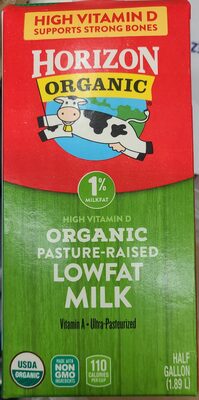
1% Organic Pasture-Raised Lowfat Milk
Vegan Analysis
We recommend searching for certified Vegan alternatives.
Pro Tip
Always double-check the label. Manufacturers change ingredients frequently without notice!