
Is Bean with Bacon Healthy Request Condensed Soup Keto?
No, Bean with Bacon Healthy Request Condensed Soup is not keto-friendly. While the 'Healthy Request' label implies lower sodium, the ingredient list contains several hidden carbohydrates that will spike your insulin response. If you are strictly following a ketogenic diet, this soup will likely kick you out of ketosis.
The Ingredient Breakdown
As a food scientist, I look past the marketing claims on the front of the can and go straight to the ingredient list. The verdict here is clear: this soup is formulated for mass appeal, not for metabolic ketosis. Here is why specific ingredients are problematic for the keto diet.
The first red flag is the presence of modified food starch and wheat starch. In the food industry, modified starch is used as a thickener to give the soup body without adding excessive fat. However, these starches are derived from corn or wheat and are essentially pure glucose chains. Even in small amounts, they add up quickly in a condensed soup format. The wheat starch is particularly concerning because it is a direct source of carbohydrates that is not fiber.
The second major issue is the sugar listed in the ingredients. Manufacturers often add sugar to balance the acidity of the tomato puree and to cure the bacon. While the amount per serving might seem small (usually 2-3 grams), condensed soups are dense. When you eat a bowl of this soup, you are consuming enough added sugar to potentially disrupt the fat-burning state of ketosis.
Finally, the pea beans and navy bean powder are the base of the soup. While beans contain fiber, they are naturally higher in net carbohydrates than leafy greens or low-carb vegetables. In a keto diet, your daily carb limit is typically 20-50 grams. A single serving of this soup can easily consume half of that allowance just from the bean content alone.
Nutritional Value
Looking at the nutritional profile, the numbers tell the story. A half-cup serving of this condensed soup contains roughly 100 calories. While 100 calories isn't high in the grand scheme of a diet, the macronutrient ratio is wrong for keto. You are looking at roughly 15 grams of carbohydrates per serving, with only 4-5 grams of fiber. This results in a net carb count of about 10-11 grams per serving.
For a standard ketogenic diet, you aim for under 20 grams of net carbs for the entire day. Consuming 11 grams from a single side dish leaves very little room for vegetables, nuts, or proteins. Furthermore, the fat content is relatively low compared to the carbohydrates. A true keto soup should be high in fat (from heavy cream or bone broth fats) and low in carbs. This soup is high in carbs and low in fat, which is the exact opposite of what you need to maintain ketosis.
Frequently Asked Questions
Does Bean with Bacon Healthy Request Condensed Soup contain dairy or gluten?
Is Bean with Bacon Healthy Request Condensed Soup good for weight loss?
Where can I buy Bean with Bacon Healthy Request Condensed Soup?
Is Bean with Bacon Healthy Request Condensed Soup safe for kids?
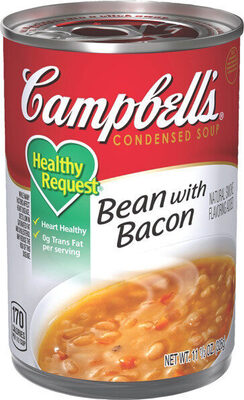
Bean with Bacon Healthy Request Condensed Soup
Keto Analysis
We recommend searching for certified Keto alternatives.
Pro Tip
Always double-check the label. Manufacturers change ingredients frequently without notice!