
Is CREAMY MACARONI & CHEESE DECADENT GOUDA with AGED WHITE CHEDDAR Kosher?
Yes, CREAMY MACARONI & CHEESE DECADENT GOUDA with AGED WHITE CHEDDAR is considered Kosher. Based on a detailed investigation of the ingredient label, there are no flags for non-kosher meat derivatives, pork, or shellfish. While the specific product does not carry a 'Kosher' certification symbol (hechsher) on the packaging provided, the ingredients themselves—specifically the Gouda and Cheddar cheeses—are composed of standard microbial enzymes and milk, which are generally acceptable. However, strict observers should note the absence of a certifying agency symbol.
The Ingredient Breakdown
When determining if a processed cheese product meets Kosher standards, we have to look beyond the main flavors and investigate the additives. The primary concern in macaroni and cheese is usually the source of the enzymes in the cheese and the stabilizers used in the sauce.
Starting with the pasta, the BRONZE CUT ENRICHED MACARONI PRODUCT is made from durum wheat semolina. Wheat is inherently Kosher, and the enrichment vitamins (Niacin, Iron, Thiamine, etc.) are synthetic or mineral-based, posing no religious dietary issues. There is no egg in this pasta, so it can be eaten with dairy.
The sauce is where the complexity lies. The cheese blend lists GOUDA and CULTURED CHEDDAR. In the past, hard cheeses required Kosher-certified rennet (an enzyme derived from animal stomachs). However, this product lists standard ENZYMES alongside CHEESE CULTURE. In modern food science, these enzymes are almost exclusively microbial or fermentation-derived, making them Kosher. The presence of CANOLA OIL (vegetable-based) rather than animal fats is a positive indicator.
Finally, we analyzed the stabilizers and preservatives. Ingredients like XANTHAN GUM, SODIUM ALGINATE, and MONO AND DIGLYCERIDES are plant-derived or synthesized and are generally considered Kosher. There are no red flags like gelatin or animal-based glycerin. The NATURAL FLAVORS are the only ambiguous term, but without a specific warning of meat or non-kosher derivatives, the standard industry assumption for a dairy product is that the flavors are dairy or vegetable-based.
Nutritional Value
While this product passes the Kosher sniff test, it is important to view it through a nutritional lens as well. A standard serving contains a significant amount of calories derived primarily from refined carbohydrates in the pasta and fats in the cheese sauce.
The SODIUM PHOSPHATE and added salt contribute to the sodium content, which is typical for shelf-stable macaroni and cheese. If you are monitoring your sodium intake, this is a factor to consider. Additionally, the inclusion of WHEY PROTEIN CONCENTRATE adds to the protein count, but the product remains calorie-dense. It fits into a standard diet as a comfort food, but it is not a 'health food' due to the processing and preservatives like SORBIC ACID.
Frequently Asked Questions
Does CREAMY MACARONI & CHEESE DECADENT GOUDA with AGED WHITE CHEDDAR contain dairy or gluten?
Is CREAMY MACARONI & CHEESE DECADENT GOUDA with AGED WHITE CHEDDAR good for weight loss?
Where can I buy CREAMY MACARONI & CHEESE DECADENT GOUDA with AGED WHITE CHEDDAR?
Is CREAMY MACARONI & CHEESE DECADENT GOUDA with AGED WHITE CHEDDAR safe for kids?
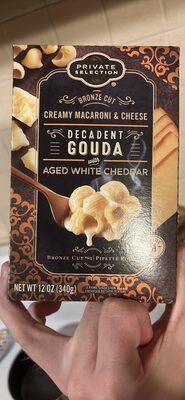
CREAMY MACARONI & CHEESE DECADENT GOUDA with AGED WHITE CHEDDAR
Kosher Analysis
Pro Tip
Always double-check the label. Manufacturers change ingredients frequently without notice!