
Is Creatine Gummies Pineapple Mango Keto?
No, Creatine Gummies Pineapple Mango are not keto-friendly. While they offer a convenient way to supplement creatine, the primary ingredients are tapioca syrup and cane sugar, which will spike blood glucose and likely kick you out of ketosis. If you are strictly following a ketogenic diet, these gummies are not a suitable option.
The Ingredient Breakdown
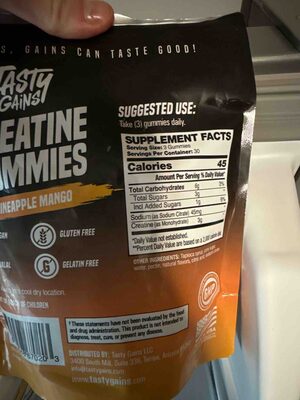
As a food scientist, looking at the label for Creatine Gummies Pineapple Mango tells a clear story about why they fail the keto test. The first two ingredients listed are tapioca syrup and cane sugar. In the food industry, ingredients are listed by weight, meaning these two sugars make up the bulk of the product.
Tapioca syrup is a liquid sweetener derived from the cassava plant. While it is often marketed as a "natural" alternative to corn syrup, metabolically, it is almost identical. It is a high-glycemic carbohydrate that acts as a rapid fuel source. For a keto dieter, whose goal is to minimize carbohydrate intake to roughly 20-50 grams per day to maintain ketosis, a serving of these gummies provides a massive dose of pure sugar that immediately halts fat burning.
The second major flag is the pectin. Pectin is a gelling agent derived from fruit, commonly used to make gummies firm without gelatin. However, pectin requires sugar to set properly. This means that for the texture to be correct, the manufacturer must include a significant amount of sweetener. Unlike sugar-free gummies that use stevia or erythritol, these rely entirely on cane sugar and tapioca syrup for their structure and taste.
Finally, the natural flavors and citric acid are responsible for the Pineapple Mango taste. While these are generally keto-safe in isolation, they are carried in a matrix of sugar. Even though creatine monohydrate itself is a fantastic supplement for muscle performance and is 100% keto-safe, the delivery vehicle (the gummy) makes the product incompatible with the diet.
Nutritional Value
From a nutritional standpoint, these gummies function more like a candy than a supplement. Because the ingredients list is dominated by sweeteners, the carbohydrate count per serving is high. Typically, a serving of sugar-based gummies can contain anywhere from 15 to 25 grams of net carbohydrates. For someone on a strict keto diet, consuming 20 grams of carbs in a single serving of a supplement would use up their entire daily allowance, making it impossible to eat any vegetables or other foods without exceeding their limit.
The product contains virtually no fat, which is the primary macronutrient required for the ketogenic diet. Instead, it provides empty calories in the form of simple sugars. While the calorie count might not be exorbitant (likely around 80-100 calories per serving), those calories are entirely devoid of nutritional value regarding ketosis. They will cause an insulin spike, which inhibits the release of fatty acids from adipose tissue for energy.
If your goal is weight loss through ketosis, this product is counterproductive. The sugar content promotes fat storage rather than fat burning. While the creatine will help with gym performance, the metabolic environment created by the gummies works against the fundamental biochemistry of the ketogenic diet.
Frequently Asked Questions
Does Creatine Gummies Pineapple Mango contain dairy or gluten?
Is Creatine Gummies Pineapple Mango good for weight loss?
Where can I buy Creatine Gummies Pineapple Mango?
Is Creatine Gummies Pineapple Mango safe for kids?



Creatine Gummies Pineapple Mango
Keto Analysis
We recommend searching for certified Keto alternatives.
Pro Tip
Always double-check the label. Manufacturers change ingredients frequently without notice!