
Is Crisp and thins salt and vinegar chips Gluten Free?
The direct answer is no, Crisp and thins salt and vinegar chips are not gluten-free. While they may sound like a light potato snack, the ingredient list includes wheat flour, making them unsafe for anyone with Celiac disease or gluten sensitivity. Here is a detailed breakdown of why these chips contain gluten and what that means for your diet.
The Ingredient Breakdown
As a food scientist, the first thing I look for when analyzing a snack labeled 'thin' is the structural integrity. How does a chip hold its shape without traditional wheat structure? In the case of Crisp and thins salt and vinegar chips, the answer lies in a blend of starches and flours. The primary ingredients listed are potato flour and canola oil, which provide the base flavor and texture. However, the formulation is not purely potato-based.
The critical flag for gluten content is the ingredient unbleached enriched flour. In the food industry, unless specified otherwise, 'enriched flour' is derived from wheat. This ingredient contains gluten proteins (glutenin and gliadin) that provide elasticity and structure. Even though the chip is thin, the presence of wheat flour means it is not safe for a gluten-free diet. Additionally, the ingredient maltodextrin is present. While maltodextrin can be derived from corn in the US, it is frequently derived from wheat. Without a specific 'gluten-free' certification on the packaging, the source of maltodextrin remains an unknown risk factor for sensitive individuals.
Finally, we must consider cross-contamination. The ingredient list includes oat fiber. While oat fiber itself is a gluten-free fiber source, oats are notorious for being cross-contaminated with wheat during harvesting and processing. If the manufacturer does not use certified gluten-free oats, there is a high probability of trace amounts of gluten in the final product. Therefore, between the explicit wheat flour and the potential for cross-contamination via oats, these chips are definitively not gluten-free.
Nutritional Value
From a nutritional standpoint, Crisp and thins salt and vinegar chips are marketed as a lighter alternative to traditional potato chips, and the label reflects this. A standard serving is relatively low in calories compared to full-fat chips, primarily because they are baked or fried to a crisp texture using canola oil. However, the sodium content is significant due to the combination of sea salt, sodium diacetate, and added salt. This high sodium level can be a concern for those monitoring blood pressure or fluid retention.
Regarding macronutrients, the carbohydrate content is driven by potato flour, cornstarch, and dextrose. The inclusion of dextrose (a simple sugar) and added sugar contributes to the overall glycemic load, meaning these chips can spike blood sugar faster than a whole-food snack. While the oat fiber adds a small amount of dietary fiber, it is not enough to offset the processed carbohydrate content. For those on a weight loss journey, these chips can fit into a calorie deficit due to the portion control nature of the 'thin' format, but they offer little nutritional density beyond simple energy (calories) and sodium.
Frequently Asked Questions
Does Crisp and thins salt and vinegar chips contain dairy or gluten?
Is Crisp and thins salt and vinegar chips good for weight loss?
Where can I buy Crisp and thins salt and vinegar chips?
Is Crisp and thins salt and vinegar chips safe for kids?
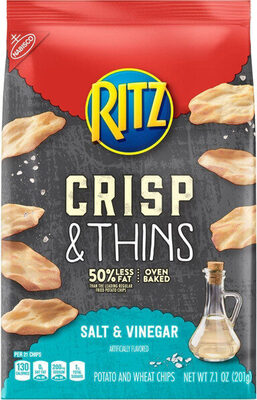
Crisp and thins salt and vinegar chips
Gluten Free Analysis
We recommend searching for certified Gluten Free alternatives.
Pro Tip
Always double-check the label. Manufacturers change ingredients frequently without notice!