
Is Cultured Lowfat Buttermilk Halal?
No, Cultured Lowfat Buttermilk is generally not considered Halal. While the base product of fermented milk is permissible, the ingredient label reveals a significant red flag: gelatin. This specific ingredient, often derived from pork, makes the standard version unsuitable for a Halal diet.
The Ingredient Breakdown
As a food scientist, I look at the chemistry of food to understand its suitability for specific diets. When analyzing Cultured Lowfat Buttermilk, the ingredients list is mostly benign, but there is one critical exception that halts the verdict. Let's look at the components.
The base of the product is CULTURED MILK. This is simply milk that has been fermented with lactic acid bacteria. It is entirely Halal. The SALT and VITAMIN A PALMITATE and VITAMIN D3 are also standard additives that pose no religious concerns. Even the stabilizers TAPIOCA STARCH, GUAR GUM, LOCUST BEAN GUM, and CARRAGEENAN are plant-derived or seaweed-derived, making them safe for consumption.
The issue lies with GELATIN. Gelatin is a protein obtained by boiling skin, tendons, ligaments, and/or bones with water. It is usually obtained from cows or pigs. In food manufacturing, gelatin is used as a stabilizer or thickener. To be Halal, gelatin must be sourced exclusively from cattle that were slaughtered Islamically, or from fish. However, because pork-derived gelatin is cheaper and more abundant, it is the default in many generic food products unless explicitly certified otherwise. Without a Halal certification logo on the package, the GELATIN in this buttermilk is assumed to be non-Halal.
Nutritional Value
From a nutritional standpoint, Cultured Lowfat Buttermilk is a decent option for those monitoring their fat intake. It typically contains very little fat due to the 'lowfat' designation, and it provides a good source of calcium and protein. The added vitamins A and D help fortify the nutrient profile.
Regarding sugar, the fermentation process naturally converts lactose into lactic acid, which gives buttermilk its tang. However, consumers should be aware that the added gums and starches can impact the total carbohydrate count. While it fits well within standard diet limits for calories and fat, the presence of the questionable gelatin overrides the health benefits for those strictly adhering to Halal guidelines.
Frequently Asked Questions
Does Cultured Lowfat Buttermilk contain dairy or gluten?
Is Cultured Lowfat Buttermilk good for weight loss?
Where can I buy Cultured Lowfat Buttermilk?
Is Cultured Lowfat Buttermilk safe for kids?
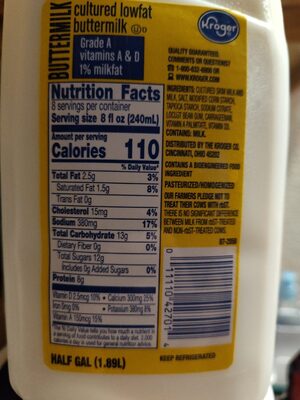
Cultured Lowfat Buttermilk
Halal Analysis
We recommend searching for certified Halal alternatives.
Pro Tip
Always double-check the label. Manufacturers change ingredients frequently without notice!