
Is Dubai Chocolate Vegan? An Investigative Analysis
If you are following a strict plant-based diet, you need to know the answer right away: No, Dubai Chocolate is not vegan. While the packaging might highlight the rich pistachio filling and dark chocolate, a closer look at the label reveals several animal-derived ingredients that make this treat unsuitable for vegans.
The Ingredient Breakdown
As a food scientist, I look beyond the marketing claims and straight at the formulation. The formulation of Dubai Chocolate is complex, blending textures and flavors, but it relies heavily on animal products to achieve its signature creaminess.
The first red flag appears in the Dark Chocolate (60%) coating. While it contains cocoa mass and cocoa butter—which are plant-based—it also lists whole milk powder and demineralized whey powder. Whey is a direct byproduct of cheese manufacturing, making it strictly non-vegan. Even if a chocolate is dark, the addition of milk derivatives is common in Middle Eastern confections to soften the bitterness of the cocoa.
The Pistachio Cream Filling (33.5%) is where the texture gets its signature richness, but again, it comes at a cost to the vegan status. The formula includes whole milk powder and demineralized whey powder. Furthermore, the use of vegetable oil (specifically palm and sunflower) combined with milk solids creates that fudgy mouthfeel, but it firmly places this product in the dairy category.
Finally, we have the Kataifi (6.5%) layer. This shredded pastry is made from wheat flour (gluten) and water. While the kataifi itself is plant-based, the presence of gluten means this product is not suitable for those with Celiac disease or gluten sensitivities, a common co-occurrence with vegan diets.
Important Note on Cross-Contamination: The label explicitly states that the product may contain trace amounts of egg. This usually happens due to shared manufacturing lines with pastries that use egg wash. While the main recipe contains dairy, the risk of egg traces further disqualifies it for strict vegans.
Nutritional Value
From a nutritional standpoint, Dubai Chocolate is an energy-dense confection. The combination of sugar, cocoa butter, and vegetable oils creates a high-fat profile. A single serving likely contributes a significant portion of the daily recommended intake of saturated fats, primarily from the whole milk powder and cocoa butter.
Regarding sugar, both the chocolate coating and the pistachio cream contain added sugar. This spikes the glycemic load, making it a quick source of energy but potentially problematic for those monitoring blood sugar levels. While the pistachios provide some protein and healthy monounsaturated fats, the quantity of pistachio (50%) in the filling is diluted by sugar and oils. Therefore, while delicious, it should be viewed as a dessert indulgence rather than a health food.
Frequently Asked Questions
Does Dubai Chocolate contain dairy or gluten?
Is Dubai Chocolate good for weight loss?
Where can I buy Dubai Chocolate?
Is Dubai Chocolate safe for kids?


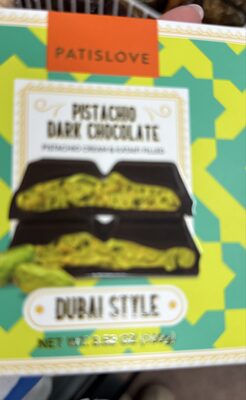
Dubai Chocolate
Vegan Analysis
We recommend searching for certified Vegan alternatives.
Pro Tip
Always double-check the label. Manufacturers change ingredients frequently without notice!