
Is Duke's hot & spicy smoked shorty sausages Halal?
No, Duke's hot & spicy smoked shorty sausages are not Halal. While the heat level is tempting, a close look at the label reveals two major red flags that strictly prohibit them from being consumed on a Halal diet. Let's break down exactly why these sausages fail the Halal test and explore the specific ingredients involved.
The Ingredient Breakdown
When determining if a processed meat product is Halal, we have to look beyond just the main protein source. It is the combination of the meat, the casing, and the additives that determines the final status. For Duke's hot & spicy smoked shorty sausages, the analysis reveals two distinct deal-breakers.
The primary issue is the meat source itself. The ingredient list explicitly states the product is made with pork. In Islamic dietary laws, pork is strictly forbidden (Haram) in any amount. It does not matter how it is processed or smoked; if pork is present, the product is automatically non-Halal.
However, even if the meat were beef or chicken, there is a second, often overlooked ingredient that would still make this product non-compliant: the casing. These sausages use a beef collagen casing that is treated with caramel and carmine. While beef collagen is generally acceptable if the animal was slaughtered correctly, the inclusion of carmine is a significant issue. Carmine (also known as cochineal) is a red pigment derived from crushing insects. Because it is an animal byproduct from an insect that is not slaughtered according to Islamic rites, it is considered Haram by most scholars. Therefore, even the coloring of the sausage casing renders it impermissible.
Nutritional Value
While the Halal status is the primary focus, it is worth noting the nutritional profile of these sausages. As a processed meat, they are calorie-dense and high in sodium. A single serving contains a significant amount of fat, which is typical for sausages designed to be smoked and shelf-stable.
The ingredient list includes cane sugar and vinegar, which contribute to the flavor profile but also add to the total carbohydrate count. While these ingredients are generally safe, the combination of high fat and high sodium makes this a food that should be eaten in moderation regardless of dietary restrictions. For those strictly monitoring their sodium intake, this product would likely exceed daily limits if consumed in large quantities.
Frequently Asked Questions
Does Duke's hot & spicy smoked shorty sausages contain dairy or gluten?
Is Duke's hot & spicy smoked shorty sausages good for weight loss?
Where can I buy Duke's hot & spicy smoked shorty sausages?
Is Duke's hot & spicy smoked shorty sausages safe for kids?
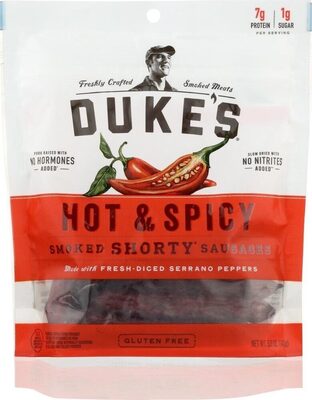
Duke's hot & spicy smoked shorty sausages
Halal Analysis
We recommend searching for certified Halal alternatives.
Pro Tip
Always double-check the label. Manufacturers change ingredients frequently without notice!