
Is Feta cheese Vegan?
No, Feta cheese is not vegan. As a traditional dairy product, it is derived entirely from animal milk, making it unsuitable for a plant-based diet. While its tangy, salty profile is beloved in salads and cooking, strict vegans must avoid standard Feta due to its core ingredients.
The Ingredient Breakdown
To understand why Feta fails the vegan test, we have to look at the production process and the specific ingredients listed on standard packaging. Traditional Feta is a protected designation of origin cheese, historically made from sheep's milk or a blend of sheep and goat milk. The modern commercial version, however, often utilizes cow's milk to meet mass-market demands.
The primary culprit is pasteurized part-skim milk. This is the base of the cheese and is an animal-derived product. Without milk, Feta cannot exist. Following the milk, you will find cheese culture and enzymes. While cheese cultures are often microbial, the enzymes used to coagulate the milk are frequently derived from the stomach lining of ruminants (animal rennet), though microbial rennet is sometimes used. Because the label simply lists 'enzymes' without specifying the source, it creates ambiguity that most strict vegans avoid.
Finally, additives like powdered cellulose (a plant-derived anti-caking agent) and natamycin (a natural mold inhibitor) are technically plant or microbial based. However, these are merely preservatives for the finished product; they do not change the fact that the cheese itself is made from milk. Therefore, regardless of the preservatives, the fundamental nature of Feta cheese remains non-vegan.
Nutritional Value
While Feta is not suitable for a vegan diet, it does have a distinct nutritional profile that some health-conscious consumers appreciate. It is generally lower in fat and calories compared to hard cheeses like Cheddar or Parmesan, largely because it is often made from part-skim milk and stored in brine, which reduces the overall fat content.
However, it is important to note that Feta is high in sodium due to the salt brine required for its preservation and flavor. For those monitoring sodium intake, this can be a significant drawback. On the positive side, it is a good source of calcium and protein, essential nutrients for bone health and muscle maintenance. It also contains Vitamin B12, which is vital for nerve function. While it fits into a non-vegan diet as a source of these nutrients, the sodium content suggests it should be consumed in moderation rather than as a staple food.
Frequently Asked Questions
Does Feta cheese contain dairy or gluten?
Is Feta cheese good for weight loss?
Where can I buy Feta cheese?
Is Feta cheese safe for kids?
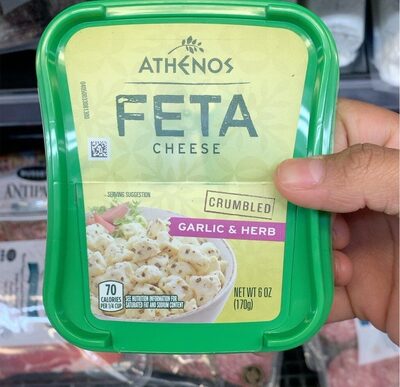
Feta cheese
Vegan Analysis
We recommend searching for certified Vegan alternatives.
Pro Tip
Always double-check the label. Manufacturers change ingredients frequently without notice!