
Is Fruit Snacks Halal?
The short answer is NO, standard Fruit Snacks are generally not considered Halal. While they may look innocent and fruity, a closer look at the ingredient label reveals a major red flag: gelatin. This common gelling agent is frequently sourced from pork, making these chewy treats impermissible for consumption by those following Islamic dietary laws.
The Ingredient Breakdown
As a food scientist, I look past the marketing claims and go straight to the formulation. When analyzing these Fruit Snacks, the formulation is actually quite standard for a chewy candy, relying on a specific combination of sweeteners, acids, and colors to achieve that signature texture and look. However, the texture is exactly where the problem lies.
The primary culprit here is Gelatin. Gelatin is a protein obtained by boiling skin, tendons, ligaments, and/or bones with water. It is usually obtained from cows or pigs. In the context of mass-produced snacks like these, the source is rarely specified on the packaging, but it is highly likely to be pork-based unless explicitly certified Halal. Without a Halal certification symbol, you cannot guarantee the source is permissible.
Additionally, the product contains Natural Flavors. This is a vague term that can sometimes hide non-Halal extracts, such as vanilla extract (which often contains alcohol) or other animal-derived flavorings. While the gelatin is the definitive dealbreaker, the lack of transparency on the 'natural flavors' adds another layer of concern for a strict Halal diet.
Finally, we see Citric Acid and Ascorbic Acid. These are standard food acids used to provide tartness and act as preservatives. They are generally derived from fermentation of sugars (like corn or molasses) and are perfectly Halal. The colors, including Annatto and Turmeric, are plant-derived and safe. Unfortunately, the presence of gelatin overrides these safe ingredients.
Nutritional Value
From a nutritional standpoint, these Fruit Snacks are essentially concentrated sugar and carbohydrates. The primary ingredients by weight are Corn Syrup and Sugar, followed by fruit juice concentrate. This creates a product that is very high in sugar and low in fiber, protein, or healthy fats.
A single serving can pack a significant caloric punch with little satiety. Because the fruit juice is from concentrate and the fiber has been processed out, these snacks spike blood sugar rapidly. While they are fortified with Ascorbic Acid (Vitamin C), this does not negate the high sugar content. They are best viewed as a candy, not a fruit serving, and should be consumed sparingly, especially by those monitoring their sugar intake or managing weight.
Frequently Asked Questions
Does Fruit Snacks contain dairy or gluten?
Is Fruit Snacks good for weight loss?
Where can I buy Fruit Snacks?
Is Fruit Snacks safe for kids?



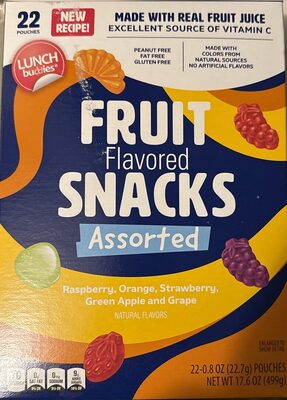
Fruit Snacks
Halal Analysis
We recommend searching for certified Halal alternatives.
Pro Tip
Always double-check the label. Manufacturers change ingredients frequently without notice!