
Is Fruity Jellies Keto?
No, Fruity Jellies are not keto-friendly. While they may be labeled as 'fruit snacks,' they are essentially pure sugar candies that will immediately spike your blood glucose levels. If you are strictly following a ketogenic diet, these jellies should be avoided entirely.
The Ingredient Breakdown
To understand why these jellies are incompatible with a low-carb lifestyle, we need to look at the first two ingredients listed: SUGAR and GLUCOSE SYRUP (CORN). In the food industry, ingredients are listed by weight, meaning the product is primarily composed of sweeteners. Sugar is a disaccharide that rapidly breaks down into glucose, causing an immediate insulin response. Glucose syrup, derived from corn, is a highly processed liquid sweetener that acts almost identically to pure sugar in the body, providing a massive load of fast-acting carbohydrates.
The gelling agent used here is FRUIT PECTIN. While pectin itself is a soluble fiber found in fruit peels and is generally low-carb, in this context, it acts as a structural binder for the sugar solution. It allows the sugar to set into a chewy texture, but it does not add nutritional value that offsets the carbohydrate load. Additionally, the inclusion of CORNSTARCH is a red flag. Cornstarch is a polysaccharide (a chain of glucose molecules) used as a thickener. While it is often used in 'sugar-free' versions of candies as a bulking agent, here it sits alongside sugar, adding to the total glycemic impact.
Finally, the additives like CITRIC ACID and SODIUM CITRATE are used to provide the signature tartness and preserve the texture, but they do nothing to mitigate the metabolic effects of the sweeteners. The bottom line is that the formula is engineered to deliver a high-sugar punch, not to support a fat-burning metabolic state.
Nutritional Value
From a nutritional standpoint, Fruity Jellies are classified as 'empty calories.' A standard serving contains a significant amount of calories derived almost exclusively from carbohydrates. Because the ketogenic diet restricts carbohydrate intake to typically 20-50 grams per day to maintain ketosis, a small handful of these jellies could easily consume your entire daily carb allowance. There is virtually zero fat content, which is the primary fuel source for the keto diet, and the protein content is negligible.
The lack of fiber is also concerning. Whole fruits contain fiber which slows down sugar absorption, but the processing of these jellies strips away the fruit fiber and replaces it with isolated pectin and added starches. This results in a high glycemic index food. Consuming high-sugar, low-fiber foods like this leads to blood sugar spikes followed by crashes, which triggers hunger and cravings—exactly the opposite effect you want when trying to manage weight or control appetite on a diet.
Frequently Asked Questions
Does Fruity Jellies contain dairy or gluten?
Is Fruity Jellies good for weight loss?
Where can I buy Fruity Jellies?
Is Fruity Jellies safe for kids?

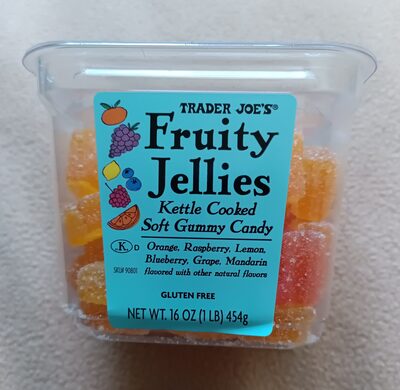
Fruity Jellies
Keto Analysis
We recommend searching for certified Keto alternatives.
Pro Tip
Always double-check the label. Manufacturers change ingredients frequently without notice!