
Is Golden tropics, cocoyam fufu flour Vegan?
The direct answer to whether Golden tropics, cocoyam fufu flour is vegan is MAYBE. While the primary ingredients are plant-based, the inclusion of mono and diglycerides introduces a gray area that strict vegans need to consider. This investigative breakdown analyzes the label to explain exactly where the potential conflict lies.
The Ingredient Breakdown
As a food scientist, I look beyond the marketing claims and straight into the chemical composition. Golden tropics, cocoyam fufu flour is primarily made from cocoyam and cassava. These are root vegetables, making them inherently vegan and the foundation of this product. However, the processing aids and fortification blend tell a more complex story.
The fortification includes niacin, iron, thiamine, and riboflavin. These vitamins are generally synthesized in labs today and are not derived from animal sources, so they pass the vegan test. The major red flag in this ingredient list is mono and diglycerides.
Here is why this specific ingredient matters: Mono and diglycerides are emulsifiers used to keep the flour from clumping and to improve texture. While they can be extracted from plant oils (soybean or palm), they are equally likely to be derived from animal fats (tallow or lard). Manufacturers are not required to specify the source on the label. Therefore, without a "Certified Vegan" seal, the presence of mono and diglycerides makes the product technically questionable for strict vegans.
Additionally, the product contains sodium bisulfite (a preservative) and BHT (butylated hydroxytoluene). BHT is a synthetic antioxidant; while it is not an animal product, some ethical vegans avoid synthetic additives. The FD&C Red No. 40 and Blue No. 1 are artificial colors. Historically, Red No. 40 was tested on animals, but the current version is synthetic and vegan. However, the mono and diglycerides remain the primary hurdle.
Nutritional Value
From a nutritional standpoint, Golden tropics, cocoyam fufu flour is designed as a fortified staple. It provides a significant amount of carbohydrates, which is expected for a fufu flour base consisting of cassava and cocoyam. The addition of niacin, iron, and B vitamins turns this from a simple starch into a fortified food product, which is beneficial for those using it as a primary energy source.
Regarding fat content, the inclusion of mono and diglycerides adds a negligible amount of fat, but it is not a high-fat product. The calorie count is consistent with other fufu flours—dense and energy-rich. For individuals monitoring their sugar intake, this product is generally low in sugar, as it is a savory flour mix rather than a sweetened dessert. It fits well into a diet requiring high energy output, but portion control is necessary for those on calorie-restricted diets.
Frequently Asked Questions
Does Golden tropics, cocoyam fufu flour contain dairy or gluten?
Is Golden tropics, cocoyam fufu flour good for weight loss?
Where can I buy Golden tropics, cocoyam fufu flour?
Is Golden tropics, cocoyam fufu flour safe for kids?
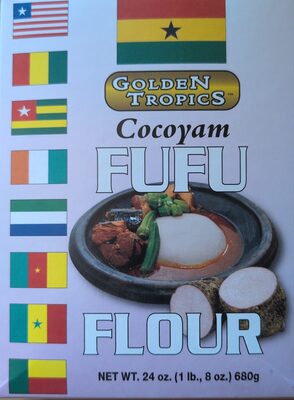
Golden tropics, cocoyam fufu flour
Vegan Analysis
We recommend searching for certified Vegan alternatives.
Pro Tip
Always double-check the label. Manufacturers change ingredients frequently without notice!