
Is Greens Blend Halal?
The direct answer is: **MAYBE**. While Greens Blend is packed with organic superfoods and appears clean on the surface, there is one specific ingredient that prevents a definitive 'Yes'—Natural Flavor. This ingredient can be derived from animal sources, meaning you must verify the source with the manufacturer to ensure it meets Halal standards.
The Ingredient Breakdown
As a food scientist, I look beyond the marketing claims and dive straight into the label. When analyzing Greens Blend for Halal compliance, we are looking for alcohol, animal derivatives, and hidden non-compliant enzymes. Here is the breakdown of the specific ingredients that matter.
Organic Greens (Wheat Grass, Alfalfa, Barley Grass, etc.): These are the core of the product. Being plant-based, they are inherently Halal. However, there is a nuance here regarding gluten. While Barley Grass is technically gluten-free if harvested before the grain forms, it is often a point of contention for those with Celiac disease or strict gluten avoidance. For Halal purposes, it is permissible, but be aware of cross-contamination risks in processing facilities.
Enzymes (Amylase, Protease, Lipase, Lactase, Cellulase): This is a complex area. The enzymes are listed with their fungal sources, such as Aspergillus oryzae and Trichoderma reesei. In modern food science, these are grown on fermentation vats. The critical question is: what was the fermentation medium? Historically, some enzymes were grown on pork or beef derivatives, but today, most commercial enzymes are grown on fungal or yeast mediums, making them Halal. However, without a specific Halal certification on the bottle, we cannot guarantee the medium used.
The Major Flag: Natural Flavor: This is the most ambiguous ingredient in the blend. 'Natural Flavor' can legally consist of up to 80 distinct chemical compounds. While it is often derived from plants (like peppermint or fruit oils), it can also be derived from animal sources (like beef fat for savory notes or dairy for creamy notes). Because the label does not specify the source of the Natural Flavor, this is the primary reason the product cannot be rated as definitively Halal.
Probiotics (Lactobacillus acidophilus): This is a beneficial bacteria. While generally safe, the strain Lactobacillus acidophilus is sometimes cultured on dairy mediums. If the product is labeled dairy-free, this is usually fine, but in a Halal audit, we look for confirmation that no animal-based culture mediums were used.
Nutritional Value
From a nutritional standpoint, Greens Blend is a powerhouse of micronutrients rather than a source of macronutrients like protein or fat. A typical serving provides a massive dose of Vitamin A, Vitamin C, and Vitamin K, largely derived from ingredients like Acerola Cherry Extract and Organic Spinach.
In terms of sugar and calories, the product is quite lean. The sweetness comes from Organic Pineapple, Organic Cacao, and F.O.S. (Fructooligosaccharide), which is a prebiotic fiber. This keeps the glycemic load relatively low compared to sugary juice blends. It fits well into a weight management diet because it adds volume and nutrients without significant caloric density. However, because of the Green Tea Leaf Extract, it does contain caffeine, which is something to monitor if you are sensitive or consuming multiple servings.
Frequently Asked Questions
Does Greens Blend contain dairy or gluten?
Is Greens Blend good for weight loss?
Where can I buy Greens Blend?
Is Greens Blend safe for kids?
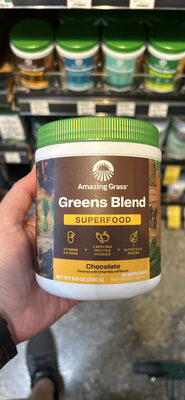
Greens Blend
Halal Analysis
We recommend searching for certified Halal alternatives.
Pro Tip
Always double-check the label. Manufacturers change ingredients frequently without notice!