
Is Havarti Dill Cheese Vegan?
No, Havarti Dill Cheese is not vegan. While the dill flavoring and microbial rennet might sound plant-based, the primary ingredient is pasteurized milk, making it strictly a dairy product. For anyone adhering to a strict vegan lifestyle, this cheese is off the menu.
The Ingredient Breakdown
To understand why Havarti Dill Cheese fails the vegan test, we have to look at the specific components used to make it. As a food scientist, I look at the function of each ingredient, and in this case, the foundation is entirely animal-derived.
The first and most critical ingredient is Pasteurized Milk. This is the base of the cheese, providing the proteins (casein and whey) and fats necessary for the curd structure. Because it comes from an animal (typically cows), it is strictly non-vegan. Even though microbial rennet is used instead of animal rennet, the milk remains the dealbreaker.
Next, we have Culture and Microbial Rennet. The culture consists of specific bacteria strains (like Lactococcus) that ferment lactose into lactic acid, which helps acidify and set the milk. Microbial rennet is an enzyme derived from molds (like Rhizomucor miehei) used to coagulate the milk. While both of these are technically vegan-friendly, they are processing aids that do not change the fact that the substrate is dairy.
Finally, Salt and Dill are added. Salt is a mineral and vegan, while dill is a plant herb. However, simply adding a plant flavor to an animal product does not make the final product vegan. The combination of milk and culture creates the Havarti texture and tang, solidifying its status as a dairy product.
Nutritional Value
While Havarti Dill Cheese is not vegan, it does offer a distinct nutritional profile typical of semi-soft cheeses. It is relatively high in saturated fat and sodium, which are important to monitor if you are watching your heart health or blood pressure. A standard serving provides a decent amount of protein, roughly 6 grams per ounce, derived entirely from the milk casein.
For those on a plant-based diet looking for alternatives, the nutritional landscape changes. Vegan cheeses often rely on coconut oil or cashews, which can be higher in unsaturated fats but lack the natural calcium found in dairy unless fortified. If you are strictly vegan, you would need to look for fortified alternatives to match the calcium content naturally present in Havarti.
Frequently Asked Questions
Does Havarti Dill Cheese contain dairy or gluten?
Is Havarti Dill Cheese good for weight loss?
Where can I buy Havarti Dill Cheese?
Is Havarti Dill Cheese safe for kids?
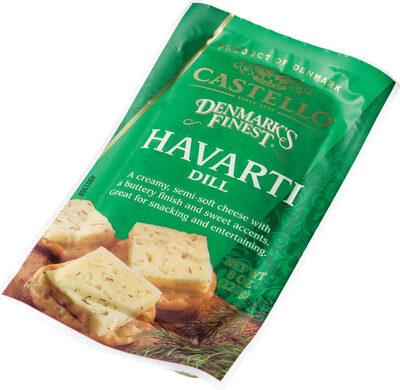
Havarti Dill Cheese
Vegan Analysis
We recommend searching for certified Vegan alternatives.
Pro Tip
Always double-check the label. Manufacturers change ingredients frequently without notice!