
Is Holiday Challah Vegan?
No, Holiday Challah is not vegan. While it skips obvious animal products like milk or butter, a closer look at the ingredient label reveals two key items that disqualify it: eggs and honey. If you are following a strict plant-based diet, this bread is off the menu.
The Ingredient Breakdown
As a food scientist, I look beyond the marketing on the package to the chemistry of the dough. Holiday Challah is a traditional enriched bread, meaning it is fortified with fats and proteins to create that signature soft, pillowy texture. However, the enrichment here comes from animal sources.
The most obvious flag is EGGS. In traditional Jewish baking, eggs are the defining characteristic of challah (aside from the braiding). They provide the rich yellow color, the tender crumb, and the distinct flavor profile. From a vegan perspective, this is an immediate disqualifier. There is no way to substitute eggs in a traditional challah recipe without fundamentally changing the texture.
The second, more subtle flag is HONEY. Many vegans avoid honey because it is a product of the labor of bees. While some vegetarians might consume honey, strict vegans generally do not. In this recipe, honey likely serves as a humectant (keeping the bread moist) and provides a floral sweetness that white sugar lacks.
Finally, let's look at the enrichment blend. The flour contains NIACIN, IRON, THIAMIN MONONITRATE, RIBOFLAVIN, and FOLIC ACID. These are synthetic vitamins added back into the flour after processing. While the source of these vitamins is generally plant-derived or synthetic, they are considered vegan-friendly. The texture enhancers like WHEAT STARCH and ENZYMES are also plant-based.
Nutritional Value
When analyzing the nutritional profile of Holiday Challah, the primary concern for health-conscious consumers is the sugar content. Between the added SUGAR and the HONEY, this bread sits on the sweeter end of the bread spectrum. This makes it delicious for French toast, but it also spikes the glycemic index slightly higher than a standard lean bread.
In terms of fats, the bread uses SOYBEAN OIL and CANOLA OIL. These are unsaturated fats, which are generally considered heart-healthier than the saturated fats found in butter (which is often used in other enriched breads). However, the presence of EGGS adds dietary cholesterol to the mix.
Regarding dietary restrictions, the WHEAT FLOUR base makes this unsuitable for those with Celiac disease or gluten intolerance. While the WHEAT PROTEIN (vital wheat gluten) is added to improve rise and chew, it concentrates the gluten content further.
Frequently Asked Questions
Does Holiday Challah contain dairy or gluten?
Is Holiday Challah good for weight loss?
Where can I buy Holiday Challah?
Is Holiday Challah safe for kids?
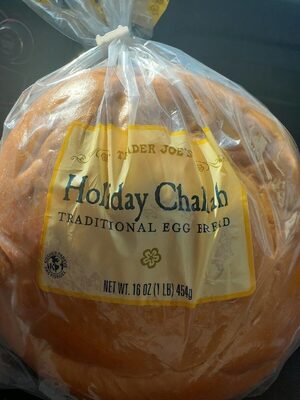
Holiday Challah
Vegan Analysis
We recommend searching for certified Vegan alternatives.
Pro Tip
Always double-check the label. Manufacturers change ingredients frequently without notice!