
Is Hula Ramyun Halal?
No, Hula Ramyun is not considered Halal. While the noodles themselves are plant-based, our deep dive into the flavor packet reveals the use of alcohol in the extraction process of key ingredients. This makes the product impermissible for consumption under strict Halal dietary guidelines.
The Ingredient Breakdown
As a food scientist, I look beyond the front-of-box marketing to the chemical composition. When analyzing Hula Ramyun, the issue isn't the wheat flour or the palm oil in the noodles. The problem lies entirely within the complex 'Soup Powder' and 'Vegetable Flavor' sections of the seasoning packet.
The primary flag is the use of oleoresins (such as oleoresin capsicum, ginger, and black pepper). In the food industry, oleoresins are often extracted using solvents like ethanol (alcohol) to capture the pure essential oils of spices. Since the source of this alcohol is not specified as non-ingestible or plant-derived, it is considered haram by most scholars. Furthermore, the beef bone concentrate and umami base are major red flags. Without a certified Halal stamp, beef extracts in mass-market Asian instant noodles are almost certainly derived from non-Halal slaughtered cattle.
Finally, the disodium inosinate and disodium guanylate are flavor enhancers often derived from animal sources (usually fish or meat) or microbial fermentation. While microbial fermentation can be Halal, in a non-certified product like Hula Ramyun, the risk of cross-contamination or animal sourcing is high. The combination of alcohol-based extracts and uncertified beef derivatives makes this product unsuitable for a Halal diet.
Nutritional Value
From a nutritional standpoint, Hula Ramyun falls into the category of an occasional indulgence rather than a health food. A standard serving contains roughly 450-500 calories, with a significant portion coming from refined carbohydrates in the noodles and sodium in the seasoning.
The soup base is heavy in salt and flavor enhancers, which can easily exceed 50% of the recommended daily sodium intake in one sitting. Additionally, the presence of palm oil contributes to the saturated fat content. While it provides quick energy, it lacks substantial fiber or protein. If you are monitoring your blood pressure or looking for a low-calorie meal, this is not the ideal choice.
Frequently Asked Questions
Does Hula Ramyun contain dairy or gluten?
Is Hula Ramyun good for weight loss?
Where can I buy Hula Ramyun?
Is Hula Ramyun safe for kids?
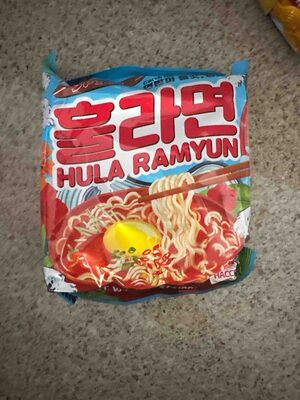
Hula Ramyun
Halal Analysis
We recommend searching for certified Halal alternatives.
Pro Tip
Always double-check the label. Manufacturers change ingredients frequently without notice!