
Is Italian salami Halal?
No, traditional Italian salami is not Halal. The primary ingredient in most authentic recipes is pork, which is strictly prohibited in Islamic dietary laws. Even if you find a beef version, the processing aids and preservatives used often render it non-compliant with Halal standards.
The Ingredient Breakdown
To understand why Italian salami fails Halal certification, we must look at the specific ingredients used in its production. As a food scientist, I look beyond the main meat source to the additives that define the product's texture and safety.
The most significant flag is Pork. Authentic Italian salami is historically and predominantly made from pork. In Islam, pork is Haram (forbidden) in its entirety, making any salami derived from it immediately non-Halal.
Even if the salami is made from Beef, there are hurdles. The meat must be slaughtered according to Zabihah guidelines. Furthermore, the curing process introduces chemical additives. Sodium Nitrite is a standard preservative used to prevent botulism and give the meat its pink color. While effective, it is a synthetic chemical that some Halal certification bodies restrict or require specific sourcing for.
Finally, ingredients like Dextrose (a sugar derived from starch) and Spices and Flavorings are generally Halal. However, the presence of Sodium Erythorbate (a synthetic fruit salt used to speed up curing) and antioxidants like BHA and BHT complicate the purity of the product. Without a specific Halal certification seal, you cannot guarantee the beef was slaughtered Islamically or that these additives are free from animal-derived sources.
Nutritional Value
From a nutritional standpoint, Italian salami is a calorie-dense, high-fat food. A typical serving contains significant amounts of saturated fat and sodium, which are linked to increased risks of heart disease and high blood pressure if consumed in excess.
It does provide a concentrated source of protein, but this comes at the cost of high caloric density. The added Sugar and Dextrose are minimal but serve as fuel for bacteria during fermentation. For those monitoring their sodium intake, salami is one of the highest sources in the deli aisle. It fits into a diet only in very strict moderation, specifically for those on Keto or Carnivore diets, but it is not a 'health food'.
Frequently Asked Questions
Does Italian salami contain dairy or gluten?
Is Italian salami good for weight loss?
Where can I buy Italian salami?
Is Italian salami safe for kids?
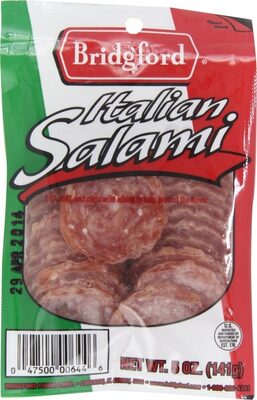
Italian salami
Halal Analysis
We recommend searching for certified Halal alternatives.
Pro Tip
Always double-check the label. Manufacturers change ingredients frequently without notice!