
Is Kimchi Ramyun Gluten Free?
No, Kimchi Ramyun is not gluten-free. While the spicy kimchi flavor profile might seem like it relies on vegetables and chili, the core structure of this meal is built on wheat. The noodles themselves are made from enriched wheat flour, and the seasoning packet contains fermented wheat protein, making it unsafe for anyone with Celiac disease or gluten sensitivity.
The Ingredient Breakdown
As a food scientist, I look at the label to determine the structural integrity of the food, not just the flavor profile. When analyzing Kimchi Ramyun, the verdict is clear: it contains gluten. The primary source of gluten is found in the noodles themselves. The ingredient list explicitly states Enriched wheat flour as the first and most abundant ingredient. This is the same flour used in bread and pasta, containing high levels of gluten-forming proteins like gliadin and glutenin.
However, the gluten exposure doesn't stop at the noodle brick. If you look further down the ingredient list, you will find fermented wheat protein. This is often used as a flavor enhancer to provide a savory, umami depth, but it is derived directly from wheat. For individuals with Celiac disease, even trace amounts of wheat protein can trigger an immune response. Additionally, while modified potato starch and potato starch are listed (which are gluten-free), the risk of cross-contamination in facilities that process wheat noodles is high, though the primary concern here is the intentional inclusion of wheat ingredients.
It is also important to note the presence of hydrolyzed soy protein and yeast extract. While these are generally safe regarding gluten, they are often processed in the same facilities as wheat products. However, the smoking gun remains the enriched wheat flour in the noodles. There is no ambiguity here; this product is wheat-based.
Nutritional Value
From a nutritional standpoint, Kimchi Ramyun is a calorie-dense, high-sodium convenience food. A standard serving contains a significant amount of fat, primarily from palm oil and beef fat. These are saturated fats that contribute to the rich mouthfeel of the broth but can add up quickly if you are monitoring your daily intake.
The carbohydrate count is high, as expected for a pasta-based meal, but the sugar content is worth noting. Ingredients like corn syrup and dextrose appear in the seasoning, which helps balance the intense heat of the red chili pepper. While the kimchi flavor suggests fermentation and gut-health benefits, the high sodium levels (driven by sodium carbonate and salt) likely outweigh any probiotic benefits found in the small amount of dehydrated cabbage. This is a meal designed for flavor and convenience, not for nutritional optimization.
Frequently Asked Questions
Does Kimchi Ramyun contain dairy or gluten?
Is Kimchi Ramyun good for weight loss?
Where can I buy Kimchi Ramyun?
Is Kimchi Ramyun safe for kids?
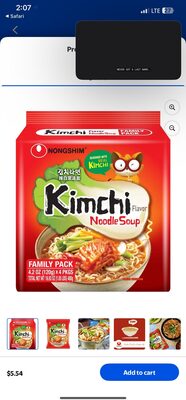
Kimchi Ramyun
Gluten Free Analysis
We recommend searching for certified Gluten Free alternatives.
Pro Tip
Always double-check the label. Manufacturers change ingredients frequently without notice!