
Is Korea everything sauce Keto?
No, Korea everything sauce is not keto-friendly. While the flavor profile promises a savory, spicy kick, a deep dive into the ingredient list reveals several hidden sugars and starches that are strictly off-limits on a ketogenic diet. If you are tracking your net carbs, this sauce is one to leave on the shelf.
The Ingredient Breakdown
As a food scientist, I look past the marketing buzzwords and straight at the formulation. The reason Korea everything sauce fails the keto test lies in its complex base of sweeteners and thickeners. Let's break down the specific culprits.
The primary offender is the inclusion of corn syrup and cane sugar. In the world of keto, these are immediate disqualifiers. Corn syrup is a high-glycemic sweetener that causes rapid insulin spikes, effectively shutting down fat-burning ketosis. Following that, we see maltodextrin listed under the granulated tamari soy sauce. Maltodextrin is a processed starch derived from corn (unless otherwise specified) that has a glycemic index even higher than table sugar. It is often used as a filler or anti-caking agent, but for a keto dieter, it is just as damaging as pure sugar.
We also need to look at the fermentation bases. The gochujang paste and white miso paste are traditional ingredients, but in commercial blends like this, they are often bulked up with grains. The label explicitly lists rice and yeast extract (a byproduct of fermentation usually fed on sugar or corn). Furthermore, the presence of cultured dextrose and molasses adds to the total carbohydrate load. Dextrose is a form of sugar derived from corn, and molasses is a byproduct of sugar refining. Even the canola oil is a red flag for those on a strict 'clean keto' protocol, as it is a highly processed industrial seed oil.
Nutritional Value
While the exact nutritional label isn't provided, we can calculate the likely impact based on the ingredients. The density of sweeteners suggests a high sugar content per serving. On a ketogenic diet, the goal is usually to stay under 20-50 grams of net carbs per day. A sauce containing corn syrup, cane sugar, and maltodextrin can easily contribute 5 to 10 grams of net carbs in just one or two tablespoons. This makes it incredibly difficult to fit into your daily macros without sacrificing other meals. Additionally, the combination of sugar and canola oil creates a calorie-dense product that offers little nutritional value in terms of vitamins or minerals, making it a 'empty calorie' food that does not support the metabolic goals of a low-carb lifestyle.
Frequently Asked Questions
Does Korea everything sauce contain dairy or gluten?
Is Korea everything sauce good for weight loss?
Where can I buy Korea everything sauce?
Is Korea everything sauce safe for kids?




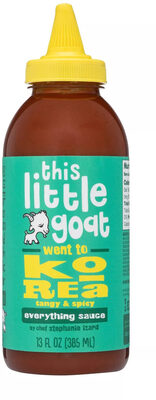
Korea everything sauce
Keto Analysis
We recommend searching for certified Keto alternatives.
Pro Tip
Always double-check the label. Manufacturers change ingredients frequently without notice!