
Is Leche Nido Fortificada Vegan?
The short answer is no, Leche Nido Fortificada is not vegan. While it is fortified with essential vitamins and minerals, the base of the product is dairy milk, and the specific form of Vitamin D used is animal-derived. For strict vegans, this product is unsuitable.
The Ingredient Breakdown
As a food scientist looking at the label of Leche Nido Fortificada, the non-vegan status is determined by two primary factors: the base ingredient and the vitamin sourcing. Let's analyze the specific components to understand why this product fails the vegan test.
The first and most obvious ingredient is whole milk. Milk is a lact secretion from mammals, making it inherently non-vegan. This is the primary ingredient, meaning the product is fundamentally a dairy product. It also contains soy lecithin, which is an emulsifier derived from soybeans. While soy lecithin is vegan, it is often processed in facilities that handle other allergens, though this is secondary to the milk content.
The more subtle non-vegan ingredient is the vitamin d3 (cholecalciferol). Vitamin D3 is the most effective form of Vitamin D for the human body, but it is typically derived from lanolin, a waxy substance extracted from sheep's wool. While some Vitamin D3 is now synthesized from lichen (making it vegan), the standard source in fortified dairy products like Leche Nido is usually lanolin-based. Unless the packaging explicitly states 'Vegan Vitamin D3' or 'Lichen-derived,' it is safe to assume it is animal-derived.
Finally, the other fortifications—sodium ascorbate (Vitamin C), ferric pyrophosphate (Iron), zinc sulfate, and vitamin a acetate—are generally synthesized in laboratories and are considered vegan-friendly. However, they cannot outweigh the dairy base and the animal-derived Vitamin D3.
Nutritional Value
Despite not being vegan, Leche Nido Fortificada is designed to be a nutrient-dense beverage. A standard serving provides a significant amount of calcium and protein, which is expected given the dairy base. The fortification adds Iron, Zinc, and Vitamins A, C, and D, making it a comprehensive nutritional supplement often marketed for children or those needing weight gain.
In terms of macronutrients, this is a full-fat product. It contains whole milk, which means it has a higher saturated fat content compared to skim or low-fat alternatives. It also contains added sugars (often found in sweetened versions of this milk, though the specific sugar content depends on the variant). For individuals looking to build muscle or gain weight, the calorie density is beneficial. However, for those on a strict calorie deficit or monitoring saturated fat intake, this product would be considered a high-density indulgence rather than a light beverage.
Frequently Asked Questions
Does Leche Nido Fortificada contain dairy or gluten?
Is Leche Nido Fortificada good for weight loss?
Where can I buy Leche Nido Fortificada?
Is Leche Nido Fortificada safe for kids?
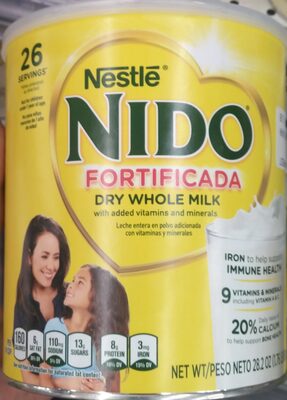
Leche Nido Fortificada
Vegan Analysis
We recommend searching for certified Vegan alternatives.
Pro Tip
Always double-check the label. Manufacturers change ingredients frequently without notice!