
Is Light Butter with Canola Oil Halal?
The short answer is: MAYBE. While Light Butter with Canola Oil is free from obvious Haram ingredients like alcohol or pork, it contains ambiguous additives like 'natural flavor' and emulsifiers that strict Halal observers may want to investigate further. This article breaks down exactly what is in this spread and why it falls into a gray area.
The Ingredient Breakdown
As a food scientist, I look at the formulation of products like this to understand their true nature. This product is essentially an emulsion of dairy and vegetable oil, designed to lower saturated fat content while maintaining a buttery texture. Let's look at the specific ingredients that matter for a Halal diet.
The base ingredients are water, butter (cream, salt), and canola oil. These are all perfectly Halal. Cream and oil are plant and animal-derived (in this case, cow's milk) and are permissible to consume. The inclusion of buttermilk adds to the dairy flavor profile without adding significant fat.
The controversy begins with the additives. Distilled monoglycerides are emulsifiers used to keep the oil and water mixed. While they can be derived from vegetable fats, they can also be sourced from animal fats. Without a specific manufacturer's certification, it is impossible to know the source simply by reading the label.
The most significant flag is natural flavor. In the food industry, 'natural flavor' can legally contain trace amounts of solvents or carriers, and in dairy products, it is sometimes used to carry savory notes that can be derived from animal sources. For a product to be certified Halal, the manufacturer must verify that the natural flavor contains no alcohol or non-Halal animal derivatives.
Finally, preservatives like potassium sorbate and sodium benzoate are synthetic and generally considered Halal. However, lactic acid is produced by bacterial fermentation. While usually derived from sugar or starch, it can technically be produced from dairy sources, though this is rare. The combination of these ambiguous ingredients is why this product does not carry a standard Halal certification seal.
Nutritional Value
From a nutritional standpoint, this product is designed for calorie reduction. A standard serving contains significantly fewer calories than regular butter because the heavy cream is diluted with water and canola oil. Canola oil is high in monounsaturated fats, which are generally considered heart-healthy compared to the saturated fats found in full-fat butter.
However, 'light' does not always mean 'nutrient-dense.' The inclusion of tapioca maltodextrin and food starch-modified acts as a bulking agent to give the spread volume. These are essentially refined carbohydrates. While the amount per serving is small, they offer little nutritional value beyond texture.
If you are monitoring your sodium intake, note that this product contains added salt alongside the salt in the butter and buttermilk. It fits well into a low-fat diet plan, but those strictly watching processed food additives might prefer a simpler product.
Frequently Asked Questions
Does Light Butter with Canola Oil contain dairy or gluten?
Is Light Butter with Canola Oil good for weight loss?
Where can I buy Light Butter with Canola Oil?
Is Light Butter with Canola Oil safe for kids?
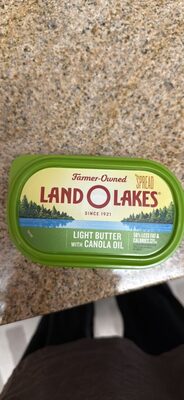
Light Butter with Canola Oil
Halal Analysis
We recommend searching for certified Halal alternatives.
Pro Tip
Always double-check the label. Manufacturers change ingredients frequently without notice!