
Is Milano Milk Chocolate Cookies Halal?
The short answer is: MAYBE. While Milano Milk Chocolate Cookies do not contain obvious pork derivatives or alcohol, they contain ambiguous ingredients like 'natural flavor' and 'vanilla extract' that can sometimes contain trace amounts of alcohol or animal-derived solvents. Therefore, strict Halal observance requires manufacturer verification.
The Ingredient Breakdown
As a food scientist, I look beyond the marketing on the package and dive straight into the formulation. When analyzing Milano Milk Chocolate Cookies for Halal compliance, we are looking for three main culprits: pork derivatives, alcohol, and non-Halal animal enzymes.
First, the good news. The list is free of gelatin, which is the most common red flag in confectionery. It also lacks lard (pork fat) or any obvious animal shortening. The fat sources listed are palm oil, soybean oil, and hydrogenated soybean oil. These are plant-based and generally considered Halal compliant.
However, we hit the first gray area with the milk chocolate. The ingredients list milk and nonfat milk. While dairy is Halal, the source of the milk matters. If the cheese cultures or enzymes used in the processing of the milk products are derived from animal rennet (specifically pork or non-Halal slaughtered cattle), it creates an issue. Most mass-market chocolates use vegetable or microbial rennet, but verification is key.
The most significant flags are natural flavor and vanilla extract. In the food industry, 'natural flavor' can be a catch-all term for complex chemical compounds derived from natural sources. These sources can include animal byproducts. More specifically, vanilla extract is traditionally made by macerating vanilla beans in a solution of ethyl alcohol and water. While the alcohol content in such a small serving is minute, strict Halal guidelines often prohibit the consumption of alcohol as a solvent, regardless of the amount.
Finally, soy lecithin is listed. There is a persistent myth that lecithin comes from animal brains (which would be Haram). This is false in modern manufacturing; soy lecithin is derived entirely from soybeans and is perfectly Halal.
Nutritional Value
From a nutritional standpoint, the Milano Milk Chocolate Cookie is a treat designed for indulgence, not health. The primary ingredients are sugar and enriched wheat flour, meaning the glycemic load is high. A single cookie contains roughly 130 calories, with a significant portion coming from added sugars and fats.
The fat profile is a mix of cocoa butter (saturated fat) and soybean oils. While not 'healthy' fats, they are standard for a cookie of this texture. The protein content is negligible, coming mostly from the eggs and milk. If you are monitoring your sugar intake or looking for a nutrient-dense snack, this does not fit the diet limits. It is an energy-dense, low-nutrient food item.
Frequently Asked Questions
Does Milano Milk Chocolate Cookies contain dairy or gluten?
Is Milano Milk Chocolate Cookies good for weight loss?
Where can I buy Milano Milk Chocolate Cookies?
Is Milano Milk Chocolate Cookies safe for kids?
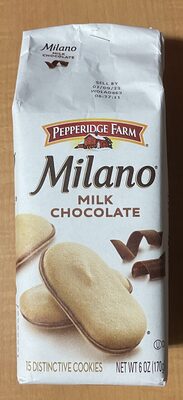
Milano Milk Chocolate Cookies
Halal Analysis
We recommend searching for certified Halal alternatives.
Pro Tip
Always double-check the label. Manufacturers change ingredients frequently without notice!