
Is Pesto creamy genovese Vegan?
No, Pesto creamy genovese is not vegan. While the label might highlight plant-based ingredients like sunflower oil and basil, the inclusion of two distinct types of cheese, whey, and buttermilk powder firmly places this product in the vegetarian category, strictly off-limits for a vegan diet.
The Ingredient Breakdown
When analyzing a product labeled "Pesto creamy genovese," we must look beyond the marketing and into the chemistry of the ingredients. The verdict is clear: this is a dairy-heavy product. The primary non-vegan culprits are the cheeses used to create that signature savory profile.
First, we have Grana Padano cheese and Pecorino Romano cheese. Grana Padano is a hard, granular cheese made from cow's milk, while Pecorino Romano is made from sheep's milk. Both are produced using animal rennet (enzymes), which is an enzyme extracted from the stomach lining of a slaughtered young ruminant. While some cheeses can be made with microbial rennet, traditional Italian cheeses like these almost exclusively use animal-derived enzymes, making them non-vegan.
Further complicating the matter are the dairy byproducts: whey powder and buttermilk powder. Whey is a byproduct of the cheese-making process—the liquid remaining after milk has been curdled and strained. Buttermilk powder is derived from the fermentation of milk. Additionally, the ingredient list notes natural flavor (milk), confirming that even the flavoring agents are derived from animal sources.
Finally, the ingredient list mentions enzymes [egg]. This is a critical detail. While the primary focus is often on dairy, the presence of egg enzymes indicates that this product is not only non-vegan but also not suitable for those with egg allergies or those following an egg-free diet. It is a strictly animal-derived product from top to bottom.
Nutritional Value
From a nutritional standpoint, Pesto creamy genovese is a calorie-dense condiment, largely due to the oils and cheeses. The inclusion of sunflower oil and extra virgin olive oil contributes a significant amount of fat, specifically monounsaturated and polyunsaturated fats. While these are generally considered heart-healthy fats in moderation, the serving size matters.
The cheeses and whey powder add to the protein content, but they also contribute significantly to the saturated fat and sodium levels. This is typical for traditional pestos, which are meant to be used sparingly as a flavor enhancer rather than a main course. The addition of sugar is interesting; traditional Genovese pesto rarely contains sugar, so this suggests a commercial adaptation to broaden the palate appeal, potentially increasing the glycemic load of the meal.
For those monitoring their intake, this product fits into a diet that allows for higher fat and sodium consumption. However, for strict low-sodium or low-fat diets, this would be a product to limit. It provides energy and flavor but should be balanced with nutrient-dense foods like vegetables and lean proteins.
Frequently Asked Questions
Does Pesto creamy genovese contain dairy or gluten?
Is Pesto creamy genovese good for weight loss?
Where can I buy Pesto creamy genovese?
Is Pesto creamy genovese safe for kids?


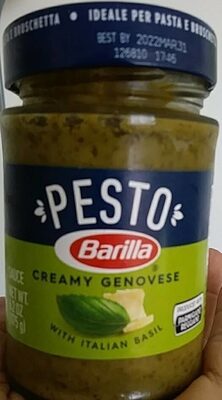
Pesto creamy genovese
Vegan Analysis
We recommend searching for certified Vegan alternatives.
Pro Tip
Always double-check the label. Manufacturers change ingredients frequently without notice!