
Is Spinach and ricotta ravioli Halal?
The direct answer is: **Maybe**. While the core ingredients like spinach, ricotta, and durum wheat pasta appear compliant, there is one specific ingredient that requires further investigation by the consumer. This analysis breaks down the cheese enzymes and the mysterious 'natural flavor' to help you make an informed decision.
The Ingredient Breakdown
As a food scientist, I look past the marketing on the front of the box and go straight to the label. For this Spinach and Ricotta Ravioli, the ingredients list is surprisingly transparent, but it contains one common ambiguity found in the food industry.
First, let's look at the pasta. The dough is made of durum wheat flour, water, and eggs. From a Halal perspective, eggs are generally permissible (Halal) as long as they are not fertilized. The wheat is fine, provided it is not processed with alcohol-based cleaners on the machinery (a rare practice, but possible).
The filling is where things get interesting. You have ricotta cheese, spinach, mozzarella, and parmesan. The critical factor in cheese is the enzyme used to coagulate the milk. Traditional Parmesan (Parmigiano Reggiano) often uses animal rennet (from calves), which makes it questionable for some Halal consumers. However, this product lists enzymes on the Parmesan and Mozzarella. In mass-market products, these enzymes are almost exclusively microbial (derived from fungi or bacteria) or vegetable-based, making them Halal compliant. However, without a specific certification, we rely on industry standards.
The final flag is the natural flavor. This is the industry's catch-all term. While it usually refers to plant-derived extracts or yeast, it can occasionally be derived from animal sources (like beef fat or bacon) to enhance savory notes. Because the manufacturer does not specify the source of this flavor, we cannot confirm 100% compliance.
Nutritional Value
From a nutritional standpoint, this ravioli is a dense source of energy. It combines complex carbohydrates from the durum wheat with significant fats from the heavy cream, parmesan, and mozzarella.
A standard serving likely contains between 300-400 calories, with a substantial portion coming from saturated fats due to the cream and cheese blend. The maltodextrin acts as a thickener and sugar source, providing a quick energy spike. While it provides protein from the milk and eggs, the sodium content (from salt and cheeses) is something to watch if you are monitoring blood pressure. It fits well into a balanced diet as a main course, but portion control is key for weight management.
Frequently Asked Questions
Does Spinach and ricotta ravioli contain dairy or gluten?
Is Spinach and ricotta ravioli good for weight loss?
Where can I buy Spinach and ricotta ravioli?
Is Spinach and ricotta ravioli safe for kids?
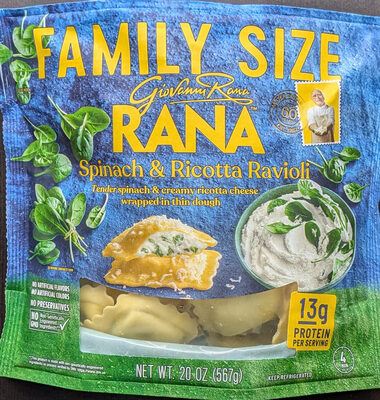
Spinach and ricotta ravioli
Halal Analysis
We recommend searching for certified Halal alternatives.
Pro Tip
Always double-check the label. Manufacturers change ingredients frequently without notice!