
Is Spreadable Cheddar Cheese Vegan? An Investigative Analysis
No, Spreadable Cheddar Cheese is not vegan. While the name suggests a simple dairy product, a closer look at the label reveals ingredients that strictly exclude it from a plant-based diet. This spread contains actual cheddar cheese, cream, and a controversial coloring agent derived from insects.
The Ingredient Breakdown
As a food scientist, I analyze ingredient labels to determine the true nature of a product. When we look at Spreadable Cheddar Cheese, the verdict is clear: it is an animal-derived product through and through. Let's break down the specific components that make this incompatible with veganism.
The primary ingredient, Cheddar cheese, is the immediate disqualifier. This isn't a plant-based imitation; the label specifies it is made from pasteurized milk, cheese culture, and enzymes. In the food industry, 'enzymes' in cheese are often rennet, which is an animal-derived product, though the specific source is rarely detailed on the label. The inclusion of cream further cements its dairy status, adding to the richness and fat content that vegans avoid.
Perhaps the most surprising ingredient for some consumers is carmine (also listed as cochineal). This is a red pigment derived from crushing cochineal insects. While it provides a stable color, it is strictly non-vegan. Many vegans avoid carmine for ethical reasons, distinct from the dairy issue. The spread also utilizes reduced protein whey and reduced lactose whey. Whey is a byproduct of the cheese-making process; it is the liquid that separates from the curds. While often used to add protein or sweetness, it is fundamentally a dairy derivative.
Finally, the texture is held together by xanthan gum and preserved with sorbic acid. While these are technically vegan-friendly additives, they are used here to stabilize a mixture that is fundamentally non-vegan. Therefore, despite the presence of gums and acids, the core composition remains dairy-heavy.
Nutritional Value
From a nutritional standpoint, this product is designed for flavor and shelf-stability rather than health optimization. It is high in calories and fat due to the combination of cheddar cheese and cream. For those monitoring their saturated fat intake, this spread would be considered a high-risk food item.
The product contains reduced lactose whey, which suggests the manufacturer has attempted to lower the sugar content (lactose) for those with mild sensitivities. However, this does not make the product low-carb or sugar-free. It still contains significant amounts of dairy sugars and proteins. It fits into the diet of a standard omnivore looking for a convenient snack, but it does not align with low-fat, dairy-free, or vegan dietary restrictions.
Frequently Asked Questions
Does Spreadable Cheddar Cheese contain dairy or gluten?
Is Spreadable Cheddar Cheese good for weight loss?
Where can I buy Spreadable Cheddar Cheese?
Is Spreadable Cheddar Cheese safe for kids?
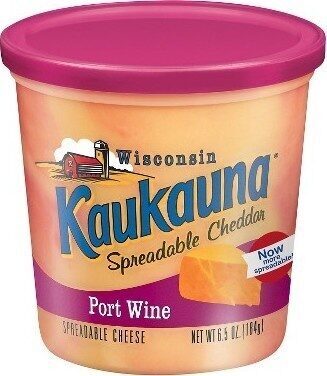
Spreadable Cheddar Cheese
Vegan Analysis
We recommend searching for certified Vegan alternatives.
Pro Tip
Always double-check the label. Manufacturers change ingredients frequently without notice!