
Is Steamed Pork & Ginger Soup Dumplings Kosher?
No, Steamed Pork & Ginger Soup Dumplings are not kosher. While the flavor profile of pork and ginger is undeniably delicious, this product violates fundamental kosher laws. The most obvious issue is the pork itself, but there is a secondary, more hidden violation in the soup base that requires a closer look at the ingredients.
The Ingredient Breakdown
When evaluating any food for kosher compliance, we must look beyond the main protein. Even if the meat were permissible, the auxiliary ingredients often tell the real story. Let's dissect the specific components of these dumplings to understand exactly why they fail the kosher test.
The primary and most immediate disqualifier is the filling itself. The ingredient list explicitly states PORK. In Jewish dietary law (Kashrut), the pig is an unclean animal. It does not chew its cud and does not have a split hoof, making it non-kosher. Therefore, any product containing pork is automatically non-kosher, regardless of how it is processed or what other ingredients are used.
However, even if this were a beef or chicken dumpling, we would encounter a second major issue in the SOUP BASE. This ingredient provides the signature 'soup' inside the dumpling, but it contains GELATIN. Gelatin is a protein derived from the collagen in animal skin, bones, and connective tissue. While gelatin can technically be sourced from kosher animals (like kosher beef), it is almost exclusively sourced from pork or non-kosher slaughtered cattle in the commercial food industry. Because the source of the gelatin is not specified as kosher, and because the product already contains pork, we can safely assume the gelatin is also non-kosher.
Finally, we must look at the SOY SAUCE and COOKING RICE WINE. Traditional soy sauce is fermented with wheat, and rice wine often contains alcohol produced in facilities that handle non-kosher ingredients. While these are not the primary reasons these dumplings are non-kosher, they represent additional hurdles that would require strict certification even if the pork and gelatin were removed.
Nutritional Value
From a nutritional standpoint, these dumplings are a dense source of calories and fat. The filling relies heavily on PORK, which is naturally high in saturated fats. Combined with the addition of SESAME OIL and SOYBEAN OIL, the fat content per serving is significant. While fat is necessary for energy, the ratio in a processed dumpling like this can easily exceed daily recommendations if eaten in large quantities.
The carbohydrate content comes primarily from the dough made of WHEAT FLOUR and POTATO STARCH. This provides a quick source of energy, but it is refined carbohydrates with little fiber. The SUGAR listed in the filling adds to the caloric density without offering nutritional benefits. While these dumplings can certainly fit into a balanced diet as an occasional treat, they are not a 'health food' and should be consumed in moderation, particularly by those monitoring their sodium intake, as SALT and SOY SAUCE contribute a high amount of sodium.
Frequently Asked Questions
Does Steamed Pork & Ginger Soup Dumplings contain dairy or gluten?
Is Steamed Pork & Ginger Soup Dumplings good for weight loss?
Where can I buy Steamed Pork & Ginger Soup Dumplings?
Is Steamed Pork & Ginger Soup Dumplings safe for kids?
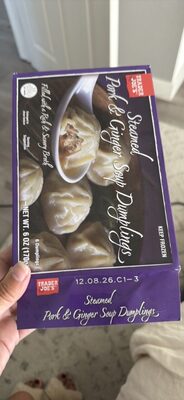
Steamed Pork & Ginger Soup Dumplings
Kosher Analysis
We recommend searching for certified Kosher alternatives.
Pro Tip
Always double-check the label. Manufacturers change ingredients frequently without notice!