
Is Traditional bread crumbs Vegan?
The answer is MAYBE. While Traditional bread crumbs does not contain obvious animal products like milk or eggs, a deeper look at the ingredients reveals a potential ethical issue. This investigation explores why that spoonful of sugar makes all the difference for strict vegans.
The Ingredient Breakdown
As a food scientist, I look at ingredients lists to determine the true nature of a product. For Traditional bread crumbs, the label reads: rice flour, xanthan gum, cane sugar, yeast, sea salt, and ascorbic acid. At first glance, this looks like a clean, plant-based list. However, the cane sugar is the specific ingredient that requires scrutiny.
The issue with cane sugar in the context of veganism often lies in the processing method. In the United States, a significant portion of refined cane sugar is processed using bone char—charred animal bones—to filter and bleach the sugar crystals to achieve that pristine white color. While no bone char remains in the final product, its use in manufacturing renders the sugar non-vegan to many strict adherents. Unless the manufacturer explicitly states that their sugar is organic, unrefined, or processed without bone char (often labeled as beet sugar), its origin is ethically ambiguous.
Fortunately, the other ingredients pass the test. Rice flour is a grain-based staple, and xanthan gum is a polysaccharide produced by bacterial fermentation, making it perfectly vegan. Yeast is a single-celled fungus, and while there is occasional debate about yeast in the vegan community, it is widely accepted as a plant-based ingredient. Ascorbic acid is simply Vitamin C, and sea salt is a mineral. Therefore, the sugar is the sole barrier to a definitive 'Yes'.
Nutritional Value
From a nutritional standpoint, Traditional bread crumbs function primarily as a carbohydrate source. The base ingredient, rice flour, provides the bulk of the calories and starch. Because these are processed crumbs, they lack the fiber density of whole grains, meaning they digest relatively quickly and can spike blood sugar levels, especially when fried or baked onto food.
The inclusion of cane sugar adds to the carbohydrate count and increases the glycemic index slightly. While the amount per serving is likely low, it contributes to the overall caloric density without offering significant micronutrients. There is very little fat or protein in this product, so it doesn't offer much satiety. It fits into a standard diet as a texture enhancer, but for those monitoring sugar intake strictly, it's worth noting that added sugar is present, even if in small amounts.
Frequently Asked Questions
Does Traditional bread crumbs contain dairy or gluten?
Is Traditional bread crumbs good for weight loss?
Where can I buy Traditional bread crumbs?
Is Traditional bread crumbs safe for kids?


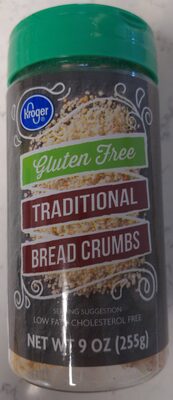
Traditional bread crumbs
Vegan Analysis
We recommend searching for certified Vegan alternatives.
Pro Tip
Always double-check the label. Manufacturers change ingredients frequently without notice!