
Is Tri-Color Rotini Gluten Free?
No, standard Tri-Color Rotini is absolutely not gluten-free. As a pasta made primarily from wheat, it contains the specific proteins (gluten) that cause adverse reactions in those with celiac disease or gluten sensitivity. If you are looking at a standard box of this colorful pasta, you must avoid it to maintain a strict gluten-free diet.
The Ingredient Breakdown
To understand why this pasta is off-limits for a gluten-free diet, we need to look closely at the ingredient list. The primary component of Tri-Color Rotini is semolina. Semolina is a coarse flour derived specifically from wheat. It is the standard backbone of traditional Italian pasta, providing that distinct chewy texture. Because it is wheat-based, it is inherently high in gluten.
The second major ingredient listed is durum flour. While semolina and durum flour come from the same wheat variety (durum wheat), they are processed differently. Durum flour is simply a finer grind of the same wheat kernel. Therefore, it carries the same gluten risks as semolina. In the world of food science, these two ingredients are the definitive markers that a product contains gluten.
Finally, the color in "Tri-Color" comes from dried tomato and dried spinach. While these vegetable powders are naturally gluten-free, they are mixed directly into the wheat dough. In a manufacturing facility that processes wheat, there is no way to separate the vegetable powders from the wheat base. Therefore, the entire product is considered contaminated for anyone with a gluten allergy.
Nutritional Value
From a nutritional standpoint, Tri-Color Rotini functions similarly to other traditional wheat pastas. It is a carbohydrate-dense food, providing a quick source of energy. The enrichment process adds essential vitamins like niacin, iron, and B vitamins, which is standard for refined wheat products to replace nutrients lost during processing.
Regarding dietary fit, this pasta is high in calories and carbohydrates but low in fiber and protein compared to whole-grain or legume-based alternatives. It fits into a standard diet for energy needs, but it does not offer the blood sugar stability of complex carbohydrates. For those monitoring sugar intake, the vegetable powders add negligible sugar, making the carbohydrate load purely from the wheat starch.
Frequently Asked Questions
Does Tri-Color Rotini contain dairy or gluten?
Is Tri-Color Rotini good for weight loss?
Where can I buy Tri-Color Rotini?
Is Tri-Color Rotini safe for kids?


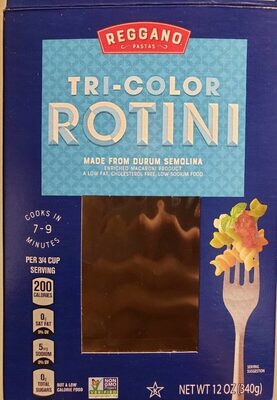
Tri-Color Rotini
Gluten Free Analysis
We recommend searching for certified Gluten Free alternatives.
Pro Tip
Always double-check the label. Manufacturers change ingredients frequently without notice!