
Is Turkish Delight Vegan?
No, traditional Turkish Delight is not vegan. While the chewy, jelly-like texture seems harmless, a look at the ingredient label reveals hidden dairy derivatives. Specifically, this product contains skimmed milk powder, whey permeate powder, and milk fat, making it unsuitable for a plant-based diet.
The Ingredient Breakdown
Turkish Delight (or Lokum) is often marketed as a fruit-and-starch confection, but commercial varieties frequently use dairy for texture and flavor. Based on the ingredient list provided, here is why this specific product fails the vegan test.
The primary non-vegan culprits are skimmed milk powder and whey permeate powder. Whey is a byproduct of cheese manufacturing and is strictly animal-derived. Manufacturers often add these to enhance the mouthfeel, giving the gel a creamier consistency than pure starch could provide. Additionally, the presence of milk fat contributes to the flavor profile, likely mimicking a richer, buttery note.
There are also several additives that, while technically plant-derived or synthetic, are often points of concern for strict vegans. Palm oil is listed, which raises ethical environmental concerns. Furthermore, the chemical additives E450 (diphosphates) and E452 (sodium polyphosphate) are used as gelling agents and sequestrants. While they are usually vegan, they are highly processed.
Finally, the coloring agents beetroot red and carotenes are plant-based, but the emulsifier (6442) is a proprietary code that is not standardly listed in public databases, adding a layer of mystery to the formulation.
Nutritional Value
From a nutritional standpoint, this Turkish Delight is primarily a source of empty calories. The first two ingredients are glucose syrup and sugar, meaning the glycemic load is extremely high. This will cause rapid spikes in blood sugar levels, making it a poor choice for anyone managing diabetes or insulin resistance.
Regarding fat content, the inclusion of cocoa butter, palm oil, and milk fat pushes the calorie count up significantly compared to a fruit-based gel. While cocoa butter is a source of stearic acid, the combination with palm and milk fats contributes to saturated fat intake. It fits into a diet only as a rare, small-portion treat, as it offers little satiety or nutritional benefit.
Frequently Asked Questions
Does Turkish Delight contain dairy or gluten?
Is Turkish Delight good for weight loss?
Where can I buy Turkish Delight?
Is Turkish Delight safe for kids?
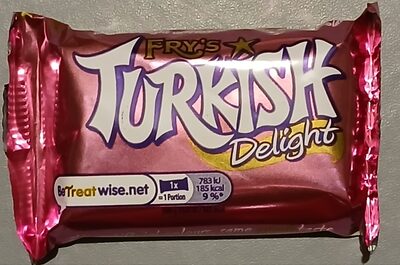
Turkish Delight
Vegan Analysis
We recommend searching for certified Vegan alternatives.
Pro Tip
Always double-check the label. Manufacturers change ingredients frequently without notice!