
Is Uncured Pepperoni Cauliflower Crust Pizza Halal?
No, Uncured Pepperoni Cauliflower Crust Pizza is not Halal. While the cauliflower crust and cheese might seem permissible, the pepperoni topping is the dealbreaker. This pizza contains a mixture of pork and beef, making it strictly forbidden for those following a Halal diet.
The Ingredient Breakdown
As a food scientist, I look past the marketing buzzwords like "uncured" and "cauliflower" to the actual composition of the food. When analyzing this pizza for Halal compliance, we must look at every single ingredient added to the pie. The verdict is clear: this product fails the test due to the meat source and processing aids.
The primary issue lies in the Uncured Pepperoni. The ingredient label explicitly lists Pork as the first meat source, followed by Beef. In Islamic dietary laws, the consumption of pork is strictly prohibited (Haram). Even if the beef portion were compliant, the presence of pork contaminates the entire product. Furthermore, the pepperoni utilizes Cultured Celery Powder. While this is a natural preservative often used to cure meats without synthetic nitrates, it is derived from celery, which is perfectly Halal. However, it does not negate the fact that the meat itself is pork.
Next, we must examine the Cheeses. The pizza contains Low Moisture Mozzarella, Pecorino Romano, and Parmesan. Traditionally, hard Italian cheeses like Pecorino Romano and Parmesan are made using animal rennet (enzymes extracted from the stomach lining of unweaned animals). While the vegetable-based rennet is becoming more common, the label does not specify the source of the enzymes. Without a Halal certification verifying that non-animal or Halal-slaughtered rennet was used, these cheeses are considered Mashbooh (suspect) by many scholars.
Finally, the Crust itself is a blend of Cauliflower, Mozzarella Cheese, and starches. It also contains Egg Whites. Eggs are generally Halal, provided the chicken was slaughtered according to Islamic rites, though many scholars consider eggs from non-Halal sources to be permissible. The starches (rice, tapioca) and xanthan gum are plant-derived and safe. However, the crust is baked directly alongside the pork pepperoni, leading to cross-contamination of juices and fats, which renders the entire pizza non-compliant.
Nutritional Value
From a nutritional standpoint, this pizza is marketed as a healthier alternative to traditional crusts, but the data tells a different story. A standard serving of this pizza can contain between 300 to 400 calories, with a significant portion coming from fat due to the multiple layers of cheese and the pork pepperoni. While the crust provides a lower glycemic index than refined white flour, the Turbinado Sugar and Cane Sugar found in both the crust and the pepperoni add unnecessary simple carbohydrates.
Regarding dietary restrictions, this pizza is Gluten-Free (relying on rice and tapioca starches), which is a benefit for those with Celiac disease. However, it is not Dairy-Free or Egg-Free. If you are looking for a weight-loss friendly option, the high saturated fat content from the cheese and pork may be a concern. It is a better option than traditional pizza regarding refined flour, but it is still a processed, high-sodium food item.
Frequently Asked Questions
Does Uncured Pepperoni Cauliflower Crust Pizza contain dairy or gluten?
Is Uncured Pepperoni Cauliflower Crust Pizza good for weight loss?
Where can I buy Uncured Pepperoni Cauliflower Crust Pizza?
Is Uncured Pepperoni Cauliflower Crust Pizza safe for kids?
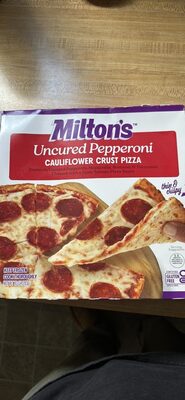
Uncured Pepperoni Cauliflower Crust Pizza
Halal Analysis
We recommend searching for certified Halal alternatives.
Pro Tip
Always double-check the label. Manufacturers change ingredients frequently without notice!