
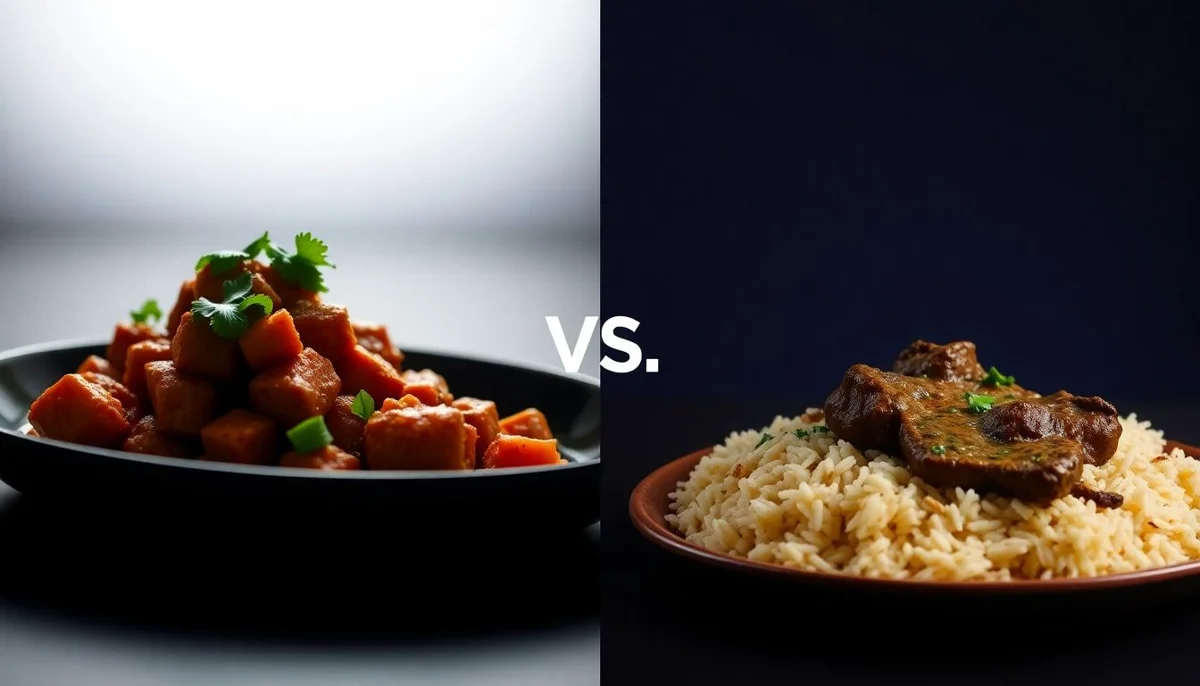
Tikka Marinade vs Lamb Saag
A concentrated spice punch faces off against a full-meal lamb and spinach plate. One is built to flavor and finish, the other to satisfy and sustain—both bring South Asian flair but very different nutritional footprints.
Based on AI sentiment analysis

Tikka Marinade
Chef's Hacks
- Marinate lean proteins: Use the tikka masala marinade to marinate chicken breast, tofu, or firm fish for 20–60 minutes before grilling or baking to add concentrated Indian spice character without many calories.
- Flavor roasted vegetables: Toss roasted cauliflower, carrots, or eggplant with a small amount of the marinade during the last 5–10 minutes of roasting to create a smoky, tangy glaze that keeps the dish low-calorie.
- Light sauce for grain bowls: Stir a tablespoon or two into a bowl of steamed greens and quinoa to provide bold flavor; because the marinade is low-calorie, you can use it liberally to perk up lunches without heavy sauces.
Did You Know?
"Tikka masala as a sauce has an origin story debated between India and the UK; chicken tikka masala is often cited as a British invention that adapted South Asian spices into a tomato- and cream-based curry to suit local palates, demonstrating how sauces like tikka masala evolved through cultural exchange."
The Showdown
Pros & Cons
Tikka Marinade
- Very low-calorie seasoning: At roughly 20 kcal per serving and only about 2 g of carbohydrates, the tikka masala marinade is extremely light and lets you add bold flavor without large caloric impact, making it a practical choice for calorie-controlled meals.
- Simple, spice-forward ingredient list: The marinade uses identifiable spices (coriander, cumin, tamarind, ground ginger, garlic powder) which provide authentic flavor without heavy dairy or meat fats, offering versatility across proteins and vegetables.
- Lower portion of fat and sugars: With around 1 g fat and 1 g fiber per serving, the product minimizes saturated fat and added sugars (none listed), which helps those managing total fat intake or cutting sweet sauces.
- Contains processed thickeners and preservatives: Modified corn starch and acids (acetic, citric, lactic) are used for texture and shelf stability, which signal higher processing and fewer whole-food ingredients compared with made-from-scratch sauces.
- Relatively low nutrient density: At ~20 kcal per serving, the marinade contributes almost no protein, vitamins, or minerals on its own, so it cannot be counted on to provide satiety or micronutrients without a substantial accompaniment.
- Use of refined vegetable oil: Canola oil is present and while common, it is a refined oil that raises questions for shoppers seeking minimally processed or cold-pressed oils and contributes polyunsaturated fat without the benefits of whole-food fat sources.
Lamb Saag & Rice
- Complete, balanced meal with real protein and vegetables: The lamb saag includes boneless lamb, spinach sauce, and basmati rice, delivering real animal protein plus a vegetable base (spinach) that adds micronutrients and volume.
- No added sugars and reasonable ingredient transparency: Nutrition labeling shows 0 g added sugars and ingredient lists are mostly whole foods—spinach, tomatoes, basmati rice, lamb, yogurt—while seasonings are mostly spices and natural flavor enhancers.
- Textural complexity and satisfying mouthfeel: The combination of cream, yogurt, rice, and tender lamb creates a thick, creamy bed of spinach with separate grains of basmati rice and succulent pieces of lamb, offering a full-meal sensory profile.
- Higher caloric and carbohydrate load: With 46 g carbohydrates per serving (16.3 g/100 g) and presence of cream and lamb, the meal will be considerably higher in calories than the marinade on its own, which may be a downside for calorie-restricted diets.
- Saturated fat and cholesterol present: The dish contains cream and lamb, and labeling lists around 0.055 g cholesterol per serving (55 mg), which means higher saturated fat content relative to purely plant-based or lean protein options.
- Presence of refined oils and gums: Expeller-pressed sunflower oil and xanthan gum are used in the spinach sauce and rice; while generally safe, these are processed components and may be undesirable for shoppers aiming for minimal processing.
Flavor Profile
Flavor & Texture
Ingredient Quality
Nutritional Value
Value Verdict
A Better Alternative?
Homemade yogurt-based tikka sauce — making a tikka marinade at home from plain yogurt, fresh ginger, garlic, ground spices, lemon juice, and a touch of oil is a healthier alternative because it replaces industrial thickeners and acids with real dairy for creaminess, gives you control over salt and oil type, and supplies some protein and probiotics when made with cultured yogurt.
If both A and B are disappointing, our experts recommend this healthier swap.
Make it a Meal
Try pairing the winner with Cooling cucumber raita
"A cucumber raita—yogurt mixed with grated cucumber, a pinch of cumin, and salt—works perfectly because the creamy, cooling yogurt base contrasts the heat and acidity of both the tikka marinade and the lamb saag, cutting through fat and balancing spices. The dairy in the raita soothes the palate and adds a fresh vegetal note that complements tomato and tamarind tang in the tikka, while the cucumber’s crunch refreshes the mouth between bites of the rich, spinach-laden lamb saag, enhancing overall enjoyment and reducing palate fatigue."
Buy Cooling cucumber raitaFinal Conclusion
These two items are not direct equals: Product A is a concentrated tikka masala marinade engineered to add bold spice while contributing almost no calories or protein, and Product B is a composed lamb saag with basmati rice that functions as a full meal. If your priority is calorie control, minimizing added sugars and fats, and adding vibrant spice to a lean protein, the tikka marinade is the smarter pick—its low energy (around 20 kcal per serving) and minimal macronutrients let you flavor food without altering your meal plan. If your priority is convenience, fullness, and nutrient density—real animal protein, cooked spinach, and rice in one package—then the lamb saag is superior: it delivers umami, texture, and micronutrients like calcium and iron and contains no added sugars. Ingredient-wise, A relies on modified starches, refined canola oil, and multiple food acids to achieve stability and brightness; B relies on whole foods with some functional additives such as xanthan gum and expeller-pressed oil. From a health standpoint, A is better when used sparingly as a flavor enhancer, while B is better as an occasional, satisfying meal that contributes meaningful protein but should be consumed mindful of saturated fat and cholesterol. Choose A if you want to control portions and calories and already have the protein base; choose B if you need a complete, comforting meal with real ingredients and don’t mind the higher caloric and fat load. Both have places in a balanced diet depending on your needs and priorities.
Share the Verdict
Help your friends eat smarter.
Frequently Asked Questions
Which product is better if I’m trying to lose weight?
For weight loss, Product A is generally better because it contains only about 20 kcal per serving and minimal fat and carbohydrates, allowing you to add big flavor to lean protein or vegetables without many extra calories. However, because it provides almost no protein or fiber, you should pair it with high-protein, high-fiber foods (grilled chicken, legumes, or vegetables) to maintain satiety; relying on the sauce alone will not keep you full.
Is the lamb saag a healthier option than the tikka marinade if I want nutrients?
The lamb saag supplies more nutrients per serving—protein from lamb, iron and vitamins from spinach, calcium from yogurt, and energy-providing carbohydrates from basmati rice—so it is nutritionally denser and more likely to be a complete meal. That said, it also contains cream and lamb fat which increase saturated fat and cholesterol, making it a better occasional meal for most people rather than an everyday choice if cardiovascular risk is a concern.



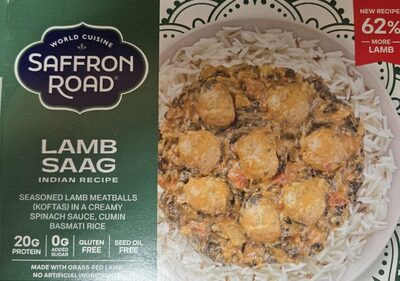
Lamb Saag & Rice
Chef's Hacks
- Complete convenience meal: Reheat the lamb saag with basmati rice as a standalone lunch or dinner—no additional sides needed, since it supplies protein, starch, and vegetables.
- Transform into a stuffed pepper filling: Mix warmed lamb saag with extra cooked rice and spoon into bell peppers; top with a sprinkle of low-fat cheese and bake for a Mediterranean-Indian fusion bake.
- Split and supplement for lower calories: Serve half the portion over a large bed of steamed greens or cauliflower rice to reduce total carbohydrate intake while maintaining the dish’s creamy, savory character.
Did You Know?
"Saag (spinach-based dishes) are traditional across South Asia and were popularized in many regions for their ability to stretch small amounts of meat into a nutrient-dense meal; combining spinach with dairy (yogurt or cream) is a time-honored technique to mellow bitter greens and add richness."