
Is Golden Oreo Halal?
The direct answer is: **Maybe**. Golden Oreos do not contain obvious animal-derived ingredients like pork gelatin or alcohol, but the presence of 'Natural Flavor' creates a gray area. Without a specific Halal certification on the package, the status depends entirely on the source of that flavoring.
The Ingredient Breakdown
As a food scientist, I look at the label to determine the source of potential issues. The Golden Oreo wafer is essentially a sugar cookie, and the ingredients reflect that. The base is Unbleached Enriched Flour (wheat), which is perfectly Halal. The fats come from a blend of Canola Oil and Palm Oil. While palm oil is sometimes controversial for environmental reasons, it is botanically Halal.
The primary concern for Halal consumers lies in the flavorings. The ingredient list includes both Artificial Flavor and Natural Flavor. Artificial flavors are synthesized chemically and are generally considered safe and Halal. However, Natural Flavor is the wildcard. By definition, 'Natural Flavor' can be derived from plant or animal sources. While it is most likely plant-derived in a cookie, manufacturers are not required to disclose the source. If the natural flavor was derived from vanilla bean extract processed with alcohol, or animal-derived enzymes, it would compromise the Halal status.
Finally, we must look at Soy Lecithin. There is a common misconception that soy lecithin is forbidden due to genetically modified organisms (GMOs). However, from a Halal and Shariah perspective, GMOs are generally permitted, and lecithin is a fat extracted from soybeans, making it permissible. The only exception would be if the lecithin was used as a carrier for a non-Halal enzyme, which is rare but possible.
Verdict: The ingredients list is 'clean' of obvious red flags, but the lack of certification means you are trusting the manufacturer's supply chain implicitly.
Nutritional Value
From a nutritional standpoint, Golden Oreos are a treat designed for indulgence, not health. A standard serving (two cookies) contains approximately 140 calories, derived almost entirely from Sugar and refined Flour. The High Fructose Corn Syrup and sugar content are significant, contributing to 13g of sugar per serving. This is a high amount for such a small snack and can spike blood glucose levels rapidly.
The fat content (5g per serving) comes from Canola Oil and Palm Oil. While these are not 'bad' fats in moderation, they are processed oils. There is virtually no fiber or protein in Golden Oreos, meaning they provide very little satiety. If you are monitoring your caloric intake or trying to manage blood sugar, these cookies should be consumed sparingly. They fit into a diet only as an occasional 'cheat' item, not a daily snack.
Frequently Asked Questions
Does Golden Oreo contain dairy or gluten?
Is Golden Oreo good for weight loss?
Where can I buy Golden Oreo?
Is Golden Oreo safe for kids?

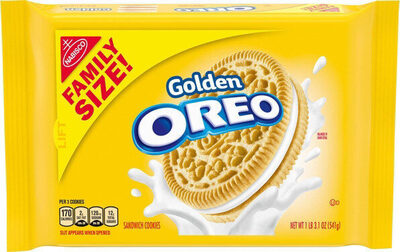
Golden Oreo
Halal Analysis
We recommend searching for certified Halal alternatives.
Pro Tip
Always double-check the label. Manufacturers change ingredients frequently without notice!