
Is Greek Lifestyle Original Flatbread Vegan?
The short answer is: MAYBE. While Greek Lifestyle Original Flatbread contains no obvious animal products like milk or eggs, it contains two controversial ingredients—Vegetable Mono and Diglycerides and Vegetable L-Cysteine—that strict vegans may wish to avoid. Here is the full breakdown.
The Ingredient Breakdown
When determining if a processed flatbread is vegan, we have to look beyond the main flour and water base. The additives used for texture and shelf-life are where the ethical lines are often drawn. Let's analyze the specific ingredients in Whole Wheat Flour, Vegetable L-Cysteine, and Vegetable Mono and Diglycerides.
Vegetable L-Cysteine: This is the most debated ingredient in this product. L-Cysteine is an amino acid used to shorten dough fermentation time and improve texture. Historically, it was derived from animal sources like duck feathers or human hair. However, the ingredient listed here is specifically labeled "Vegetable." In the food industry, "Vegetable L-Cysteine" is typically synthesized through a fermentation process using genetically modified bacteria, making it technically vegan. However, because the source isn't explicitly defined (e.g., "fermented from beets"), strict vegans sometimes avoid it due to lack of transparency.
Vegetable Mono and Diglycerides: These are emulsifiers used to keep the bread soft and prevent it from crumbling. The word "Vegetable" suggests a plant origin (like soy or canola oil). However, mono and diglycerides can also be derived from animal fat (tallow). While the "Vegetable" label strongly implies a plant source, the FDA does not require manufacturers to distinguish between plant and animal sources for these specific additives. This ambiguity is why many vegans mark this ingredient as a "maybe" or a potential red flag.
Preservatives and Sweeteners: The rest of the list is straightforward. Calcium Propionate, Sorbic Acid, and Fumaric Acid are synthetic preservatives to prevent mold. Sucralose is an artificial sweetener, and Dextrose is a simple sugar. None of these are animal-derived, though some vegans avoid artificial sweeteners like Sucralose due to animal testing controversies in the past.
Nutritional Value
From a nutritional standpoint, Greek Lifestyle Original Flatbread is a low-calorie option, with each flatbread typically containing around 60-70 calories. This makes it an attractive choice for those managing their calorie intake. The primary ingredient is Whole Wheat Flour, which provides a modest amount of fiber compared to white flour flatbreads.
However, the inclusion of Dextrose and Sucralose means it is not a 'clean' whole food. While the sugar content is low due to the artificial sweetener, the presence of added sugars and preservatives like Calcium Propionate may be a concern for those following a strict whole-food plant-based diet. It fits well within low-fat and low-calorie diet limits, but it is a processed food designed for shelf stability rather than nutrient density.
Frequently Asked Questions
Does Greek Lifestyle Original Flatbread contain dairy or gluten?
Is Greek Lifestyle Original Flatbread good for weight loss?
Where can I buy Greek Lifestyle Original Flatbread?
Is Greek Lifestyle Original Flatbread safe for kids?


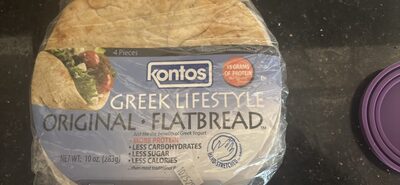
Greek Lifestyle Original Flatbread
Vegan Analysis
We recommend searching for certified Vegan alternatives.
Pro Tip
Always double-check the label. Manufacturers change ingredients frequently without notice!