
Is Hard Salami, Pepperoni, Genoa Salami Kosher?
No, Hard Salami, Pepperoni, and Genoa Salami are not kosher. These cured meats are traditionally made using pork as the primary ingredient, which strictly violates Kosher dietary laws. If you are looking to maintain a Kosher diet, these specific varieties of salami must be avoided entirely.
The Ingredient Breakdown
As a food scientist, the classification of these meats is straightforward based on their ingredient lists. The primary flag for Kosher compliance is the meat source itself. All three varieties—Hard Salami, Pepperoni, and Genoa Salami—list pork as their first and most abundant ingredient. Under Jewish dietary laws (Kashrut), the pig is an unclean animal and is explicitly forbidden for consumption. Therefore, regardless of the other ingredients used, the product cannot be considered kosher.
However, even if the meat source were acceptable, there are secondary ingredients that often pose issues for kosher certification. These salami varieties frequently contain wine. While wine itself can be kosher, it requires a specific process of production (Mevushal) and handling by Jewish individuals to maintain its status. In mass-produced cured meats, the wine is rarely certified kosher. Additionally, the natural flavoring and oleoresin of paprika (found in pepperoni) are proprietary blends that can contain non-kosher derivatives or alcohol-based carriers, making them problematic for strict observers.
Finally, the preservation method involves sodium nitrite and potassium nitrate. While these chemicals are chemically inert regarding kosher status, they are used in the curing process of the pork. For those looking for a kosher alternative, you would need to seek out beef or turkey-based salamis that are explicitly labeled with a reliable Hechsher (kosher certification symbol), such as an 'OU' or 'Kof-K'.
Nutritional Value
From a nutritional standpoint, these cured meats are energy-dense but should be consumed in moderation. A standard serving of salami (approximately 28 grams) typically contains between 90 and 110 calories. The majority of these calories come from fat, specifically saturated fats, which contribute to the meat's characteristic texture and flavor. While fat is a necessary macronutrient, the high saturated fat content in cured pork products can be a concern for heart health if eaten in excess.
In terms of carbohydrates, these meats are very low. Ingredients like dextrose are present in amounts of less than 2%, meaning they contribute minimal sugar (usually less than 1 gram per serving). This makes salami an option for those following a low-carb or ketogenic diet, provided the portion size is controlled. However, the sodium content is the most significant nutritional flag. Between the salt used for curing and the sodium from sodium nitrite and sodium ascorbate, a serving can contain 20-25% of the daily recommended value of sodium. For individuals monitoring blood pressure or salt intake, these meats are not a suitable daily option.
Frequently Asked Questions
Does Hard Salami, Pepperoni, Genoa Salami contain dairy or gluten?
Is Hard Salami, Pepperoni, Genoa Salami good for weight loss?
Where can I buy Hard Salami, Pepperoni, Genoa Salami?
Is Hard Salami, Pepperoni, Genoa Salami safe for kids?
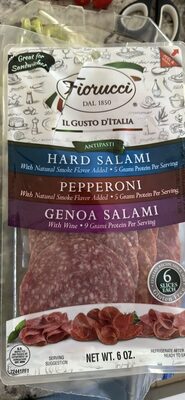
Hard Salami, Pepperoni, Genoa Salami
Kosher Analysis
We recommend searching for certified Kosher alternatives.
Pro Tip
Always double-check the label. Manufacturers change ingredients frequently without notice!