
Is Lard Halal?
The direct answer is no: this specific product is not Halal. It contains lard derived from pork, which is strictly prohibited in Islam. Additionally, the presence of hydrogenated fats and chemical preservatives raises further concerns for those seeking pure, permissible foods.
The Ingredient Breakdown
As a food scientist, I look at the chemistry of fats to determine quality and suitability. When we analyze this product, the verdict is clear based on two distinct factors: the source of the fat and the additives used to stabilize it.
The primary ingredient is LARD and HYDROGENATED LARD. By definition, lard is rendered fat from pigs. In Islamic dietary laws, pork and its by-products are haram (forbidden). The term "hydrogenated" indicates that the fat has been chemically altered to make it solid at room temperature and increase its shelf life. This process creates trans fats, which are widely recognized by health organizations as harmful to cardiovascular health.
Furthermore, the product contains BHA (Butylated Hydroxyanisole) and PROPYL GALLATE. These are synthetic antioxidants used to prevent the fat from going rancid. While they serve a functional purpose in food preservation, many consumers prefer to avoid them due to potential health controversies. The combination of a prohibited animal source and industrial chemical additives makes this product unsuitable for a Halal diet.
Nutritional Value
Nutritionally speaking, lard is almost pure animal fat. It is extremely calorie-dense, providing roughly 115 calories per tablespoon, with 100% of those calories coming from fat. It contains zero carbohydrates, zero sugar, and zero protein.
While it is free of sugar, the high saturated fat content combined with hydrogenation makes it a poor choice for heart health. If you are monitoring your cholesterol or looking for a clean source of dietary fat, this product does not fit the limits of a healthy diet. It offers energy but lacks the micronutrients found in plant-based oils like olive or avocado oil.
Frequently Asked Questions
Does Lard contain dairy or gluten?
Is Lard good for weight loss?
Where can I buy Lard?
Is Lard safe for kids?
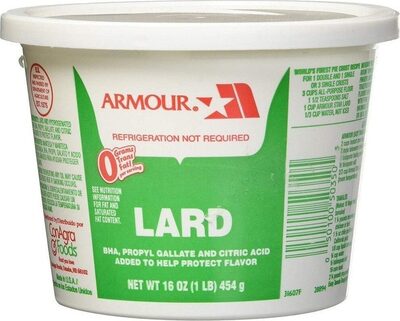
Lard
Halal Analysis
We recommend searching for certified Halal alternatives.
Pro Tip
Always double-check the label. Manufacturers change ingredients frequently without notice!