
Is Milk Kosher?
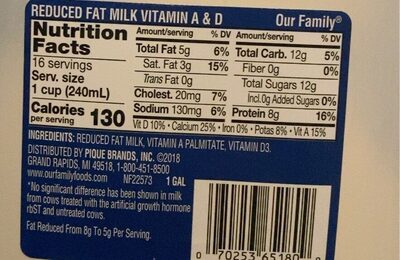
Yes, milk is kosher. Based on the ingredient list of reduced fat milk fortified with Vitamin A and D, there are no non-kosher additives or processing agents. It is a straightforward dairy product that fits within kosher dietary guidelines.
The Ingredient Breakdown
When determining if a product is kosher, we look at the source of the ingredients and how they are processed. For this specific Reduced Fat Milk, the analysis is quite direct. The primary ingredient is pasteurized cow's milk, which is inherently kosher provided the animal is healthy and slaughtered correctly, though milk does not require a hechsher (kosher certification) in the same way meat does, provided no non-kosher additives are introduced.
The secondary ingredients are Vitamin A Palmitate and Vitamin D3. These are synthetic or isolated vitamins added for fortification. Vitamin A Palmitate is generally derived from plant sources or synthesized, making it kosher. Vitamin D3 is typically derived from lanolin (sheep's wool) or lichen. While lanolin is a byproduct of sheep, it is generally considered kosher by most authorities as it is not a food product of the animal and does not involve slaughter concerns. There are no animal-derived flavorings or colorings that would raise a red flag.
Finally, the processing of standard milk—pasteurization and homogenization—does not involve any non-kosher equipment or additives. Therefore, even without a specific kosher symbol on the carton, plain milk is widely accepted as kosher. However, strictly observant consumers often look for a hechsher to ensure the facility adheres to strict kosher standards regarding cross-contamination with other products.
Nutritional Value
From a nutritional standpoint, this reduced fat milk offers a solid profile for those monitoring their intake. A standard cup typically contains around 120 calories, with the fat content reduced to roughly 2.5 grams to 5 grams depending on the specific 'reduced' level (usually 2%). This makes it a suitable option for those looking to manage weight without completely eliminating dairy.
The sugar content in plain milk comes naturally from lactose, usually around 12 grams per cup. It is important to distinguish this from added sugars found in flavored milks. For individuals following a kosher diet that also emphasizes whole foods, this milk provides essential calcium and protein without the guilt of processed additives. It fits well within most balanced diet limits, providing energy and satiety.
Frequently Asked Questions
Does Milk contain dairy or gluten?
Is Milk good for weight loss?
Where can I buy Milk?
Is Milk safe for kids?


Pro Tip
Always double-check the label. Manufacturers change ingredients frequently without notice!