
Is Sesame teriyaki noodle bowl Vegan?
The short answer is MAYBE. While the Sesame teriyaki noodle bowl appears to be free of meat and dairy, strict vegans need to scrutinize the sauce. The presence of sugar and ambiguous 'natural flavor' makes it a gray area for those avoiding all animal derivatives.
The Ingredient Breakdown
As a food scientist, I look past the marketing claims and straight at the label. To determine if this noodle bowl is truly vegan, we have to dissect the sauce, which is where the ethical complexities usually hide.
First, let's look at the soy sauce. The ingredient list specifies it is made of water, salt, and soybean. This is a clean, vegan formulation, unlike some varieties that use bonito (fish) or trace dairy. The noodles themselves are also safe; they are made from wheat flour and starches, containing no egg.
The primary red flag for strict vegans is the sugar. In many countries, particularly the US, white sugar is often processed using bone char (charred animal bones) to achieve its white color. Unless the brand specifies 'organic' or 'unrefined' sugar, this ingredient renders the product non-vegan for many.
Furthermore, the natural flavor listed in the sauce is a common industry term. While it usually implies plant-derived compounds in an Asian-style sauce, 'natural flavor' can technically be derived from animal sources. Without specific disclosure from the manufacturer, this remains an ambiguity.
Finally, the glucono delta-lactone found in both the noodles and sauce is a vegan acidulant derived from glucose, so it poses no issue.
Nutritional Value
From a nutritional standpoint, this Sesame teriyaki noodle bowl is a calorie-dense convenience food. A standard serving typically contains between 350 to 500 calories, driven largely by the refined wheat flour in the noodles and the soybean oil in the sauce.
The sugar content is the most concerning factor for health-conscious consumers. Teriyaki sauce is inherently sweet, and this product likely contains enough added sugar to spike your blood glucose levels significantly. It fits the diet limits of a standard omnivore, but for those watching their sugar intake or managing diabetes, this is not an ideal choice.
Regarding fat, the inclusion of sesame oil and soybean oil contributes to the total fat count. While sesame oil provides a distinct flavor and some healthy fats, the overall sodium content—driven by the soy sauce and salt—is quite high, often exceeding 30% of the recommended daily value in a single bowl.
Frequently Asked Questions
Does Sesame teriyaki noodle bowl contain dairy or gluten?
Is Sesame teriyaki noodle bowl good for weight loss?
Where can I buy Sesame teriyaki noodle bowl?
Is Sesame teriyaki noodle bowl safe for kids?


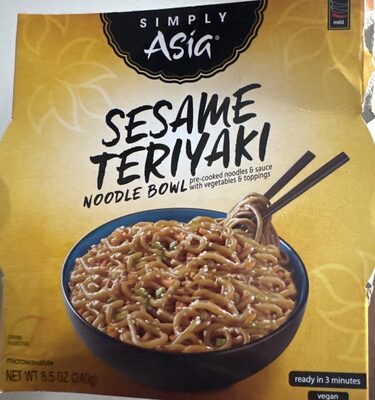
Sesame teriyaki noodle bowl
Vegan Analysis
We recommend searching for certified Vegan alternatives.
Pro Tip
Always double-check the label. Manufacturers change ingredients frequently without notice!