
Is Ultra Thin Pizza Crust Gluten Free?
No, Ultra Thin Pizza Crust is not gluten-free. Despite its name, this product relies on wheat flour as its primary ingredient, making it unsuitable for anyone with Celiac disease or gluten sensitivity. If you are looking for a safe base for your pizza night, you will need to look elsewhere or make your own.
The Ingredient Breakdown
As a food scientist, the first thing I look at is the ingredient list, specifically the first five items, as they make up the bulk of the product. For this Ultra Thin Pizza Crust, the verdict is clear immediately. The very first ingredient is ENRICHED FLOUR (WHEAT FLOUR, ENZYME, WHEAT STARCH...). This is the definition of gluten. Wheat flour is the structural backbone of traditional pizza, providing the chew and elasticity. Wheat starch is often used to increase the gluten content or improve texture, ensuring that the crust is anything but gluten-free.
Furthermore, we must look at potential hidden sources of gluten or cross-contamination. While the ingredients list does not explicitly list barley or rye, the presence of WHEAT STARCH confirms the wheat origin. Additionally, the ingredient DIACETYL TARTARIC ESTERS OF MONO AND DIGLYCERIDES is an emulsifier often derived from plant sources but can sometimes be processed in facilities that handle wheat. However, the primary offender here is the sheer volume of wheat-based ingredients.
Finally, we see ingredients like WHEY and SODIUM METABISULFITE. Whey is a milk derivative, which makes this crust unsuitable for those with dairy allergies, though it does not contain gluten. Sodium metabisulfite is a preservative used to maintain freshness and color. While it is generally safe for the general population, those with severe sulfite sensitivities should be cautious. But for the gluten-free community, the wheat flour remains the absolute dealbreaker.
Nutritional Value
When discussing the nutritional profile of an Ultra Thin Pizza Crust, we are looking at a product designed for convenience and texture rather than optimal health. The crust is essentially a refined carbohydrate. The ENRICHED FLOUR means the bran and germ of the wheat have been removed, stripping away much of the fiber and nutrient density. While it is fortified with vitamins like Niacin and Folic Acid, it lacks the slow-burning energy of whole grains.
In terms of macronutrients, the crust contains PALM OIL and SOYABEAN OIL. These fats contribute to the caloric density and the desirable crispiness of the crust when baked. However, they also add to the saturated fat content. The presence of DEXTROSE and SUGAR provides a quick spike in blood glucose. While the sugar content isn't massive compared to a dessert, it is enough to contribute to the total caloric load without providing satiety.
Is it 'healthy'? In the context of a balanced diet, it is a processed food. It fits into a diet as an occasional treat, but it should not be a staple. If you are managing your weight or blood sugar, the refined flour and added sugars mean you should consume this in moderation. It is lower in calories than a deep-dish pan pizza, but it lacks the nutritional benefits of a cauliflower or whole-wheat alternative.
Frequently Asked Questions
Does Ultra Thin Pizza Crust contain dairy or gluten?
Is Ultra Thin Pizza Crust good for weight loss?
Where can I buy Ultra Thin Pizza Crust?
Is Ultra Thin Pizza Crust safe for kids?
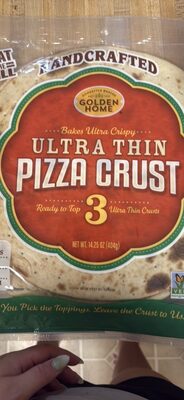
Ultra Thin Pizza Crust
Gluten Free Analysis
We recommend searching for certified Gluten Free alternatives.
Pro Tip
Always double-check the label. Manufacturers change ingredients frequently without notice!